Harvest your kief first, then freeze the pieces for 30 to 60 minutes so the resin flakes off when you tap it. Clean metal with a 91%+ isopropyl alcohol soak, clean acrylic or wood with soap and water or dry brushing only, then rinse and dry every part completely before you reassemble it. Skip these steps or do them out of order and you risk staining, warping, or mould.
TL;DR:
- Freezing grinder parts for 30 to 60 minutes makes resin brittle and easier to remove during tapping and brushing, maximizing kief recovery.
- Metal grinders should be disassembled, soaked in alcohol with coarse salt, and dried thoroughly to prevent oxidation and mold, especially for aluminum and zinc alloys.
- Avoid using isopropyl alcohol on acrylic or wood grinders, as it causes cracking in plastics and warping in porous wood, which must be cleaned with soap and water or dry brushing.
- Regular maintenance includes wiping threads weekly and deep cleaning every four to six weeks for moderate users, with thorough drying being essential to prevent odors and rust.
- Replacing torn screens or damaged chambers is more effective than attempting repairs, especially on acrylic and stretched-out metal mesh, to ensure proper filtering.
Table of Contents
- Grinder cleaning guide: what to gather before you start
- How do you deep clean a metal grinder?
- Can you use alcohol on acrylic or wood grinders?
- How does the freezer method work for saving kief?
- How often should you clean a grinder?
- Why is my grinder stuck, squeaky, or clogged?
- A note on getting this guidance right
- Where to find replacement grinders and cleaning supplies
- Sources
- FAQ
Grinder cleaning guide: what to gather before you start
A proper grinder cleaning guide starts with your supplies laid out, not halfway through the sink. Rushing this part is how people end up scrubbing acrylic with the wrong solvent or losing kief down the drain.
Set yourself up with:
- 91%+ isopropyl alcohol (for metal grinders only)
- Coarse salt, to use as a gentle abrasive scrub
- A sealable bag or small mason jar for soaking
- A soft toothbrush or dedicated grinder brush
- Cotton swabs, a toothpick, or a wooden skewer for tight corners
- Warm water and a drop of dish soap
- A couple of clean towels
- Freezer space and a tray or piece of parchment
Work somewhere ventilated, away from open flame or a lit burner. Isopropyl alcohol is flammable, and the fumes build up fast in a small bathroom. Before anything touches soap or solvent, harvest your kief first onto that tray or a sheet of parchment. Skip this step and you’re rinsing away the most potent part of the job.
How do you deep clean a metal grinder?
Metal grinders take the most aggressive cleaning of the three materials, and they can handle it. This is the process most people picture when they search for a grinder cleaning guide, and it’s worth doing right the first time.
- Disassemble completely. Pull apart every chamber, the screen, and the kief catcher.
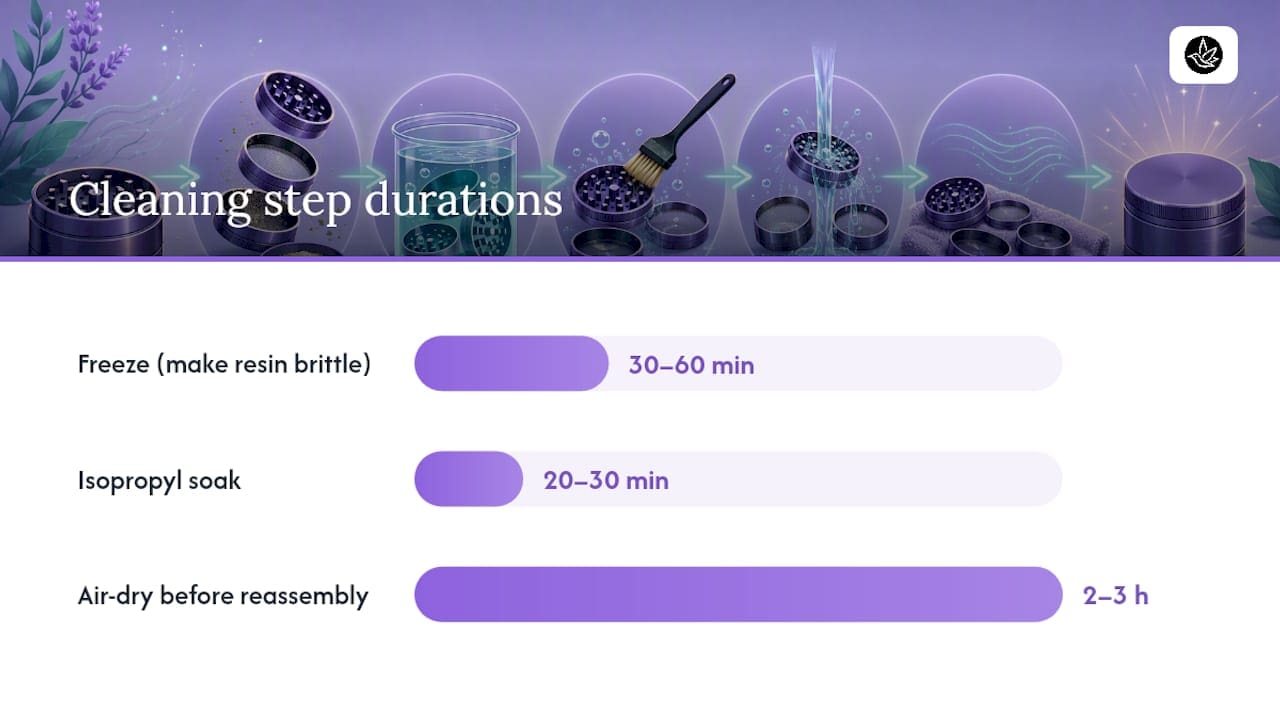
- Freeze for a period sufficient to make resin brittle, typically around half an hour to an hour. Cold makes resin brittle so it chips away instead of smearing.
- Tap firmly over your tray. Most of your kief drops free at this stage.
- Soak in isopropyl alcohol. Use 91% or higher, add a tablespoon of coarse salt, and let the pieces sit for 20 to 30 minutes. Heavier buildup can soak longer.
- Shake gently, then scrub with a soft brush. Use a cotton swab on the screen mesh where a brush can’t reach.
- Rinse thoroughly under warm water to clear alcohol and salt residue.
- Dry completely with a towel, then let every piece air-dry for a few hours before you put it back together.
Statistic to remember: research on grinder cleaning shows resin turns brittle enough to flake off once you get below roughly minus 10°C, which is well within range of a standard home freezer at about minus 18°C.
Skip metal picks and knife tips. A gouge in soft aluminium creates a burr that snags resin every single time afterward, making future cleanings harder, not easier. Drying matters just as much as the soak. Aluminium and zinc alloy grinders can oxidize if they stay damp, and trapped moisture inside a fine screen is a mould risk waiting to happen. Towel dry, then leave the pieces on a clean cloth for two to three hours minimum before reassembly.
Can you use alcohol on acrylic or wood grinders?
No. Isopropyl alcohol is the wrong tool for acrylic, plastic, and wood, and using it is one of the most common ways people damage a grinder they were only trying to clean.
Acrylic and plastic:
- Soak in warm, soapy water for 30 to 60 minutes.
- Scrub gently with a soft brush, focused on the teeth and screen holes.
- Rinse well and air dry completely before reassembling.
- Never use isopropyl alcohol on these materials. It triggers stress cracking and crazing in the plastic within minutes of contact.
Wood:
- Never soak a wood grinder. It’s porous and will absorb moisture or warp.
- Use the freezer method, then dry brush every surface.
- For sticky spots, wipe with a barely damp cloth and dry the wood immediately after.
- Once fully dry, a tiny amount of food-grade mineral oil can condition the wood, though it’s optional.
Pro Tip: If a screen is torn, stretched, or a chamber has warped out of round, stop trying to save it. A cracked acrylic body or a blown-out screen won’t seal properly no matter how well you clean it, and a replacement part costs far less than the flower you’ll waste to a poor grind.
How does the freezer method work for saving kief?
Cold is doing most of the real cleaning work in this whole grinder cleaning guide, and it’s worth understanding why before you skip straight to soap or alcohol.
- Disassemble the grinder and set each piece, screen-side accessible, on a tray.
- Place everything in the freezer for 30 to 60 minutes. Any home freezer running at a normal setting gets cold enough.
- Pull the pieces out and tap them firmly, immediately, over parchment or a rolling tray. Resin loses its stickiness fast once it warms back up.
- Brush both sides of the screen gently to knock loose anything still clinging to the mesh.
This is why freezing before brushing recovers far more kief with a lot less mess than scraping at room temperature. It also protects the screen from the kind of pressure that stretches or tears fine mesh.
Tip what you collect into a small, light-proof jar and keep it somewhere cool, away from a window or a heat vent. Sprinkle it on a bowl, press it into rosin later, or top a joint with it. One rule worth following: never mix kief you’ve frozen and tapped with anything that touched isopropyl alcohol. Solvent residue changes the flavour and, more importantly, isn’t something you want to smoke.
How often should you clean a grinder?
Frequency comes down to how often you’re loading it, not a fixed calendar date. Daily users need a deep clean roughly every two to three weeks; moderate users can usually stretch that to every four to six weeks. Occasional users often get away with once every eight to twelve weeks, or simply whenever the grind starts feeling stiff or sticky.
Between full cleans, small habits go a long way:
- Tap the grinder out over a tray after every session, before residue has time to set.
- Wipe down the threads with a dry cloth once a week.
- Run a full deep clean about once a month if you’re a regular user.
Whatever schedule you land on, drying is non-negotiable. Towel off every piece, then let it air-dry for two to three hours, or use a hair dryer on a low, cool setting to speed things along. A grinder that goes back together damp is a grinder that starts smelling off within a week.
Why is my grinder stuck, squeaky, or clogged?
Most grinder problems have a simple fix, and almost none of them require force.
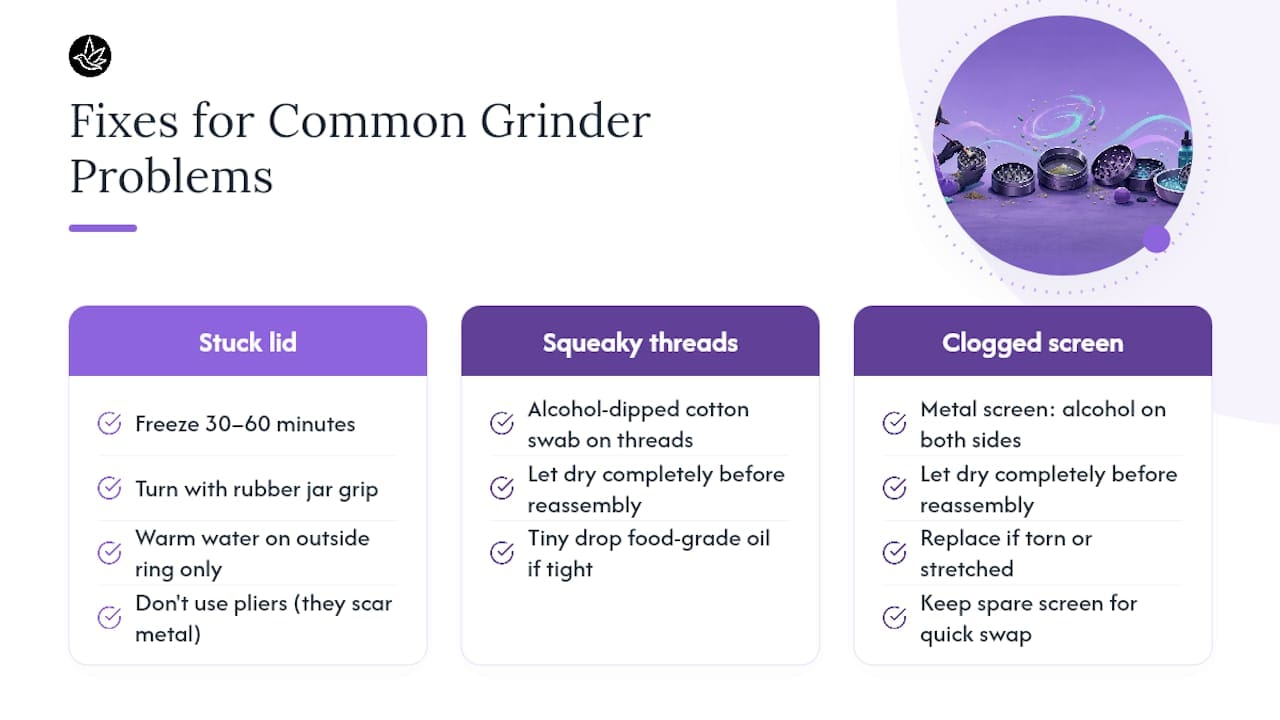
Stuck lid: Freeze the whole grinder for 30 to 60 minutes. Cold contracts the metal just enough to loosen a jam. Use a rubber jar-opener grip for turning, and run warm water on the outside ring only, never inside where the herb sits. Skip the pliers. They’ll scar the metal and make the next stick worse.
Squeaky or stiff threads: Run an alcohol-dipped cotton swab around the threading, then let it dry fully before twisting the pieces back together. If it’s still tight, a single tiny drop of food-grade oil on the glide ring usually solves it.
Clogged screen: On a metal screen only, paint both sides with an alcohol-dipped swab and let it dry completely before reassembly. If the mesh is torn or stretched out of shape, replace it. A damaged screen won’t filter properly again no matter how well you clean around it.
Pro Tip: Keep a spare screen in your kit at all times. A five-minute swap beats an hour spent trying to rescue mesh that’s already stretched past saving.
A note on getting this guidance right
Nick, who covers cannabis accessories and product care for Montrosecannabis, put this guide together to answer the questions that come up constantly from customers: what actually works, what damages a grinder, and how often maintenance really needs to happen.
This advice is supported by a promise of one-hour delivery in certain regions, a curated selection of craft cannabis from quality-focused growers, and a high customer rating. The team offers accessories alongside flower, vapes, and edibles, and educates customers on how to use and maintain their gear. Got a question about a specific grinder or screen? Reach out to customer support directly.
— Nick
Where to find replacement grinders and cleaning supplies
Once your grinder is clean, the next question is usually whether it’s worth keeping at all, or if it’s time for an upgrade. A practical stop for both, it stocks a curated range of accessories alongside a craft flower selection, so customers can find supplies in one place.

If you’re shopping for a replacement, metal wins on longevity every time, since acrylic eventually clouds and wood needs more careful upkeep. It’s worth learning how different grinder types and chamber layouts work before you buy, especially if you want a four-piece design built for kief collection. Keeping a spare screen and a small cleaning kit on hand means you’re never stuck mid-session with a clogged grinder and no fix in reach. Once your kief is harvested and stored properly, pairing it with good storage habits, like keeping your flower fresh for months instead of days, makes the whole routine worth the effort. Browse the full accessories selection or head to the shop to find a replacement grinder, spare screens, or your next order of flower, and reach out to customer service if you need a hand choosing the right one.
Sources
- How to Clean a Grinder | Azarius
- How to Clean a Weed Grinder: Step by Step | DankStop
- How to Clean a Herb Grinder: Metal, Plastic & Kief Saving Tips
- How to Clean a Grinder | Cannigma
FAQ
Can I use rubbing alcohol instead of isopropyl for a metal grinder?
Lower concentrations carry more water, which slows resin breakdown and leaves more moisture behind to dry.
Is it safe to clean a grinder with vinegar?
Vinegar isn’t part of any tested method here and can leave a lingering smell on metal. Isopropyl alcohol for metal, or warm soapy water for plastic and acrylic, are the methods with actual backing.
How long should I freeze my grinder before cleaning?
30 to 60 minutes is the standard window. Any longer doesn’t improve results, and pulling pieces out promptly to tap them matters more than extending the freeze.
Does Montrosecannabis sell replacement grinder screens?
Yes, Montrosecannabis stocks accessory kits and replacement parts alongside its curated flower selection, available through its online shop.
Why does my grinder smell musty after cleaning?
That’s almost always leftover moisture trapped in the screen or threads. Towel dry, then air-dry for two to three hours minimum, or use a cool hair dryer setting to finish the job faster.