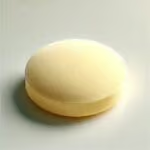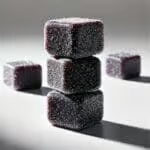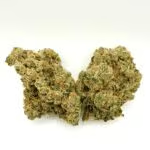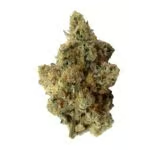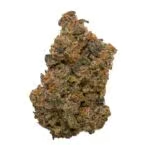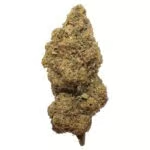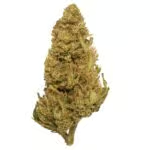
Microdosing THC means taking a very small amount, usually somewhere between 1 and 2.5 mg, so you feel a light shift in mood or body rather than a full high. There is no official Canadian definition of a microdose. The dependable way to do it is to start at the bottom of that range with a product whose THC you can measure, wait the full onset time, and write down what happened. That is where we come in: our edibles, vapes and other low-THC picks are delivered in about an hour across Durham Region and the GTA, so you can match the dose to the plan instead of guessing.
This guide is for adult cannabis consumers in Canada, with Ontario specifics where they matter.
TL;DR
- A microdose is generally 1 to 2.5 mg of THC in an edible, or a single small inhalation of lower-THC flower or a vape. Nobody has set a legal or medical definition.
- Edibles take the longest to work. Health Canada says effects begin in 30 minutes to 2 hours, so wait at least 4 hours before taking more.
- Measurable products beat joints for this. Tinctures, edibles and metered vapes let you repeat the same dose.
- Keep a short log of dose, timing and effects, and raise the dose in small steps only.
- Canada’s lower-risk guidelines advise against daily or near-daily use, so keep microdosing occasional.
Table of Contents
- What counts as a THC microdose in Canada
- The dose depends on how you consume it
- How to start: a five-step routine
- What 10 mg means next to a joint
- What the evidence says about microdosing
- Can you microdose every day?
- Ontario rules to know
- Our perspective
- Where to find low-dose products
- FAQ
- Sources
What counts as a THC microdose in Canada
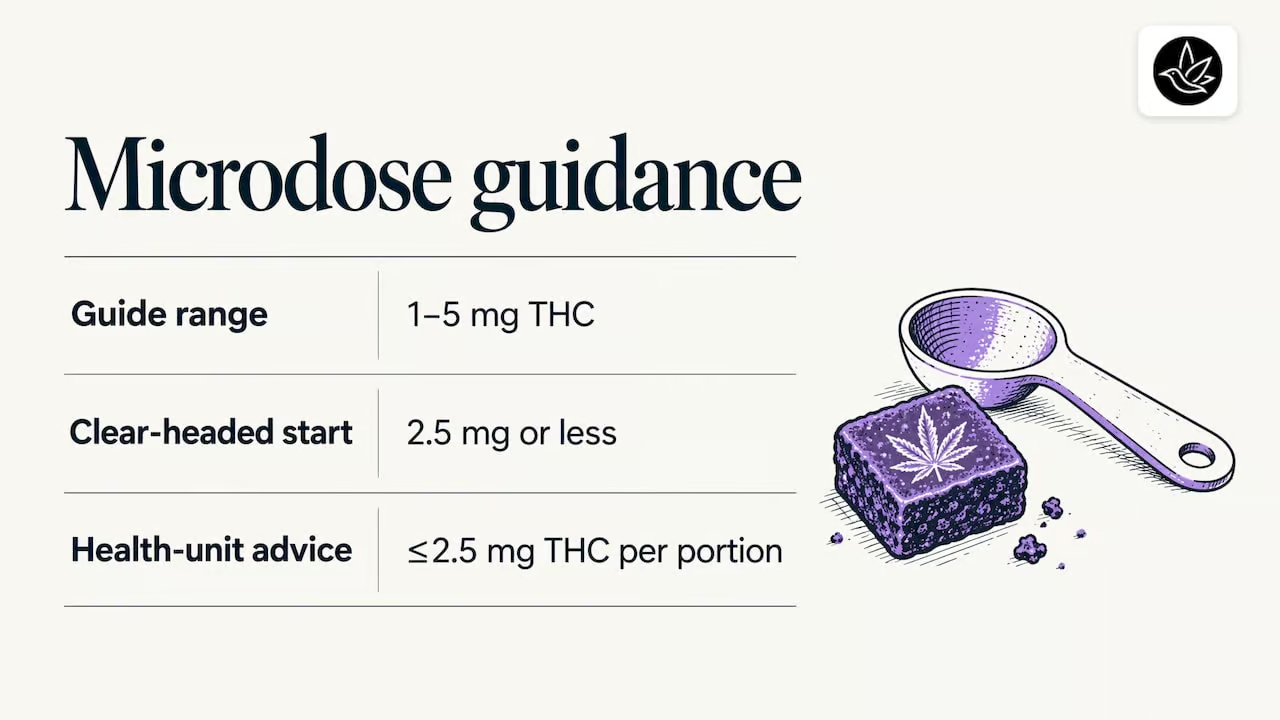
THC (tetrahydrocannabinol) is the compound in cannabis that causes the high. A microdose is a dose small enough that the high is barely there or absent. Guides most often put it between 1 and 5 mg of THC, and many people who want to stay clear-headed begin at 2.5 mg or less.
That range lines up with Canadian public-health advice. The Windsor-Essex County Health Unit suggests starting with 2.5 mg THC or less per edible portion, ideally with an equal or higher amount of CBD. CBD is the non-intoxicating cannabinoid that can soften THC’s edge. If you want to see how that pairing works, our guide to THC vs CBD edibles covers it.
A microdose is personal. Body weight, tolerance, whether you have eaten, and how you metabolise THC all shift the result. So the useful definition is the smallest dose that gives you the effect you want, and for some people that is less than 2.5 mg.
The dose depends on how you consume it
The same “small” amount looks very different across formats. Here is how the main options compare for microdosing.
| Format | Typical microdose | Onset | How long it lasts | Precision |
|---|---|---|---|---|
| Edibles and drinks | 1 to 2.5 mg THC per portion | 30 minutes to 2 hours | 4 to 8 hours, with lingering effects up to 12 to 24 hours | High, the mg is on the label |
| Oils and tinctures | A measured drop volume, for example 0.5 mL of a 2 mg/mL product gives 1 mg | Varies by method | Varies | High |
| Vapes | One small puff | Seconds to minutes | 2 to 4 hours | Medium |
| Flower and pre-rolls | One small puff, lower-THC flower | Seconds to minutes | 2 to 4 hours | Low |
The onset and duration ranges for edibles and inhaled products come from Health Canada’s consumer information on cannabis. Health Canada also warns that the delayed onset of edibles can lead to taking too much and to cannabis poisoning, with panic, paranoia or hallucinations.
Edibles: the easiest way to control the number
Edibles and drinks print the THC per piece, so a 2.5 mg dose is a known quantity every time. Ontario’s regulated edibles also carry a cap on THC per package, which is why many low-dose gummies and drinks sit well under it. Our page on Canada’s 10 mg edible THC limit explains the rule, and starting at 2.5 mg walks through safe edible dosing.
The trade-off is time. You cannot undo an edible, and its effects can run long, so patience is the whole technique. More on that below.
Vapes and flower: fast, so go in small puffs
Inhaled THC arrives quickly, which makes it easy to feel a dose and also easy to overshoot. Health Canada’s advice for new or occasional users is to start with one or two puffs of a product with 10% THC or less, and to avoid high-THC extracts such as hash, kief, wax or shatter. The full effect can take up to 30 minutes, so one puff and a pause is the microdosing pattern.
If you are choosing between the two inhaled routes, vaping vs smoking lays out the differences. To read a label properly, THC percentage labels in Canada shows how to turn a percentage into milligrams.
Why a full joint is the wrong tool
A joint is hard to portion. One puff is a microdose, but a whole joint can deliver tens of milligrams of THC depending on the flower’s potency and how much you smoke. For a repeatable microdose, pick a format where you can count the dose: a labelled edible, a measured oil, or a vape you take one puff from.
How to start: a five-step routine
- Pick a product with the THC clearly stated. For a first try, choose an edible with 2.5 mg or less per portion, or a lower-THC product you can inhale in a single puff. Look at the label for milligrams per piece, not just the percentage.
- Choose a calm setting. Do your first trial at home, on a day with no driving, no work and nothing demanding. Cannabis can impair your ability to drive, so plan not to.
- Take one dose and wait the full time. For an edible, Health Canada says effects can take 30 minutes to 2 hours to start. The Windsor-Essex County Health Unit says to wait at least 4 hours before consuming more. For inhaled products, give it up to 30 minutes. Our explainer on how edibles kick in and why to wait breaks down what affects the timing.
- Log what you feel. Note the product, the dose, the time, and what changed: mood, focus, body comfort, sleepiness. Three lines a session is plenty.
- Adjust in small steps. If the dose was too light, move up by 1 mg to 2.5 mg next time, not within the same session. If it was too strong, go lower. The goal is the minimum effective dose, the amount that gives you what you want without disrupting your day.
If you are new to cannabis, or have not used it in a long time, begin at the low end of every range above.
What 10 mg means next to a joint
People often ask how strong a 10 mg edible is compared with a joint. There is no tidy conversion, and that is the point. An edible’s THC passes through digestion and the liver, so it takes longer to arrive and can feel different and longer-lasting than the same amount inhaled. A joint’s THC depends on the potency of the flower and on how much of the joint you smoke.
In practical terms, 10 mg is the legal maximum for a single regulated edible package in Canada, and it is four times a 2.5 mg microdose. For someone aiming at a microdose, a full 10 mg product is a lot to take at once, so cut or choose lower-dose pieces instead. Health Canada’s lower-risk guidance and the rest of this page are all built around starting low and building slowly.
What the evidence says about microdosing
THC does behave differently at very low doses than at high ones. CAMH, Canada’s largest mental health teaching hospital, explains that at lower doses cannabis can subtly change perception, while stronger THC doses can intensify the effects and also bring anxiety, paranoia, panic and hallucinations.
The most cited small-dose research is medical. A 2020 trial in Israel with 27 chronic pain patients tested very small inhaled doses, and its authors reported that a dose of 500 micrograms of THC was the optimally effective one for relieving pain. A microgram is a thousandth of a milligram, so that is half a milligram, and the report contrasts it with a typical medical cannabis patient using about 150,000 micrograms of THC a day from a gram of 15% flower. If you are a patient using cannabis for a medical condition, talk to your physician or nurse practitioner before you change your dose.
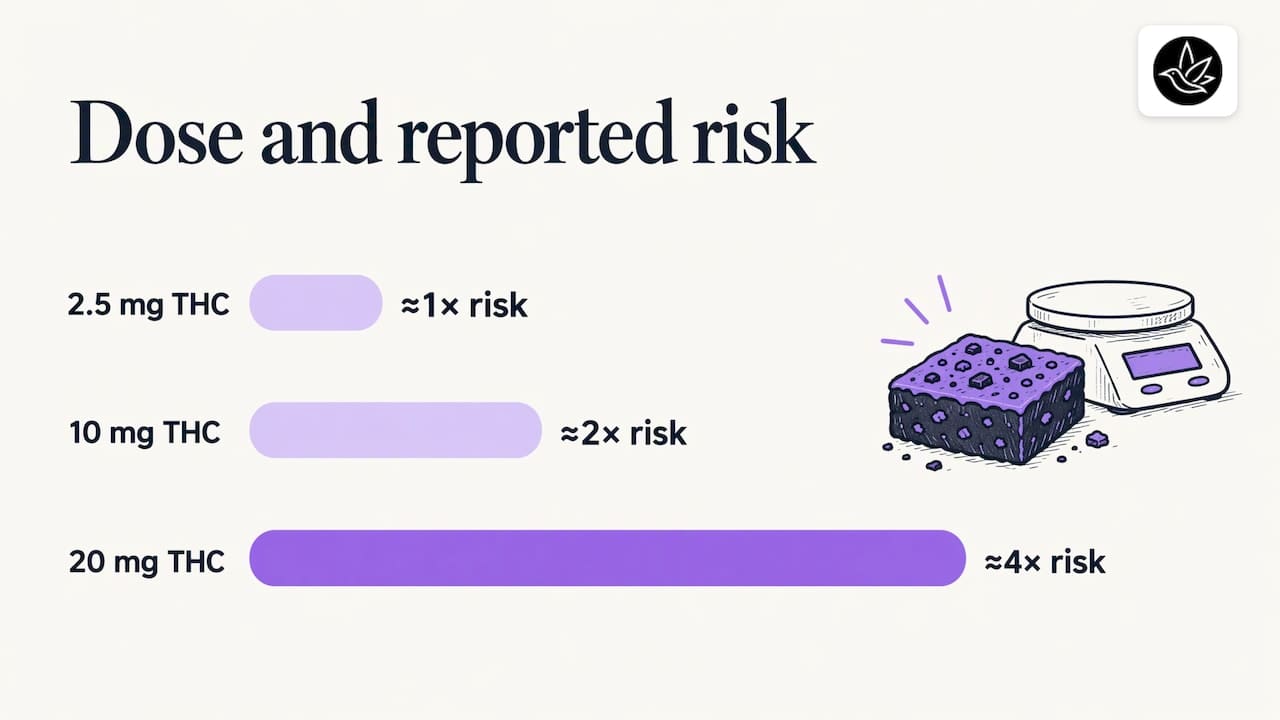
For everyday adult use, keep expectations realistic. Researchers have not agreed on a definition of a microdose, and the claims you will see online about focus or creativity run ahead of controlled studies. What the guidance does support is the practical idea: lower doses carry less risk of an unpleasant experience than higher ones. Doses also add up. A review in NEJM Journal Watch of THC-only studies reported that daily doses of 2.5, 10 and 20 mg were linked to roughly 1-, 2- and 4-fold rising risk of dizziness and changes in thinking and perception in middle-aged and older adults. That is another reason to keep to the bottom of the range.
Can you microdose every day?
Small doses do not cancel the advice on frequency. Canada’s lower-risk cannabis use guidelines say daily or near-daily use is among the strongest predictors of severe or long-term problems, and they recommend keeping use occasional, such as one day a week or less. Those guidelines are written for use in general, so a daily microdose routine is something to discuss with a doctor, especially if you have a mental health condition, take other medication, or are pregnant or breastfeeding.
A simple way to follow the guidance: save microdosing for specific moments rather than making it a habit, and take breaks.
Ontario rules to know
In Ontario you must be 19 or older to buy or possess cannabis. CAMH notes that adults 19 and over can possess up to 30 grams of dried cannabis in public and grow up to four plants per household. Legal edibles also have a cap on how much THC they can contain, and CAMH advises waiting about four hours before deciding on another edible dose, since effects can last up to 12 hours.
Buying from a licensed retailer matters for microdosing in particular: regulated products carry tested, labelled THC amounts, which is exactly what a repeatable small dose depends on.
Our perspective
Most of the bad microdosing stories we hear about start the same way: someone takes a dose they cannot measure, feels nothing at 30 minutes, and takes more. We built our approach around the opposite habit. Pick a product with the milligrams on the label, take a small amount, and give it time.
That is why we put so much effort into customer education and compliance, and why we curate craft products from growers we trust rather than stocking everything. For a microdose, the label matters more than the hype. You deserve to know what is in your product and what a portion means.
Fast delivery helps here too. When you can have a low-dose edible, a drink or a vape at your door in about an hour in Durham Region and the GTA, you can plan a calm evening around it instead of improvising. And if you are a medical patient, we deliver medical orders Canada-wide.
Start low, go slow, and keep notes. It is the least exciting advice and the most useful.
Nick
Where to find low-dose products
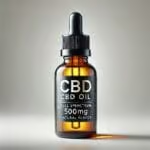
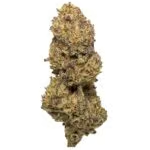
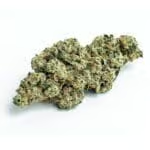
Our shop carries flower, pre-rolls, vapes, extracts, edibles, drinks and CBD, along with accessories and devices. If you are building a microdosing routine, the edibles and drinks are where to look first for labelled, per-piece THC, and the CBD range suits anyone who wants to balance THC with a non-intoxicating option. Our delivery takes about an hour across Durham Region and the GTA.

Browse the full shop by category and check the THC per piece on each product page before you order. If you like CBD in the mix, our guide to 1:1 THC:CBD strains explains how to read the ratio.
FAQ
How many mg of THC is a microdose?
Most guides put a microdose at 1 to 5 mg of THC, and many people start at 2.5 mg or less. There is no official Canadian definition, so treat the range as a starting point and find the smallest dose that gives you the effect you want.
Does microdosing THC do anything?
At very low doses, cannabis can subtly change perception and mood, and some people notice a light effect while others notice nothing at 1 mg. Reactions vary with tolerance and format. Take a single small dose, wait the full onset time, and record what you feel before changing anything.
Can you microdose THC every day?
Canada’s lower-risk guidelines advise against daily or near-daily cannabis use and suggest keeping use to one day a week or less. If you want a regular routine, speak to your doctor first, especially if you take other medication or have a mental health condition.
How strong is a 10 mg edible compared with a joint?
They cannot be compared directly. A 10 mg edible works slowly, with effects beginning in 30 minutes to 2 hours and lasting 4 to 8 hours or more. A joint acts within minutes and its THC depends on the flower’s potency and how much you smoke. For a microdose, 10 mg is four times a 2.5 mg starting dose.
Sources
- Cannabis: lower your risks, Health Canada
- Consumer information: Cannabis, Health Canada
- Canada’s lower-risk cannabis use guidelines, Health Canada
- Cannabis Edibles, Windsor-Essex County Health Unit
- Do You Know… Cannabis, CAMH
- First clinical evidence: Cannabis microdoses relieve pain, ISRAEL21c
- THC-Related Neuropsychiatric Side Effects in Middle-Aged and Older Adults, NEJM Journal Watch