
Canada THC is defined as the tetrahydrocannabinol content measured and regulated in cannabis products sold legally across the country under the Cannabis Act and Health Canada’s oversight. Whether you’re new to cannabis or a seasoned consumer, understanding THC content, labelling rules, and possession limits keeps you safe and on the right side of the law. This guide covers how THC is measured and displayed on packaging, what the legal limits are by province and product type, and how to shop and consume responsibly. Montrosecannabis has put this together so you can make genuinely informed choices every time.
How is Canada THC content measured and labelled?
THC labelling in Canada follows a range format rather than a single fixed number. Labels in Ontario commonly display values like 18–24% THC, which reflects natural batch variability and multiple testing windows across a production run. This is standard regulatory practice, not a loophole or a guess.
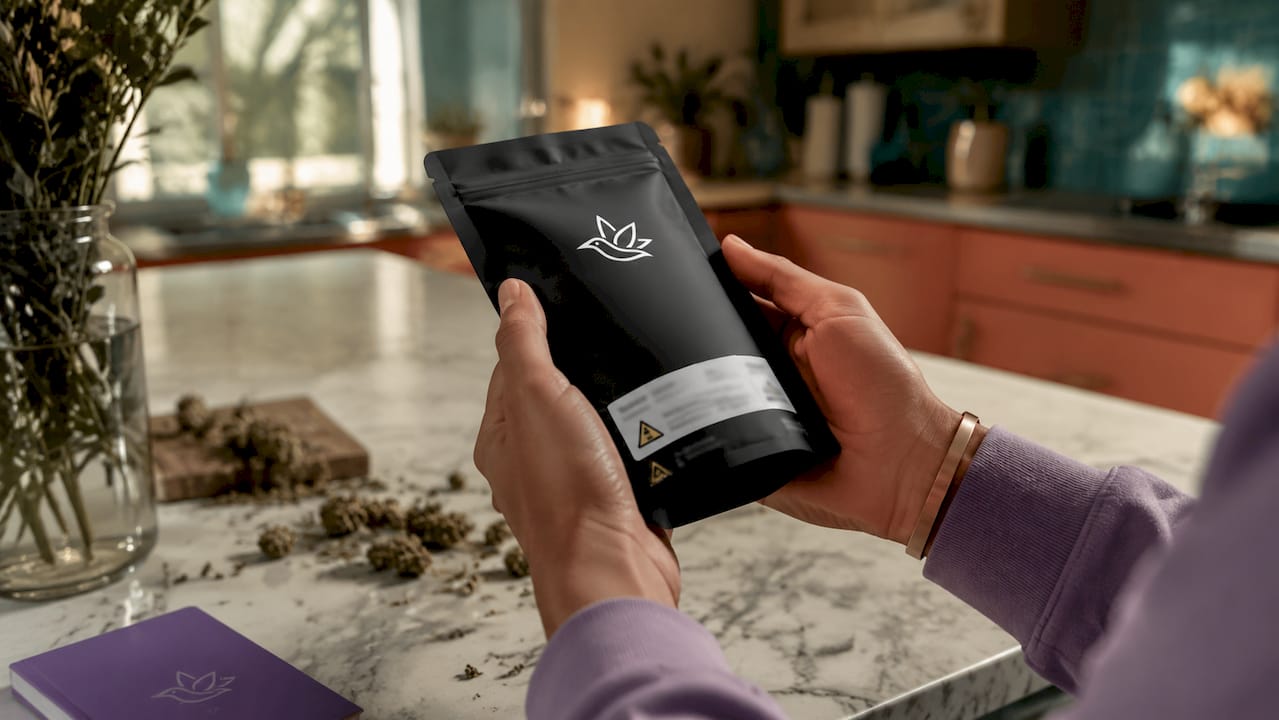
Licensed producers send samples to accredited laboratories that test for cannabinoid content, contaminants, and quality. 48% of tested legal cannabis products had THC concentrations differing by more than 20% from their labelled values, which is precisely why ranges exist rather than single-point claims. The range tells you the realistic window of potency, not a guaranteed number.
THC content is expressed differently depending on the product format:
- Dried flower and pre-rolls: Shown as a percentage by weight (e.g., 20–26% THC)
- Edibles: Shown in milligrams per package (e.g., 10 mg THC total)
- Vape cartridges: Shown in milligrams per unit or as a percentage of total volume
- Concentrates and extracts: Shown as a percentage or milligrams per gram
- Capsules: Shown in milligrams per capsule
Pro Tip: When reading a cannabis label, look at the format alongside the THC number. A 25% flower and a 10 mg edible are not comparable by those numbers alone. The delivery method changes how much THC your body absorbs and how quickly.
Retailers consistently caution that THC percentage is not a quality metric. A 15% flower with a rich terpene profile can deliver a more satisfying experience than a 30% product with minimal secondary compounds. The label gives you data, not a prediction of your personal experience.
What are the legal possession and purchase limits across Canadian provinces?
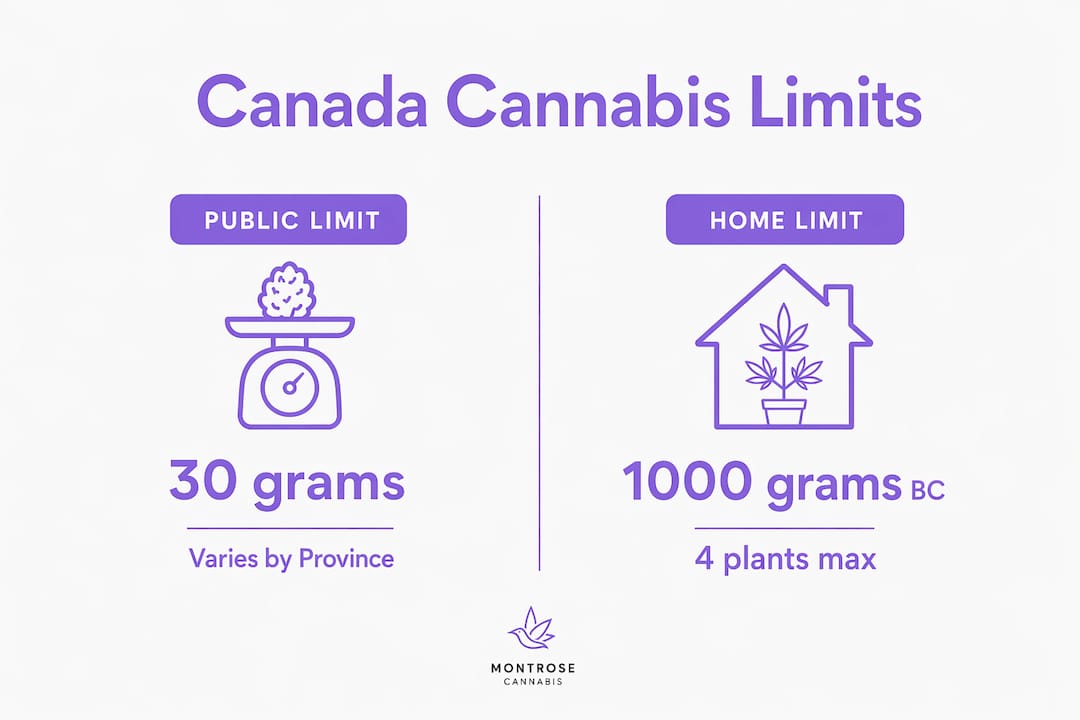
Cannabis possession limits in Canada are set by the Cannabis Act at the federal level, with provinces adding their own rules on top. Every adult can possess up to 30 grams of dried cannabis in public spaces anywhere in Canada. That federal floor applies coast to coast.
In British Columbia, adults aged 19 and older can possess up to 30 grams in public and up to 1,000 grams at home per household. The purchase limit per transaction is also 30 grams of dried cannabis or its equivalent. Home cultivation of up to four plants per household is permitted federally, though some provinces restrict this further.
| Province | Public possession limit | Home possession limit | Purchase limit per transaction | Minimum age |
|---|---|---|---|---|
| Ontario | 30 g dried | No stated household cap | 30 g dried equivalent | 19 |
| British Columbia | 30 g dried | 1,000 g per household | 30 g dried equivalent | 19 |
| Alberta | 30 g dried | No stated household cap | 30 g dried equivalent | 18 |
| Quebec | 30 g dried | No stated household cap | 30 g dried equivalent | 21 |
| Manitoba | 30 g dried | No stated household cap | 30 g dried equivalent | 19 |
Quebec stands out with a minimum age of 21, the highest in the country. Alberta is the only province where adults can legally purchase and possess cannabis at age 18. These provincial variations matter when you travel across borders within Canada.
Equivalent weight conversions are defined federally. One gram of dried cannabis equals 5 grams of fresh cannabis, 15 grams of edibles, 70 grams of liquid product, 0.25 grams of concentrate, or one cannabis plant seed. These conversions apply when calculating your total possession across mixed product types.
What are the THC concentration limits for cannabis product types?
Health Canada sets maximum THC concentrations by product category, not by personal preference. These caps exist to reduce the risk of accidental overconsumption, particularly for newer consumers and those purchasing edibles. Understanding the cannabis legal limits by product type helps you shop with confidence.
- Edibles: Maximum 10 mg THC per package. This applies to all food and beverage products, including gummies, chocolates, and drinks.
- Vape cartridges (inhalation extracts): Up to 1,000 mg THC per unit. The concentration is high, but the delivery method means consumers typically use small amounts per session.
- Capsules: Regulated per capsule, with individual doses typically ranging from 2.5 mg to 10 mg THC per capsule.
- Topicals: Maximum 1,000 mg THC per container. Topicals do not produce psychoactive effects because THC does not cross the skin barrier into the bloodstream in meaningful amounts.
- Dried flower: No maximum THC percentage is set by law. Producers can sell high-potency flower, which is why some products exceed 30% THC.
The 10 mg edibles cap is the most discussed limit in Canadian cannabis culture. It exists because edibles have a delayed onset of up to two hours, which leads consumers to take more before the first dose takes effect. That delay is the primary driver of overconsumption incidents. Checking the cannabis serving size on your product label before consuming is the single most practical step you can take.
Pro Tip: Look for the red hexagonal cannabis symbol on packaging. Its presence confirms the product meets Health Canada’s standards. If that symbol is missing, the product did not go through the legal supply chain.
How to choose and consume THC products safely in Canada
Individual response to THC varies significantly, even between people with similar body weight and consumption history. Two people can consume the same product at the same dose and have completely different experiences. That variability is biological, not a flaw in the product.
Follow these steps to consume responsibly:
- Start low. Choose a product with 2.5 mg to 5 mg THC for your first session with a new format or strain. This applies to both recreational and medical consumers.
- Go slow. Wait at least two hours before taking a second dose of any edible. The delayed onset is the most common cause of overconsumption.
- Read the full label. Check THC content, serving size, and the number of servings per package. A package with 100 mg total and 10 servings contains 10 mg per serving, not 100 mg.
- Buy from licensed retailers only. Licensed cannabis products undergo mandatory testing for cannabinoid content and contaminants. Illicit products do not.
- Store products safely. Keep cannabis in its original child-resistant packaging, away from children and pets. Store in a cool, dry place away from direct sunlight.
- Transport within legal limits. Never carry more than 30 grams in public. Keep products in their sealed packaging when travelling in a vehicle.
Pro Tip: Ask your budtender about terpene profiles, not just THC percentage. Terpenes like myrcene, limonene, and pinene shape the character of the experience as much as the cannabinoid content does. A knowledgeable budtender at a licensed shop will walk you through the options without pressure.
Consulting a cannabis dispensary checklist before you shop helps you verify that the retailer is licensed and that the products carry proper labelling. This is especially useful if you are new to purchasing cannabis legally.
What are the differences between legal and illicit THC products?
The gap between legal and illicit cannabis is not just a matter of paperwork. It is a measurable public health difference. 94% of illicit cannabis samples contained pesticides, averaging 3.4 pesticide compounds per sample, and 73% exceeded yeast and mould limits. Those are not trace amounts. They represent a consistent pattern of contamination across the illicit supply chain.
| Feature | Licensed legal products | Illicit products |
|---|---|---|
| THC labelling | Mandatory range with regulatory variance | Absent or fabricated |
| Pesticide testing | Required before sale | Not conducted |
| Microbial testing | Required, with enforceable limits | Not conducted |
| Heavy metals testing | Required | Not conducted |
| Recall process | Health Canada can issue recalls | No mechanism exists |
| Packaging | Child-resistant, tamper-evident, plain | Unregulated, variable |
| Cannabis symbol | Red hexagon required | Absent |
Legal products can be recalled for safety issues, and Health Canada’s recall process gives consumers a direct way to check whether a product has been flagged. That accountability does not exist in the illicit market. Choosing a licensed product is not just a legal choice. It is the only way to know what you are actually consuming.
Ontario cannabis retail packaging regulations require plain packaging, health warnings in both English and French, child-resistant closures, and tamper-evident seals. These features are not cosmetic. They are safety standards that the illicit market cannot replicate.
Key takeaways
Canada THC regulations protect consumers through mandatory labelling, product-specific concentration limits, and a licensed supply chain that illicit products cannot match.
| Point | Details |
|---|---|
| THC labels show ranges | Labels display a range like 18–24% to reflect natural batch variability, not a fixed potency guarantee. |
| Edibles cap at 10 mg | Federal law limits edible cannabis products to 10 mg THC per package to reduce overconsumption risk. |
| Public possession limit is 30 g | Every Canadian adult can legally carry up to 30 grams of dried cannabis in public spaces. |
| Illicit products carry real risks | 94% of illicit samples contained pesticides; licensed products undergo mandatory testing before sale. |
| Red hexagon confirms legality | The standardised red hexagonal cannabis symbol on packaging confirms Health Canada compliance. |
Reading labels is the skill nobody talks about enough
I’ve spoken with hundreds of cannabis consumers across Ontario and the GTA, and the single most common gap I see is label literacy. People fixate on the THC percentage as though it’s a score on a test. Higher means better. That assumption is wrong, and it leads to poor choices.
A 15% indica flower from a craft grower with a well-developed terpene profile will often outperform a 32% isolate-boosted product for the experience most consumers are actually looking for. The number on the front of the package is one data point. The format, the terpenes, the cultivar, and your own tolerance all matter more in practice.
What I find encouraging is that Canadian regulations are genuinely built around consumer protection. The 10 mg edibles cap frustrates some experienced consumers, but it has meaningfully reduced emergency room visits linked to accidental overconsumption. The plain packaging rules and the red hexagon symbol give you a fast, reliable way to verify a product before you buy it. Use those tools.
My honest advice: spend five minutes learning to read a cannabis label properly. Check out the cannabis lot number guide to understand what every element on the package means. That knowledge pays off every single time you shop.
— Nick
Montrosecannabis: licensed THC products delivered to your door
Knowing the rules is one thing. Finding products that actually meet them is another.
Montrosecannabis carries a curated selection of craft cannabis from verified, licensed growers across Canada, covering everything from dried flower and pre-rolls to edibles, concentrates, and cannabis seeds. Every product on the platform displays proper Health Canada labelling, including THC ranges, the red hexagonal symbol, and child-resistant packaging. If you’re in the GTA or Durham Region, Montrosecannabis offers same-day delivery in Toronto with a one-hour window and a 4.9-star Google rating backing every order. Shop with confidence, knowing every product has been through the legal supply chain.
FAQ
What is the legal THC possession limit in Canada?
Every Canadian adult can legally possess up to 30 grams of dried cannabis in public. Equivalent amounts of other product types apply using federal conversion rates.
What are Ontario’s edibles THC limits?
Ontario follows the federal cap of 10 mg THC per package for all edible cannabis products, including gummies, chocolates, and beverages.
Why do cannabis labels show a THC range instead of one number?
THC labels display a range to reflect natural batch variability and multiple testing windows across a production run. The range is a regulatory standard, not an estimate.
Can I grow cannabis at home in Canada?
Federal law permits adults to grow up to four cannabis plants per household. Some provinces, including Quebec and Manitoba, restrict or prohibit home cultivation.
How do I know if a cannabis product is legally licensed?
Look for the red hexagonal cannabis symbol on the packaging. Licensed products also carry plain packaging, health warnings in English and French, and child-resistant closures as required by Health Canada.


