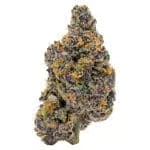
Smoking gets you high in minutes and lets you stop the moment you feel right; edibles take much longer to kick in but can hit harder and last longer because your liver converts THC into a stronger compound. Both carry real health considerations, just different ones. Health Canada and the CCSA both point to the same rule: know your method before you know your dose.
TL;DR:
- Edibles can produce a more intense and longer-lasting high than smoking because of the liver conversion of THC into 11-hydroxy-THC, which crosses the blood-brain barrier more efficiently.
- The full effect of edibles may take up to four hours to manifest, increasing the risk of accidental overconsumption if doses are repeated prematurely.
- Smoking remains the least damaging method for lung health but still poses cardiovascular and cognitive risks similar to edibles, with no method eliminating dependence potential.
- Dosing edibles should start at 2.5 mg THC and wait at least four hours before consuming more, to prevent severe over-intoxication.
- For immediate relief, smoking is preferable, while edibles suit longer, sustained effects if used with patience and proper dosing.
Table of Contents
- Edibles vs smoking effects: onset, duration and metabolism compared
- Health risks and physiological effects: lungs, heart, brain and long term concerns
- Dosing and harm reduction: safe rules for edibles and smoking
- How to choose between edibles and smoking for your situation
- Montrose Cannabis perspective and author credentials
- What the research actually tells us about this choice
- Find your method with Montrose Cannabis
- Sources
- FAQ
Edibles vs smoking effects: onset, duration and metabolism compared
The gap between these two methods starts with basic chemistry, and it’s bigger than most people expect. When you smoke, THC crosses from your lungs into your bloodstream almost immediately. You’ll typically feel the first effects within a few minutes, with a peak arriving inside 30 minutes. Edibles work on a completely different clock: THC has to survive your stomach, pass through your liver, and enter circulation before you feel anything, a process that can take up to four hours for full effect according to Health Canada’s guidance on lowering cannabis risks.
That waiting window is where most bad edible experiences begin. Someone eats a gummy, feels nothing after 30 minutes, eats another, and then gets hit by both doses at once, right around the 90-minute mark.
Here’s the side-by-side breakdown:
- Onset (smoking): Seconds to a few minutes; effects register almost as fast as you inhale.
- Onset (edibles): Anywhere from 30 minutes to 2 hours, sometimes longer depending on your stomach contents.
- Peak (smoking): Usually within 10 to 30 minutes of your last inhale.
- Peak (edibles): Often between 2 and 4 hours after ingestion.
- Duration (smoking): Most effects fade within 1 to 3 hours, with mild residual impairment possible beyond that.
- Duration (edibles): Effects commonly run 4 to 8 hours, and some users report lingering effects well into the next day.
The reason edibles can feel so much stronger than the label suggests comes down to one specific molecule: 11-hydroxy-THC. When your liver metabolizes THC, it converts a portion into this compound, which crosses the blood brain barrier more efficiently and produces a more intense, sometimes more sedating high than the THC you inhale when smoking. The CCSA’s comparison of inhaling versus ingesting cannabis lays this out clearly: smoked THC reaches your brain largely unchanged, while edible THC arrives partly transformed into something your body responds to differently.
This is exactly why a milligram of edible THC and a puff of smoked THC aren’t interchangeable, no matter how tempting the math looks on paper. The CCSA specifically warns against treating mg-to-mg conversions as reliable, because the liver-conversion effect changes how much of that dose actually reaches your brain and how it behaves once it’s there. A 10 mg edible isn’t “equal” to some fixed number of puffs from a joint. It’s a different chemical experience layered on top of a different timeline.
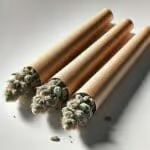
Picture two people trying THC for the first time. One smokes a small amount from a low-THC pre-roll: they feel a gentle lift within five minutes, decide that’s enough, and stop. The other eats a standard 10 mg edible, feels nothing for an hour, gets impatient, and then experiences a wave of intense, body-heavy euphoria two hours later that lasts well into the evening. Same cannabinoid, wildly different rides. Neither experience is “wrong,” but only one of them offered a real-time chance to adjust.
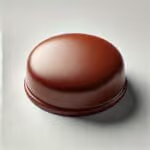
Your own biology adds another layer of unpredictability. Product format, how full your stomach is, your personal metabolism, and any medications you’re taking all influence how strong an edible’s labelled dose actually feels once it’s working through your system. Two people eating the identical 5 mg chocolate square can end up in noticeably different places an hour later. Smoking gives you feedback almost instantly, which makes it easier to stop before you overshoot. Edibles ask you to commit to a dose before you know how your body will respond to it, which is the single biggest behavioural difference between the two methods.
Health risks and physiological effects: lungs, heart, brain and long term concerns
Route matters most for one organ in particular: your lungs. Smoking anything, cannabis included, exposes airway tissue to combustion byproducts, tar, and particulate matter. Health Canada explicitly flags smoking as likely the most hazardous method for lung health, and regular smokers report bronchitis-like symptoms, chronic cough, and increased phlegm production at rates comparable to what’s seen with tobacco smoke. Edibles sidestep that risk entirely since there’s no smoke to inhale, but that doesn’t mean they’re risk-free. They simply trade a respiratory concern for a dosing concern.
Cardiovascular effects show up regardless of method. Both smoked and edible cannabis can raise your heart rate and shift your blood pressure, and Health Canada’s clinical guidance specifically advises anyone with existing heart disease to talk to a doctor before using cannabis in any form. This isn’t a minor caveat. Research reported through UCSF points to associations between chronic cannabis use, regardless of route, and vascular dysfunction, which reinforces that frequent users with any cardiac risk factors should treat both methods with real caution rather than assuming edibles are the “gentler” choice.
Quick fact: Health Canada lists smoking as carrying the highest lung-related risk among consumption methods, while edibles carry no combustion risk but a documented delayed-onset risk that increases the odds of accidental redosing.
Cognitive and psychological effects also differ by method mostly through timing and intensity rather than kind. Both routes can produce impaired attention, short-term memory disruption, anxiety, and dizziness, but the delayed and often stronger nature of an edible high means those effects can arrive unexpectedly and last considerably longer. Younger people, pregnant individuals, and anyone with a family history of psychosis face elevated risk with either method and should approach cannabis use with particular caution, ideally after speaking with a healthcare provider.
A few points worth keeping in mind about the bigger picture:
- Long-term, heavy use of either method carries a real risk of dependence, and that risk isn’t eliminated just because you switched from smoking to edibles.
- Chronic smoking specifically adds respiratory disease risk on top of general cannabis risks.
- Edibles remove the smoke exposure problem but don’t remove cardiovascular, cognitive, or dependence concerns.
- Mixing cannabis, in any form, with alcohol or sedatives amplifies impairment and raises overdose-like risk substantially.
If someone experiences extreme confusion, severe anxiety, hallucinations, or repeated vomiting after using cannabis, treat it as a potential poisoning event. Health Canada’s consumer guidance recommends contacting poison control or emergency services immediately when symptoms are severe, regardless of whether the cannabis was smoked or eaten.
Dosing and harm reduction: safe rules for edibles and smoking
Getting this right isn’t complicated, but it does require patience, especially with edibles.
- Start at 2.5 mg THC for edibles. Health Canada’s guidance recommends this as a sensible starting amount, even though many packaged products contain up to 10 mg per package.
- Wait up to four hours before considering more. This is the single rule that prevents most overconsumption events, because it accounts for the edible’s full delayed onset window rather than the first signs you feel.
- With smoking or vaping, start with one or two small puffs of a low-THC product. Give yourself a few minutes to gauge the effect before taking more, since feedback here is nearly immediate.
- Avoid deep inhalation and breath holding. These habits increase particulate deposition in your lungs and raise respiratory injury risk without actually improving how high you get.
- Account for what changes your dose response. A full stomach, your personal metabolism, any medications you’re taking, your existing tolerance, and the product’s CBD to THC ratio can all shift how strong a dose feels, sometimes significantly.
- Store edibles in child-resistant, clearly labelled packaging, locked away from children and pets. Edibles often look like ordinary food or candy, which makes secure storage a genuine safety requirement rather than a suggestion.
Reading a THC percentage or milligram count on a label only tells part of the story, since your own chemistry does the rest of the work; our breakdown of THC percentage labels walks through how to interpret those numbers realistically.
Pro Tip: Treat your first try with a new product, whether it’s a new edible brand or a new strain you’re smoking, as a planned trial session rather than a casual Friday night decision. Pick a low dose, choose a time when you have nowhere else to be for the next several hours, and have someone sober around if you’re going anywhere near a higher dose than usual.
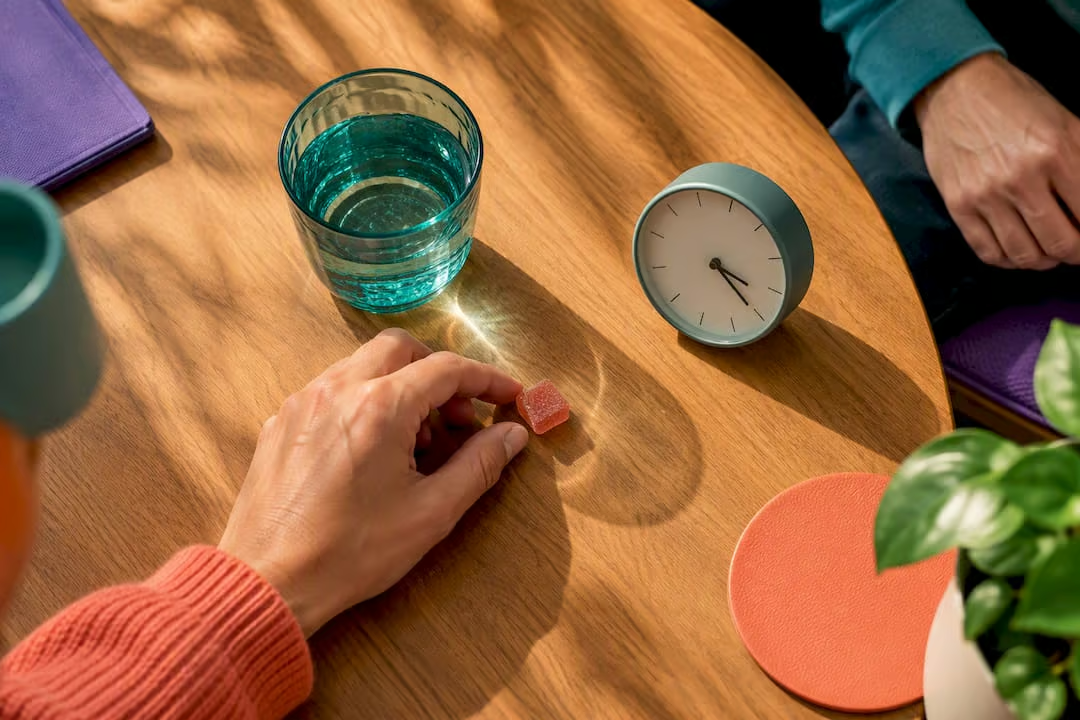
Curious how the actual timeline plays out once you’ve eaten something? Our guide on how long edibles take to kick in walks through the full window minute by minute.
How to choose between edibles and smoking for your situation
The right method depends less on preference and more on what you actually need in that moment. If you’re looking for immediate relief, smoking wins by a wide margin since you’ll know within minutes whether you’ve had enough. If you need sustained relief that carries you through several hours, an edible does that job better, provided you respect the waiting window.
A few common scenarios make the decision clearer:
- Sudden pain, nausea, or acute stress: Inhalation is the more practical choice because you can titrate in real time and stop the moment you feel adequate relief.
- Insomnia or a long evening you want to stay relaxed through: A low-dose edible, taken with enough lead time before bed, tends to outperform smoking for sustained effect.
- Social settings where discretion matters: Edibles produce no smoke and no smell, which makes them the quieter option in shared spaces.
- Concern about lung health: Edibles remove combustion entirely from the equation, which matters if you already have respiratory issues or simply want to protect your lungs long term.
- First time trying a new product or method: Choose the lowest available dose, set a specific time window with nothing else planned, and keep a sober person nearby if you’re stepping outside your usual tolerance.
Our comparison of vaping versus smoking is worth a read if lung health is the deciding factor for you, since it covers a middle ground between combustion and edibles.
Montrose Cannabis perspective and author credentials
This guide was written by Nick, who covers consumption method comparisons regularly for Montrose Cannabis, including deep dives into vaping versus smoking, THC versus CBD edible dosing, and edible onset timing.
The article is based on information from a retailer that offers recreational and medical cannabis products, including flower, vapes, extracts, and edibles, with fast local delivery in parts of Ontario, and is well rated by its customers. That means this article comes from a business with a direct stake in cannabis retail, and it’s written with that transparency upfront. Nothing here replaces professional medical advice. If you have a cardiac condition, are pregnant, or have a personal or family history of psychosis, speak with a healthcare provider before using cannabis in any form.
What the research actually tells us about this choice
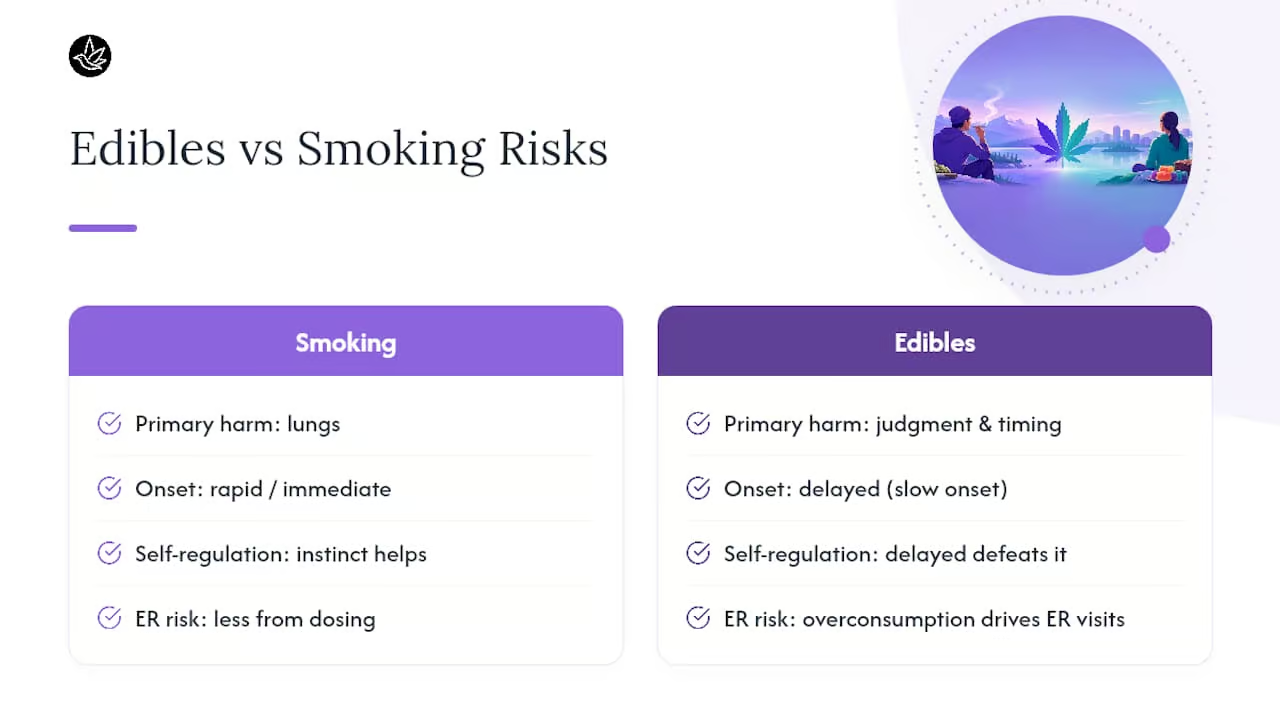
The conventional wisdom treats this as a simple tradeoff: smoking harms your lungs, edibles are the “safer” alternative. That framing undersells the real story. Edibles don’t reduce cannabis risk, they relocate it, from your respiratory system to your judgment and timing. The overconsumption events that send people to emergency rooms are almost always an edibles problem, not a smoking problem, precisely because the delayed onset defeats the instinct to self-regulate that makes smoking relatively forgiving.
What gets underrated is how much the 11-hydroxy-THC conversion changes the actual experience, not just the timeline. People plan their edible dose like they’re ordering from a menu, when it behaves more like a chemistry experiment their own liver runs without their input. If you take one thing from this comparison, prioritize the four-hour wait rule over everything else. It’s the single habit that prevents the worst outcomes, and it costs you nothing but patience.
— Nick
Find your method with Montrose Cannabis
Once you know whether you’re chasing fast relief or a longer, sustained experience, the next step is picking a product that actually matches it, and that’s where Montrose Cannabis becomes useful rather than just informative. We stock a curated range of craft flower, pre-rolls, vapes, and edibles from top-tier growers, so whether you’re titrating carefully with a low-THC pre-roll or starting at a cautious 2.5 mg with an edible, you’re working with product that’s clearly labelled and consistently sourced. Delivery in some regions typically takes about one hour, which matters when you’ve decided today is the day you’re trying something new and don’t want to wait around for it.

If edibles are your next step, our THC versus CBD edibles guide will help you pick a starting product that fits the dosing rules covered above. Ready to shop? Browse the full Montrose Cannabis catalogue of flower, pre-rolls, vapes, extracts, and edibles, and place an order for one-hour delivery in Durham Region and the GTA.
This article is general information, not a substitute for advice from a qualified doctor. Consult a qualified healthcare professional about your own circumstances before acting on anything here.
Sources
- Cannabis: Inhaling vs Ingesting (CCSA infographic)
- Cannabis: lower your risks (Health Canada)
- Whether it’s smoking or edibles, marijuana is bad for your heart (UCSF news, 2025)
FAQ
Is it worse to eat edibles or smoke cannabis?
Neither is universally “worse,” they carry different risks. Smoking exposes your lungs to combustion byproducts, while edibles avoid that but carry a higher risk of accidental overconsumption because effects take up to four hours to fully develop.
How strong is a 10 mg edible compared to a joint?
There’s no reliable direct conversion because your liver transforms a portion of edible THC into 11-hydroxy-THC, a compound that can feel considerably more intense than smoked THC, according to CCSA’s comparison. A 10 mg edible can feel noticeably stronger and last far longer than a joint delivering a comparable amount of THC.
Are gummies as effective as smoking for relief?
They can be, but on a much slower timeline. Gummies and other edibles take up to two hours to peak and can provide relief lasting 4 to 8 hours, while smoking works within minutes but fades faster, typically within 1 to 3 hours.
Are edibles or smoking worse for your brain?
Both can impair attention, memory, and mood while active, but edibles carry higher risk of an unexpectedly intense or prolonged cognitive effect due to delayed onset and the 11-hydroxy-THC conversion. Chronic heavy use of either method, per Health Canada’s clinical guidance, carries dependence and cognitive risk over time, so neither method gets a clean pass.