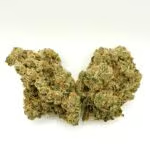
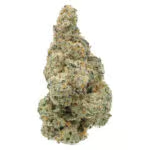
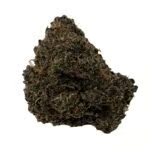
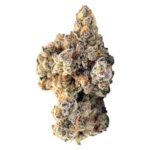
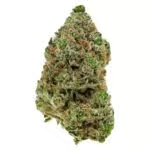
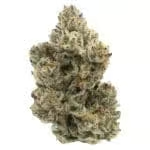
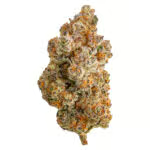
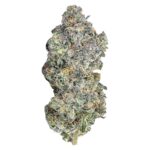
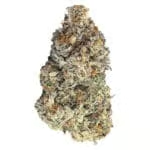
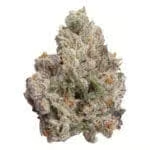
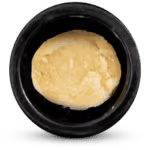
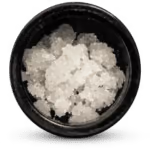
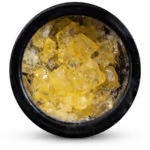
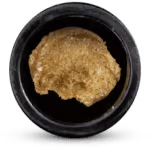
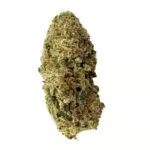
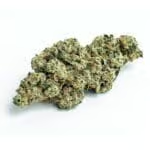
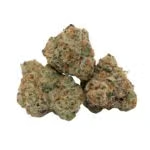
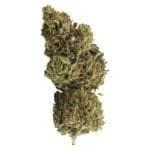
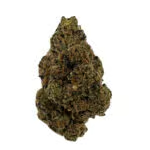
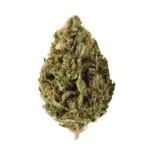
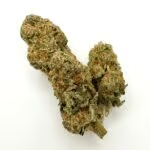
Neither is better across the board. Indoor cannabis tends to be tighter, denser and more consistent from batch to batch, while outdoor cannabis tends to be sun-grown, more aromatic and easier on the wallet. The right pick depends on what you want from a jar: a steady, polished bud or a fuller aroma at a lower price. Below, we break down what each term actually means, what the science says, what to check on a label in Ontario, and how to choose.
TL; DR
- Intérieur flower is grown in a controlled space, usually a grow room or tent. Expect consistent, dense buds and repeatable batches.
- Extérieur flower is grown under natural sunlight. Expect bigger, looser buds, often with a more complex aroma, and generally lower production costs.
- Research on matched plants points to richer terpene diversity outdoors, but the grower’s skill matters as much as the setting.
- Judge a jar by its label, harvest date, lot number and terpene info, not by a single word on the front.
- Not sure? Start with one of each in the same strain family and compare. That’s the quickest way to find your preference.
Table des Matières
- What indoor and outdoor cannabis actually mean
- How they differ in the jar
- What the science says about potency and terpenes
- Price: why outdoor is often cheaper
- What to check on the label in Ontario
- Smell, discretion and the neighbours
- Our perspective: judge the grower, not just the grow room
- How to choose: a quick decision guide
- Try both with us
- QFP
- Références
What indoor and outdoor cannabis actually mean
The terms are simple. According to the University of Saskatchewan’s gardening program, indoor cannabis is grown in a dedicated space, most likely a grow tent, while outdoor cannabis is grown outside a house or other building using natural sunlight, either in containers or directly in the ground.
That difference in setting changes almost everything the grower can control:
- Lumière: indoors, it’s a fixture on a timer. Outdoors, it’s the sun and the season.
- Climat: indoors, temperature and humidity are adjusted. Outdoors, they follow the weather.
- Période de récolte : indoors, growers can run several cycles a year. Outdoors, there’s one main harvest in the fall in most of Canada.
- Espace: outdoor plants can spread out and get large. Indoor plants are shaped and trained to fit under the lights.
You’ll also see a third term on shelves: greenhouse. It sits between the two, using sunlight with some climate control. We focus on indoor and outdoor here because that’s the comparison most people search for, but if you see “greenhouse” on a product page, think of it as a middle ground.
How they differ in the jar
Most shoppers don’t care about grow methods in theory. They care about what they see, smell and feel. Here’s the general pattern, with the caveat that individual producers vary a lot.
| Ce que vous remarquez | Intérieur | Extérieur |
|---|---|---|
| structure du bourgeon | Tighter, denser, heavier for its size | Larger, looser, often more irregular |
| lustrée | Often tidy and uniform, sometimes with vivid colours | Natural, less uniform |
| Arôme et saveur | Can be excellent, but sometimes more muted | Often fuller and more layered |
| Constance d'un lot à l'autre | High, because conditions are controlled | Varies with the season and weather |
| Prix typique | Meilleure performance du béton | Souvent inférieur |
| Usage commun | Fleurs séchées de première qualité | Dried flower, plus a lot of extraction material |
Those are tendencies, not rules. A skilled outdoor grower can produce a jar that beats a mediocre indoor one, and the reverse is just as true. What a plant gets in terms of genetics, drying and curing, and storage counts for as much as where it grew.
What the science says about potency and terpenes
You’ll hear that indoor weed is “stronger” and outdoor weed “smells better.” The research is more nuanced.
Terpenes: outdoors tends to show more variety
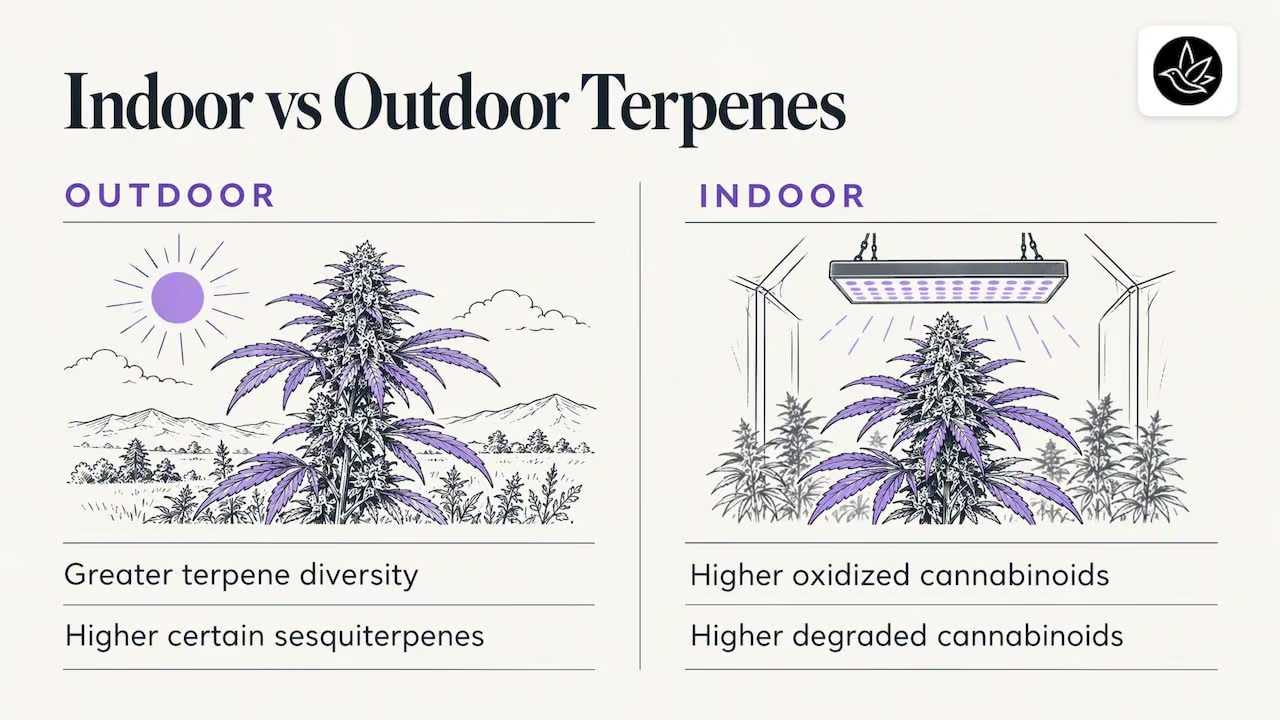
A 2023 study compared genetically identical cannabis plants grown indoors and outdoors. It found outdoor plants showed greater terpene diversity, including higher levels of certain sesquiterpenes. The same work observed higher levels of oxidized and degraded cannabinoids in the indoor-grown samples, which the researchers suggest may be linked to a weaker “oxidation shield” when overall terpene expression is lower in controlled environments.
In plain language: with the same genetics, the sun-grown plants made a wider range of aroma compounds. That fits what many people notice when they open a jar of outdoor flower.
Potency: light matters, but it isn’t the whole story
Higher THC is often credited to indoor growing. A Canadian plant-science study that tested lighting intensity found that more light increased flower yield and quality, had no effect on cannabinoid potency, and had only minor effects on terpene potency. So more light isn’t a shortcut to a stronger bud. Genetics, plant health, harvest timing and post-harvest handling all play a part.
What this means for you: don’t pick a jar on the assumption that “indoor equals stronger.” Read the tested THC and CBD numbers on the label, and remember that a higher percentage doesn’t automatically mean a better experience. Terpenes shape how a strain feels and tastes, and total potency is just one input.
Why indoor flower can look so polished
Indoor growers control light, temperature and humidity through the entire cycle. The same Canadian study notes that indoor lighting lets growers manipulate crop shape and yield, though lighting accounts for about 60% of the total energy used in indoor production. That level of control is why indoor flower tends to look uniform, and it’s also why it costs more to produce.
Price: why outdoor is often cheaper
Production cost is the biggest driver of the price gap. Back in 2019, Ontario outdoor grower 48North said it could produce flower for about 25 cents a gram, compared with around $2 a gram for indoor growers. Its CEO argued that cheaper outdoor growing was key to competing with the illicit market on price. Those are 2019 figures and shelf prices today are shaped by many other things, but the basic logic still holds: sunlight is free, and grow lights and climate systems aren’t.
A Crops & Soils magazine overview of Canadian cultivation explains how the market splits. Most indoor-grown cannabis goes to the high-end flower market, because it allows several year-round harvests of consistent bud, while much of the growth in outdoor acreage is for oil extraction. That’s worth knowing: if you’re shopping for concentrates or extracts, the plant material may well have come from an outdoor field. If you want to understand the product side of that, our guide to choosing the right cannabis extract in Canada covers the common types.
Other things that affect what you pay on the shelf:
- Brand and positioning (craft versus value)
- Package size, since larger formats usually cost less per gram
- THC level and strain popularity
- Excise duty and provincial markups, which apply regardless of growing method
What to check on the label in Ontario
The growing method is only one piece of the story, and it isn’t always spelled out. What you can rely on is the regulated information on the package. Health Canada says legal cannabis packages must carry the standardized cannabis symbol, mandatory health warning messages, child-resistant plain packaging and labelling, and an excise stamp.
Beyond those basics, here’s what we look at when comparing two jars:
- THC and CBD content. Compare tested figures, not marketing language. Our guide to THC limits, labels and laws in Canada explique comment les lire.
- Terpene information. If the producer lists dominant terpenes, that’s useful for predicting aroma and effect. It matters even more than the grow method.
- Harvest or packaged date. Fresher flower generally smells better, whichever way it was grown.
- Lot number. It lets a batch be traced. See what a cannabis lot number is and why it matters.
- Producer description. Many producers mention whether a strain is indoor, greenhouse or outdoor grown on their page or packaging. If it isn’t stated, that’s okay, but you can ask.
For a fuller walkthrough of everything printed on a package, read our Canadian cannabis product label guide.

Smell, discretion and the neighbours
One practical difference you may not expect: odour. In Canada, only indoor commercial licence holders are subject to federal odour control requirements. That’s a rule for producers, not consumers, and it doesn’t tell you which jar will smell stronger at home. But if you value a discreet jar, the smell comes down to the strain’s terpene profile and how the flower was stored, so a sealed, well-kept container does more than the grow method.
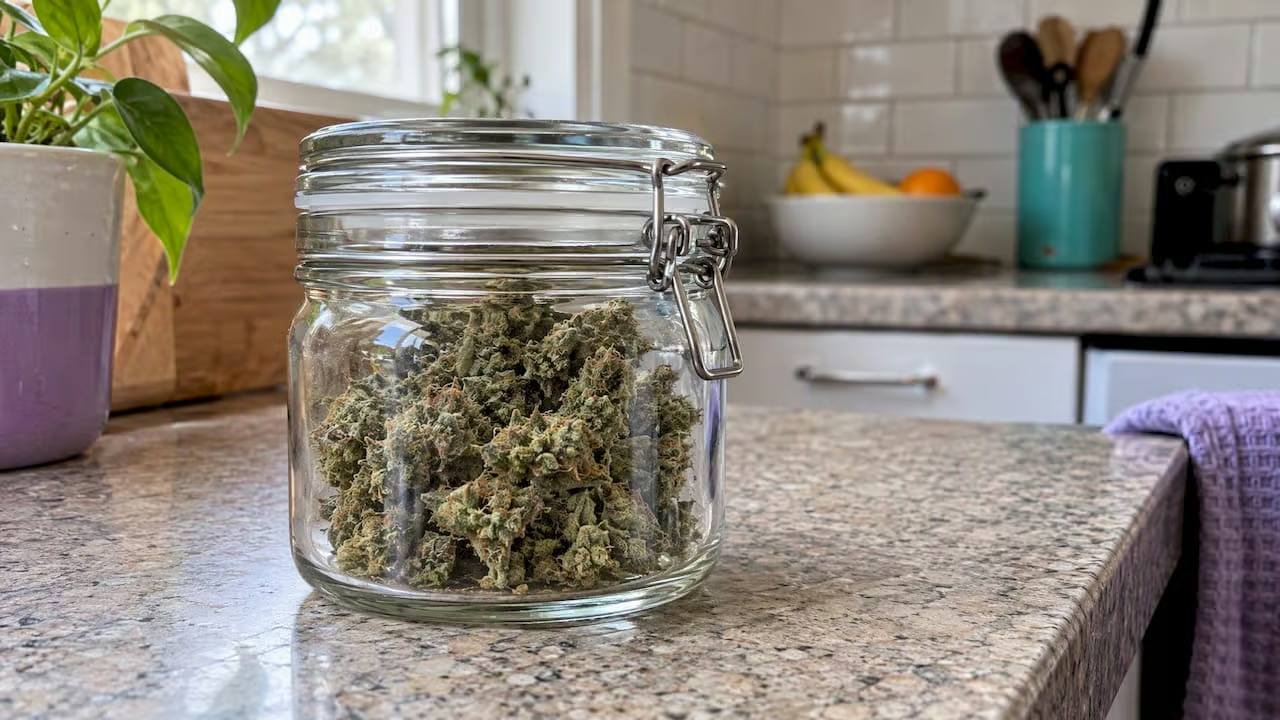
If discretion matters when you order, we’ve written about it in our piece on discreet cannabis packaging in Canada.
Our perspective: judge the grower, not just the grow room
We’re asked about this constantly, usually in the form of “which is better, indoor or outdoor?” Our honest answer is that it’s the wrong first question.
When we curate what goes on our shelves, we look at craft: how the flower was grown, trimmed, dried and cured, how fresh it is, and whether the producer shares clear, detailed product information. We’ve seen outstanding indoor flower and outstanding outdoor flower, and we’ve seen disappointing examples of both. The method shapes the tendencies, but the person behind the plants shapes the result.
So here’s how we’d steer a friend:
- If you want predictability, such as the same experience every time you reorder, indoor is a safe bet because conditions are controlled.
- If you want aroma and value, outdoor deserves a real look. Its fuller terpene character is a big part of the appeal.
- Si vous êtes nouveau, don’t overthink it. Pick a lower-THC option from a producer with good product details, and use the label to guide you.
- Si vous n'êtes pas sûr, compare two jars side by side. You’ll learn more in one evening than from any article, including this one.
We’re also proud of our service side. We offer one-hour delivery across Durham Region and the GTA, and our 4.9-star Google rating tells us customers value fast, reliable and well-explained service. If you have a question about a strain or format, ask us. That’s what we’re here for.
— Nick
How to choose: a quick decision guide
Use this as a starting point and adjust to your own taste.
| Si ce qui vous importe le plus… | Penchez-vous vers | Pourquoi |
|---|---|---|
| Dense, uniform, bag-appeal buds | Intérieur | Controlled conditions give tight, even flower |
| Rich, layered aroma and flavour | Extérieur | Sun-grown plants showed greater terpene diversity in matched-plant research |
| Lowest price per gram | Often outdoor | Lower production costs, as seen in Ontario grower figures |
| lots reproductibles | Intérieur | Year-round cycles and stable conditions |
| Concentrates or infused products | Non plus | Many extraction inputs are outdoor-grown, but quality depends on the producer |
| Smoking or vaping at home with minimal fuss | Non plus | Label details and freshness matter more than grow method |
If you use a vaporizer, flower quality and how it’s heated change the experience too. Our article on vapoter contre fumer du cannabis est une bonne lecture suivante.
Try both with us
The easiest way to settle the debate is to taste it yourself. Browse our dried flower, pre-rolls, vapes and more, where each product page lists the details you need to compare. Pre-rolls are a handy way to sample a few strains without committing to a full jar. If you’re in Durham Region or the GTA, we can bring your order to your door within an hour. Medical orders can also ship across Canada, and our guide to expédition de cannabis médical au Canada explique comment cela fonctionne.
One reminder: you must be of legal age to buy cannabis in Ontario, and you may be asked for ID at delivery.
QFP
Is indoor cannabis better than outdoor?
Not automatically. Indoor flower is usually denser and more consistent, while outdoor flower often has a fuller aroma and costs less to produce. Research on genetically identical plants found greater terpene diversity outdoors, so the better choice depends on your priorities and on the individual grower.
Is indoor weed stronger?
It’s often assumed, but the evidence isn’t that simple. A Canadian study found that increasing light intensity had no effect on cannabinoid potency. Check the tested THC figure on the label rather than relying on the grow method.
Why is outdoor cannabis usually cheaper?
It costs less to grow. Outdoor plants use sunlight instead of electric lighting, and lighting is a major share of the energy used in indoor production. Ontario grower figures from 2019 showed a large gap in per-gram production cost.
How can I tell whether a jar is indoor or outdoor grown?
Start with the producer’s product description, since many state their growing method. The package itself carries the regulated information, such as the cannabis symbol, health warnings and excise stamp, but it won’t always spell out the method. If you’re ordering from us, ask and we’ll help you find out.
Does the growing method matter for edibles and extracts?
Less than you’d think. Much of the outdoor harvest in Canada goes into oil extraction, so many extracts and infused products start with sun-grown plants. What matters more is the producer’s quality control and the tested potency on the label.
Références
- Indoor vs. Outdoor Growing, Gardening at USask
- Comparison of the Cannabinoid and Terpene Profiles, PMC
- Cannabis Yield, Potency, and Leaf Photosynthesis Respond to Light, Frontiers in Plant Science
- At 25 cents a gram to produce, is outdoor-grown cannabis the future? Global News
- Cannabis growing in Canada: An expanding market, Crops & Soils
- Authorized cannabis retailers in the provinces and territories, Health Canada
- Cannabis odours and odour control, Health Canada