Cannabis packaging is defined as the primary and secondary containment system that protects product integrity, communicates regulatory information, and prevents child access. For Canadian cannabis industry professionals, choosing the right container is not a branding exercise. It is a compliance obligation under the Cannabis Act and ASTM D3475 child-resistant standards. This cannabis packaging types list covers every major format used in the Canadian market today, from child-resistant mylar bags to rigid boxes, with cost data, barrier properties, and jurisdiction-specific notes to support your sourcing and investment decisions.
What are the top cannabis packaging types and their key features?
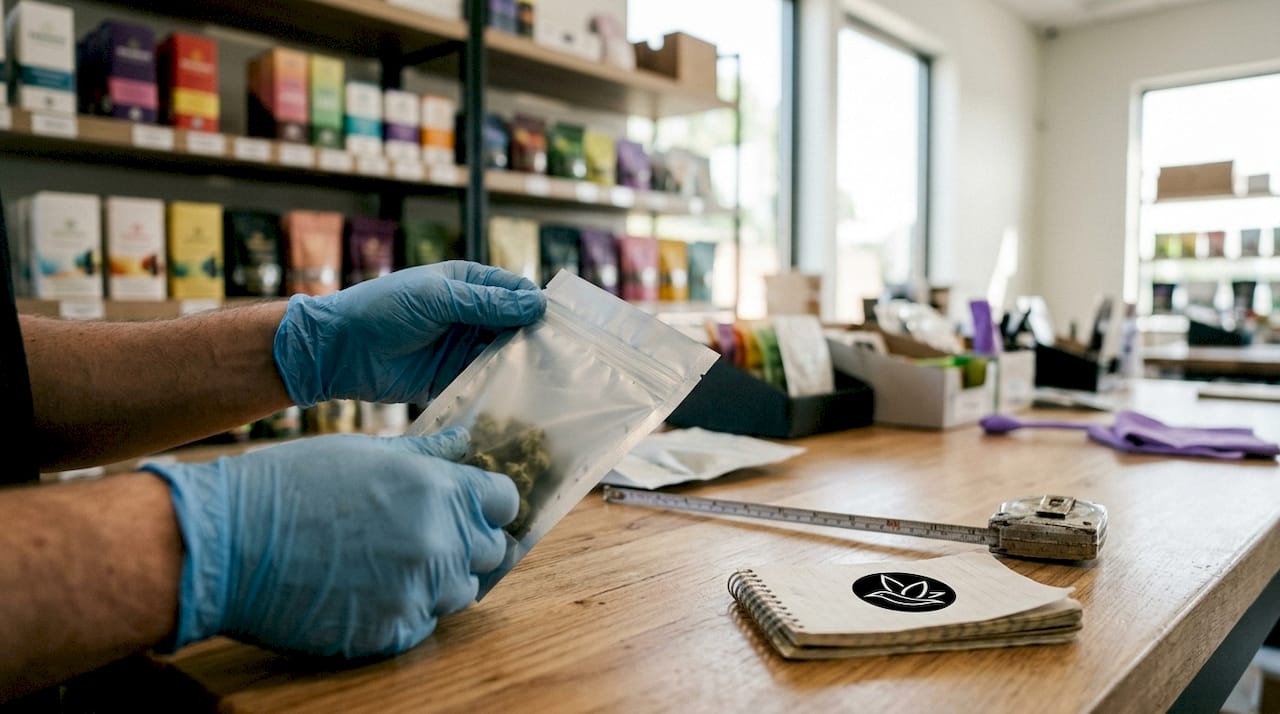
CR mylar bags dominate dispensary shelves, accounting for 60–70% of cannabis packaging volume. At roughly $0.12 per unit, they deliver an outstanding balance of cost, barrier performance, and child-resistant compliance. That price point makes them the default choice for high-volume flower and trim SKUs.
The six formats you will encounter most often are:
- Child-resistant mylar bags. Foil-laminate construction blocks UV light, moisture, and oxygen. The press-and-pull or zipper-lock closure meets ASTM D3475 requirements. Best for flower, shake, and bulk concentrates.
- Pre-roll tubes. Polypropylene or glass tubes with a push-and-turn cap. Pre-roll tubes cost roughly $0.08 per unit, making them the lowest-cost compliant format. Suited to single pre-rolls and small multi-packs.
- Rigid boxes. Chipboard or corrugated construction with a magnetic or tuck-end closure. Rigid boxes start at $2.50 per unit and deliver a premium unboxing experience comparable to consumer electronics. Best for gift sets, premium flower, and high-margin concentrates.
- Glass jars. Borosilicate or soda-lime glass with a child-resistant lid. Glass is chemically inert and preserves terpene profiles better than most plastics. Preferred for craft flower and live resin.
- Metal tins. Aluminium or steel tins with a friction-fit or child-resistant lid. They block light completely and resist crushing. Common for mints, capsules, and small edibles.
- Stand-up pouches. Multi-layer foil pouches with a resealable zipper. They offer strong barrier properties at a lower cost than rigid formats and work well for gummies, chocolates, and infused snacks.
Pro Tip: Always confirm that your chosen format carries a current ASTM D3475 certification for the exact closure configuration you plan to use. Switching from a zipper to a press-lock on the same bag body can void the certification entirely.
| Format | Approx. cost per unit | Best product fit | Key barrier strength |
|---|---|---|---|
| CR mylar bag | $0.12 | Flower, concentrates | UV, moisture, oxygen |
| Pre-roll tube | $0.08 | Single pre-rolls | Crush resistance |
| Rigid box | $2.50+ | Premium flower, gift sets | Brand perception |
| Glass jar | Varies | Craft flower, live resin | Chemical inertness |
| Metal tin | Varies | Capsules, mints | Light, crush |
| Stand-up pouch | Low-mid | Edibles, gummies | Moisture, oxygen |
How packaging materials affect preservation and compliance
The material your packaging is made from determines how well it protects cannabinoids and terpenes over time. Oxygen, moisture, and UV light are the three main degradation pathways for cannabis flower. Each material addresses these threats differently.
- Aluminium foil laminates block virtually all UV light and reduce oxygen transmission to near zero. They are the gold standard for long shelf-life flower and concentrates.
- Clear or frosted plastics (PET, HDPE) offer moderate moisture resistance but allow light penetration. They work for products with a short shelf life or those stored in opaque secondary packaging.
- Glass transmits UV unless tinted amber or cobalt. Amber glass is the preferred choice for preserving terpene-rich products like live rosin and full-spectrum oils.
- Paperboard and chipboard provide no meaningful barrier on their own. They rely on inner liners or foil pouches for product protection.
Active packaging technologies now regulate humidity and oxygen levels inside the container itself. Humidity control packets, oxygen absorbers, and two-way humidity regulators are inserted at the point of fill. These systems are becoming the expected standard for premium flower, particularly in craft and medical segments. For information on how storage conditions interact with packaging choice, the guide on the best way to store cannabis covers the practical side in detail.
Child-resistant certification attaches to the specific closure and configuration tested, not to the material alone. Printing ink applied near a heat seal, or a change in foil thickness, can require full re-testing under ASTM D3475. This is a cost that catches many operators off guard during packaging redesigns.
Pro Tip: If you are sourcing active humidity control inserts for premium flower SKUs, confirm the insert does not interfere with the closure mechanism. Some two-way humidity packets expand slightly when activated and can compromise the child-resistant seal.
How packaging requirements vary by product type and jurisdiction
Cannabis packaging requirements are not uniform. They shift based on product category, provincial rules, and sometimes municipal bylaws. Getting this wrong means pulled product and regulatory penalties.
- Flower. Requires opaque, child-resistant primary packaging in most Canadian provinces. The Cannabis Act mandates plain packaging with standardised font sizes and the cannabis excise stamp. Odour containment is a practical requirement, not just a regulatory one.
- Pre-rolls. Compact, tamper-evident packaging is the standard. A push-and-turn tube satisfies child resistance. Some jurisdictions require both a child-resistant primary container and a separate child-resistant exit bag, so verify your local rules before finalising your format.
- Edibles. Food safety regulations apply alongside cannabis regulations. Packaging must prevent contamination, be resealable where practical, and carry allergen declarations. Stand-up pouches and metal tins are the most common formats.
- Concentrates. Small-volume, high-value products like shatter, budder, and rosin typically use glass jars or silicone-lined containers. Child-resistant lids are mandatory. Secondary packaging is often a rigid box or foil pouch for added protection.
- Capsules and tablets. Blister packs with push-through foil or child-resistant bottles are the standard. These formats align with pharmaceutical packaging norms and are familiar to medical patients.
- Topicals and tinctures. Dropper bottles with child-resistant caps are the norm. Amber glass is preferred for light-sensitive formulations.
- Exit packaging. Dispensary exit bags must be child-resistant in most provinces. Requirements vary by jurisdiction. Some provinces accept a compliant exit bag as the sole child-resistant layer; others require it in addition to compliant primary packaging.
All cannabis packaging must conform to ASTM D3475, but provincial and state-level rules on opacity, resealability, and labelling frequently override the general standard. Verify your compliance stack at the provincial level before committing to a production run. The cannabis lot number guide explains how traceability labelling requirements connect to your packaging decisions.
What professionals should consider when selecting cannabis packaging
Packaging selection is a business decision, not just a compliance checkbox. The right format affects your cost per unit, your shelf presence, and your brand’s perceived value.
- Budget versus brand positioning. Pre-roll tubes at $0.08 per unit are commodity packaging. They signal value, not premium. Rigid boxes at $2.50 per unit signal premium positioning and justify higher retail price points. Know where your product sits in the market before choosing a format.
- Hybrid approaches. A pre-roll tube inside a printed folding carton delivers compliance plus shelf presence at roughly half the cost of a rigid box. Combining a $0.10 tube with a $1.80 carton is a practical middle ground for mid-tier brands.
- Certification maintenance. Any design change to a certified package, including a new print colour near the closure, may require re-testing. Build re-testing costs into your product development budget from the start.
- SKU complexity. Each product format and size may require a distinct certified packaging configuration. Managing multiple SKUs across flower, pre-rolls, and edibles multiplies your compliance overhead quickly.
- Consumer experience. Functional barrier properties outweigh aesthetics for preserving terpene profiles and product potency. A beautiful box that lets moisture in will generate returns and damage your brand faster than plain packaging ever could.
- Sustainability. Recyclable mono-material pouches and FSC-certified paperboard are gaining traction in the Canadian market. Sustainable marijuana packaging is not yet mandated federally, but several provinces are moving toward extended producer responsibility programmes that will affect packaging material choices.
Understanding the full range of cannabis strains in Canada also informs packaging decisions, since different product forms (flower versus concentrate versus edible) demand entirely different container types.
Key takeaways
Child-resistant mylar bags lead the cannabis packaging market by volume because they combine low cost, strong barrier properties, and ASTM D3475 compliance in a single format.
| Point | Details |
|---|---|
| CR mylar bags lead by volume | At $0.12 per unit, they offer the best cost-to-compliance ratio for flower and concentrates. |
| Certification is format-specific | ASTM D3475 certification ties to the exact closure and configuration; any design change may require re-testing. |
| Active packaging is the next standard | Humidity and oxygen control inserts are becoming expected in premium and craft flower segments. |
| Jurisdiction rules override general standards | Provincial mandates on opacity, resealability, and exit bags vary; always verify locally before production. |
| Hybrid formats balance cost and brand | A tube inside a printed carton delivers compliance and shelf presence at roughly half the cost of a rigid box. |
Why I think most operators underestimate packaging compliance risk
Packaging is the part of the cannabis business that looks solved until it isn’t. I’ve watched brands invest heavily in genetics, extraction equipment, and retail relationships, then get caught flat-footed when a packaging redesign triggered a re-certification requirement they hadn’t budgeted for.
The part that surprises people most is how specific child-resistant certification really is. It doesn’t cover “a zipper bag.” It covers the exact bag, with the exact closure, printed in the exact way that was submitted for testing. Change the ink coverage near the seal and you may be starting over. That’s not a technicality. That’s a production delay and a real cost.
The other thing I’d push back on is the instinct to lead with aesthetics. A beautiful package that lets in moisture or loses its child-resistant function within a few open-and-close cycles is a liability. Functional barrier properties protect your product and your licence. The look can follow once the function is locked in.
Active packaging technology is where I’d be putting attention right now. Humidity control inserts are no longer a premium differentiator. They’re becoming the baseline expectation in craft and medical segments. Operators who build that into their packaging spec now will avoid a costly retrofit later.
The Canadian regulatory environment is also tightening, not loosening. Staying current with provincial mandates, especially around exit bags and opacity requirements, is ongoing work. Build a compliance review into your packaging calendar at least once a year.
— Nick
Packaging knowledge, products worth knowing about
Cannabis packaging decisions don’t happen in isolation. They connect directly to the products you’re sourcing, the formats you’re selling, and the compliance obligations you’re managing.
Montrosecannabis carries a curated selection of craft cannabis products across flower, concentrates, pre-rolls, and edibles, all sourced from compliant, licensed producers. If you’re researching packaging formats to match specific product categories, browsing the cannabis seeds Canada catalogue gives you a practical sense of how product types map to packaging requirements. Montrosecannabis also stocks products like pre-roll formats and concentrate options that illustrate real-world packaging choices made by licensed producers operating under Canadian regulations.
FAQ
What is the most common cannabis packaging type?
Child-resistant mylar bags are the most common format, representing 60–70% of dispensary packaging volume due to their low cost and strong barrier properties.
What does ASTM D3475 mean for cannabis packaging?
ASTM D3475 is the standard that defines child-resistant packaging performance. All cannabis primary packaging in Canada must meet this standard, and certification is specific to the exact closure and configuration tested.
Do Canadian dispensaries need child-resistant exit bags?
Requirements vary by province. Some jurisdictions require a child-resistant exit bag in addition to compliant primary packaging; others accept the exit bag alone. Always confirm your provincial mandate before finalising your compliance approach.
What packaging format works best for cannabis edibles?
Stand-up pouches and metal tins are the most common formats for edibles. Both provide moisture and oxygen barriers, support resealable closures, and accommodate food safety labelling requirements alongside cannabis regulations.
How does packaging affect cannabis freshness?
Packaging with strong UV, moisture, and oxygen barriers preserves terpene profiles and cannabinoid potency. Active packaging inserts that regulate humidity and oxygen levels are becoming the standard for premium and craft flower products.