
What is a cannabis strain catalogue?
A cannabis strain catalogue is a systematic, organised collection of cannabis strains that details each variety’s genetic lineage, cannabinoid profile, terpene content, and typical effects. Think of it as the cannabis equivalent of a wine reference guide. Where a sommelier uses flavour notes and grape variety to guide a pairing, a strain catalogue gives you the chemical and sensory data you need to match a product to your desired experience. Whether you’re new to cannabis or a seasoned consumer, knowing how to read a strain catalogue is the single most reliable way to make confident, consistent purchases.
What is a cannabis strain catalogue and why does it matter?
A cannabis strain catalogue is the industry’s standard tool for organising product information beyond a simple name and price. The term “strain catalogue” is used interchangeably with “strain guide” or “strain database,” but all three refer to the same core concept: a structured reference that lets you compare strains by their actual chemistry, not just their marketing label.
The catalogue matters because cannabis effects are driven by specific compounds, not by a name printed on a package. Two products with identical names can produce completely different experiences depending on who grew them and how. A well-built catalogue cuts through that uncertainty by anchoring every strain to verifiable data. Montrosecannabis builds its product listings around this principle, pairing curated craft cannabis with the lab-backed details consumers need.

Regulated Canadian cannabis products must meet Health Canada’s labelling standards, which require THC and CBD content to appear on every package. A strain catalogue goes further by aggregating that data across dozens or hundreds of products, making comparison fast and practical.
What information does a cannabis strain catalogue include?
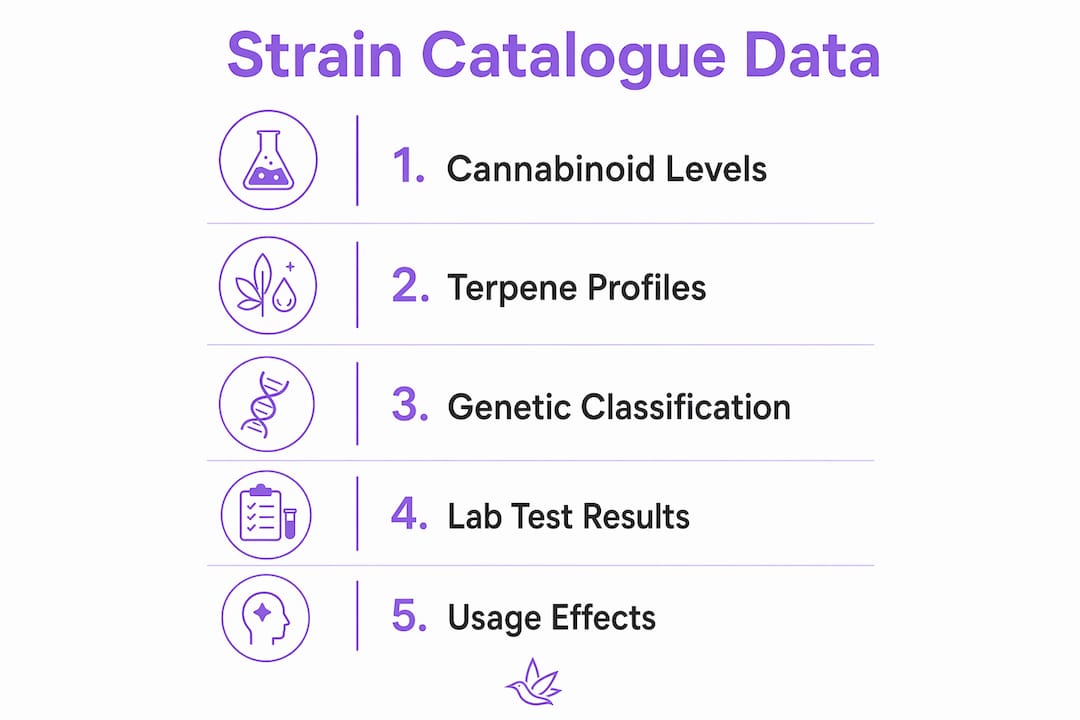
A strain catalogue typically organises products across four core data categories: cannabinoid levels, terpene profiles, genetic classification, and sensory descriptors.
Cannabinoid levels
THC and CBD percentages are the most visible numbers in any catalogue. Regulated cannabis flower typically contains 15–30% THC, but above roughly 25%, additional THC often increases anxiety rather than therapeutic benefit. That means chasing the highest number on the shelf is not always the best call. CBD content matters equally. A strain with a balanced THC:CBD ratio produces a noticeably different experience than a high-THC, low-CBD product. Some catalogues also list secondary cannabinoids like CBN, CBG, and CBC, which contribute to the overall effect through what researchers call the entourage effect.
Terpene profiles
Terpenes are the aromatic compounds that give each strain its distinctive scent and flavour. They also shape the effects more meaningfully than the indica or sativa label ever could. The most common terpenes you’ll see listed in a catalogue include:
- Myrcene: earthy, musky aroma; associated with relaxing, sedating effects
- Limonene: citrus scent; linked to uplifting and mood-enhancing experiences
- Pinene: fresh pine aroma; associated with alertness and mental clarity
- Caryophyllene: spicy, peppery notes; the only terpene that also binds to cannabinoid receptors
- Linalool: floral, lavender scent; associated with calming and stress-reducing effects
Genetic classification and additional parameters
Most catalogues still use indica, sativa, and hybrid labels as a starting point for genetic lineage. These categories describe plant structure and growth patterns more accurately than they predict effects. A quality catalogue pairs genetic classification with cannabinoid ratios and terpene dominance for a complete picture. Some catalogues also include flowering time, yield, and growing difficulty for consumers who want to explore cannabis seeds and cultivation.
| Data point | What it tells you |
|---|---|
| THC % | Potency level and likely intensity of psychoactive effect |
| CBD % | Moderating influence on THC; therapeutic potential |
| Dominant terpene | Primary aroma and key effect direction |
| Genetic class | Indica, sativa, or hybrid lineage as a rough reference |
| Secondary cannabinoids | Additional nuance in the overall experience |
Pro Tip: When scanning a catalogue, look at the dominant terpene before you look at the THC number. The terpene profile is a more reliable predictor of how a strain will actually feel.
Are strain names reliable in a cannabis strain catalogue?
Strain names are marketing labels, not scientific standards. The same strain name from two different licensed producers can carry markedly different cannabinoid and terpene profiles. One grower’s “Blue Dream” might test at 18% THC with myrcene as the dominant terpene. Another’s might test at 24% THC with limonene leading the profile. The name is the same. The experience is not.
This happens because cannabis strain names carry no trademark protection or regulatory standardisation. Any producer can call a product by any name. The only reliable anchor is the batch-specific Certificate of Analysis (COA), a lab report that confirms the actual chemical composition of that specific lot.
Here is how to protect yourself from name-based assumptions:
- Request or locate the COA. Every reputable retailer either displays lab results on the product page or provides them on request. A retailer that won’t share terpene results is a sign to shop elsewhere.
- Compare profiles, not names. If you loved a previous purchase, note its THC percentage, CBD percentage, and dominant terpene. Search the catalogue for those parameters rather than the name.
- Check the lot number. Cannabis lot numbers link a product to its specific batch and lab test. Montrosecannabis explains how lot numbers work and why they matter for safe, consistent buying.
- Treat genetic labels as a starting point. Indica and sativa classifications give you a rough genetic reference, but cannabinoid ratios and dominant terpenes are far better predictors of actual effects.
“Strain names are best used as an initial genetic lineage indicator. Lab-tested chemical profiles provide the detailed, actionable data that actually guides consistent purchasing decisions.”
How to use a strain catalogue to find the best cannabis strains
Using a strain catalogue well is a skill. The most effective selection process follows four steps: define your target effect, choose your consumption format, check the terpene and cannabinoid profile, then verify potency. This structured approach narrows a catalogue of hundreds of products down to two or four strong candidates.
- Define your target effect. Are you looking to relax, sleep, focus, socialise, or manage discomfort? Write it down before you open the catalogue. This single step eliminates most options immediately.
- Choose your consumption format. Flower, pre-rolls, concentrates, edibles, and oils all deliver cannabinoids differently. Onset time and duration vary significantly. Check the dispensary menu guide to understand how format affects your experience before filtering by strain.
- Filter by terpene profile. Use the catalogue’s terpene filter if one is available. If you want relaxation, look for myrcene or linalool dominance. If you want energy and focus, look for limonene or pinene. Terpene aromas correlate statistically with physiological effects, which means your nose is actually a useful tool here. Smell the product if you can. Your instinctive scent preference often aligns with what your body needs.
- Verify potency against your experience level. Beginners should start below 10% THC, and a balanced THC:CBD ratio helps moderate the psychoactive effect. Experienced consumers can use higher THC products confidently, but the 25% ceiling is worth keeping in mind. Above that threshold, the added potency rarely improves the experience and can increase anxiety.
Pro Tip: Keep a personal consumption log. Record the strain name, dominant terpene, THC and CBD percentages, dose, and your effect rating after each session. After 10–15 entries, clear patterns emerge that make catalogue searches far more accurate.
What types of cannabis strain catalogues are available in 2026?
Cannabis strain catalogues range from basic retailer product pages to sophisticated online databases with filtering tools. Understanding the types helps you choose the right resource for your needs.
Retailer catalogues are the most practical starting point. These are the product listings on a licensed retailer’s website, typically showing THC and CBD percentages, strain type, and sometimes terpene data. Quality retailer catalogues integrate lab results directly into each product listing. Montrosecannabis takes this approach, displaying detailed product information alongside its curated selection of craft cannabis.
Standalone strain databases offer broader coverage. These are independent platforms that aggregate data from multiple producers and allow filtering by effect, cannabinoid content, terpene profile, and user ratings. The best databases include user reviews alongside lab data, which adds a practical, real-world layer to the chemical information. Some also include cannabinoid type breakdowns that explain how different compounds interact.
Key features to look for in any catalogue include:
- Full terpene breakdown, not just THC and CBD
- Batch-specific lab results or COA access
- Filtering by effect, terpene, or cannabinoid ratio
- User reviews tied to verified purchases
- Clear genetic classification with hybrid percentage where available
The gap between a basic catalogue and a well-built one is significant. A basic catalogue tells you a product is “indica, 22% THC.” A quality catalogue tells you it’s myrcene-dominant, carries a 20:1 THC:CBD ratio, and has a COA from a licensed Canadian lab. The second version gives you something you can actually use.
Key takeaways
A cannabis strain catalogue is only as useful as the chemical data behind it. Terpene profiles and cannabinoid ratios, not strain names, are the reliable foundation for consistent, satisfying purchases.
| Point | Details |
|---|---|
| Catalogue definition | A strain catalogue is an organised reference listing genetic, cannabinoid, and terpene data for each product. |
| Terpene priority | Dominant terpene profile predicts effects more reliably than indica or sativa classification. |
| Strain name limits | The same strain name from different growers can have completely different chemical profiles. |
| COA is essential | Always verify purchases against a batch-specific Certificate of Analysis for accuracy and safety. |
| Log your sessions | Recording 10–15 consumption entries helps identify the terpene and THC levels that work best for you. |
Why I think most consumers are using strain catalogues the wrong way
The first thing most people do when they open a strain catalogue is sort by THC percentage, highest to lowest. I get it. It feels logical. Higher number, stronger effect. But that’s not how cannabis actually works, and it’s the single habit that leads to the most disappointing purchases I hear about.
The real value of a strain catalogue is in the terpene column, not the THC column. When I started paying attention to dominant terpenes instead of potency numbers, my purchasing accuracy improved dramatically. A limonene-dominant strain at 18% THC consistently delivered a better energised, social experience for me than a myrcene-dominant strain at 24% THC. The numbers suggested the second option was “stronger.” The terpene profile told the real story.
The other mistake I see constantly is treating strain names as guarantees. Consumers find a strain they love, remember the name, and then feel let down when the next batch or a different producer’s version doesn’t match. That’s not a coincidence. It’s a structural feature of an industry where strain names carry no legal standardisation. The fix is simple: write down the terpene profile and cannabinoid ratio of every product you enjoy. That data travels with you across any catalogue, any retailer, any province.
Strain catalogues are genuinely powerful tools. They just reward the consumers who read them like a chemist, not like a menu.
— Nick
Montrosecannabis: your strain catalogue, backed by real lab data
Montrosecannabis makes it easy to put catalogue knowledge into practice. Every product in the Montrosecannabis selection comes from licensed, top-tier Canadian growers and is backed by verified lab data so you always know exactly what you’re getting.

Whether you’re looking to explore cannabis strain types across the full indica, sativa, and hybrid spectrum, or you want to go deeper and try growing your own with a selection of autoflower and feminized seeds, Montrosecannabis has the products and the information to support your decision. The team is committed to customer education, and with same-day delivery across the Durham Region and GTA, you can go from catalogue to doorstep in under an hour. Shop with confidence, knowing every listing is built on transparency.
FAQ
What is a cannabis strain catalogue?
A cannabis strain catalogue is an organised reference that lists cannabis strains alongside their genetic lineage, THC and CBD levels, terpene profiles, and typical effects. It gives consumers the data they need to compare products and make informed purchasing decisions.
How is a strain catalogue different from a strain guide?
The terms are used interchangeably. Both refer to a structured resource that organises cannabis strains by their chemical and sensory characteristics. A strain guide often implies editorial commentary, while a catalogue typically emphasises searchable, filterable data.
Can I trust strain names in a cannabis catalogue?
Strain names are not standardised and carry no trademark protection. The same name from two different producers can have significantly different cannabinoid and terpene profiles. Always verify purchases using a batch-specific Certificate of Analysis rather than relying on the name alone.
What terpenes should beginners look for in a strain catalogue?
Beginners benefit most from myrcene or linalool-dominant strains, which are associated with calming, relaxing effects. Pairing a terpene-focused search with a product below 10% THC and a balanced THC:CBD ratio reduces the risk of an overwhelming first experience.
How do I use a strain catalogue to find the best cannabis strains for sleep?
Filter the catalogue for myrcene or linalool as the dominant terpene, then look for products with a higher CBD percentage or a balanced THC:CBD ratio. Products designed for sleep and anxiety relief often highlight these profiles directly in their descriptions.


