A cannabis product label is the legally required set of information printed on or applied to any cannabis product package sold in Canada, telling you exactly what’s inside, how to use it safely, and who made it. Every label must comply with the Cannabis Act and the Cannabis Regulations (SOR/2018-144), enforced by Health Canada.
Quick checklist: what to look for on any Canadian cannabis label
- Brand name — the producer’s registered brand
- Lot number — preceded by “Lot,” “Lot number,” “Lot no.” or “(L)”
- Packaging date — when the product was packaged
- Recommended storage conditions — temperature, light, humidity guidance
- Total THC and Total CBD — potency in the correct units for the product type
- Health warning message — inside a mandatory yellow warning box on the front panel
- Standardized cannabis symbol — required when THC exceeds 10 μg/g
- Bilingual text — all required information in both English and French
- Excise stamp — the federal tax stamp, present on most legal recreational products
- Licence holder contact — name, phone number, and email address
Regulatory note: Health Canada administers cannabis labelling under the Cannabis Act and the Cannabis Regulations (SOR/2018-144). These are the authoritative sources for every requirement listed in this guide.
Table of Contents
- What must appear on every Canadian cannabis product label?
- How does plain packaging change what you see on the label?
- What absolutely cannot appear on a cannabis label or package?
- How to read a Canadian cannabis product label
- Label exceptions and extra rules for edibles, extracts, topicals, and medical cannabis
- If a label looks wrong: how to report it
- A quick compliance checklist before you buy or use a product
- Key takeaways
- A retailer’s perspective on cannabis labelling
- Authoritative sources and where to read more
- FAQ
What must appear on every Canadian cannabis product label?
The Cannabis Regulations set out a precise list of mandatory elements in Section 123(1). Every single item below is a legal requirement, not a recommendation.
Mandatory elements at a glance:
- Licence holder contact information — the name, telephone number, and email address of the manufacturer or licence holder, so you always know who to call
- Class of cannabis — the product class as listed in Schedule 4 of the Cannabis Act (e.g., dried cannabis, cannabis oil, edible cannabis)
- Brand name — the registered brand name, displayed within strict typography rules
- Lot number — must be preceded by one of the designations “Lot,” “Lot number,” “Lot no.” or “(L)” for traceability and recall purposes
- Recommended storage conditions — protects potency and safety
- Packaging date — when the product was sealed; the label date may differ by a small window if the product was packaged in batches
- “Keep out of reach of children / Tenir hors de la portée des enfants” — this bilingual warning is mandatory on every container
- Health warning message — one of the rotating messages from Health Canada’s Cannabis Health Warning Messages document, displayed in the yellow box
- Standardized cannabis symbol — required when THC concentration exceeds 10 μg/g, accounting for potential THCA-to-THC conversion
- Net quantity — the amount of cannabis in the package (by weight, volume, or unit count depending on product type)
- Total THC and Total CBD — potency declarations in the units appropriate for the product class
The table below maps each element to its typical location on the package and the reason it is required.
| Label element | Typical location | Purpose |
|---|---|---|
| Brand name | Principal display panel (front) | Identity and traceability |
| Health warning (yellow box) | Front panel | Consumer safety |
| Standardized cannabis symbol | Front panel | Potency alert (>10 μg/g THC) |
| Total THC / Total CBD | Front or side panel | Informed dosing |
| Lot number | Side or back panel | Recalls and quality tracking |
| Packaging date | Side or back panel | Freshness and traceability |
| Storage conditions | Back or side panel | Product safety |
| Licence holder contact | Back panel | Consumer complaints and reporting |
| Net quantity | Front or side panel | Legal measurement requirement |
| Bilingual text (EN/FR) | All panels | Accessibility and legal compliance |
| Excise stamp | Outer packaging | Federal tax compliance |

Health Canada updated its list of health warning messages in early 2025. Under the Cannabis Regulations, a previous message may continue to appear on labels for 12 months following publication of the amended version, so you may still encounter older-format warnings on legally compliant products during that transition window.
How does plain packaging change what you see on the label?
Canadian cannabis packaging rules are deliberately restrictive, and understanding them helps you spot a compliant product at a glance.

Plain packaging rules
Plain packaging is designed to reduce appeal to young persons and to give consumers consistent, comparable safety information across every brand. In practice, this means producers are limited to a single brand element (a logo or wordmark, not both), a restricted colour palette, and mandated typography. No lifestyle imagery, no cartoon characters, no bright multi-colour graphics that could attract younger audiences.
Child-resistant and tamper-evident requirements
Every immediate container must be child-resistant and tamper-evident. These requirements affect label placement because the child-resistant mechanism itself can cover part of the package surface. When a product has both an immediate container and an outer wrapper, labelling requirements apply to both, though some information may appear on only one of the two.
What packaging rules cover and what they don’t
Plain packaging and labelling requirements apply to all visible surfaces of a package, including containers, wrappers, and shrink wrap. They do not apply to inserts or leaflets and peel-back panels. This is a detail worth knowing: a producer can include additional information in a leaflet tucked inside the box, but that leaflet cannot be used to circumvent the plain packaging rules on the outer surfaces.
Excise stamps
The federal excise stamp confirms the product has been taxed and is moving through the legal supply chain. Most recreational cannabis products carry one. Products with very low THC concentrations or those dispensed through specific medical channels may not carry a standard excise stamp, but this is the exception rather than the rule.
Pro Tip: If you pick up a product and notice colourful promotional imagery on the outer box or a peel-back panel revealing marketing graphics, that’s a red flag. Report it to Health Canada or your provincial regulator. For a deeper look at how different packaging formats interact with these rules, Montrosecannabis’s cannabis packaging compliance guide walks through each container type.
What absolutely cannot appear on a cannabis label or package?
The prohibitions in the Cannabis Act and Cannabis Regulations are specific and strictly enforced. Knowing what’s banned helps you recognise a non-compliant product.
Prohibited content:
- Imagery or language that appeals to young persons — no cartoons, child-friendly fonts, bright candy colours, or characters that could attract minors
- Health or therapeutic claims — a label cannot say a product treats, cures, or prevents any condition unless specifically authorised; this includes vague wellness language like “promotes relaxation” when framed as a health benefit
- Lifestyle imagery — no photos of people enjoying recreational activities, no aspirational scenes
- Misleading representations — any claim about potency, effects, or quality that could deceive a consumer is prohibited; this includes exaggerating THC percentages or implying a product is “stronger” than the declared amount
- Imitation of the standardized cannabis symbol — any illustration, sign, or design that closely resembles the official symbol and could be mistaken for it is explicitly prohibited under Section 131 of the Cannabis Regulations
Formatting and typography restrictions
All required label information must be clearly and prominently displayed, readily discernible under normal purchase and use conditions, and presented in both English and French. The Cannabis Regulations mandate specific type style and minimum point sizes for required text. Sans-serif fonts are required for most mandatory information, and the health warning message must meet precise size and colour specifications. INCI names (used for topical ingredient lists) and EU technical names are the only exceptions to the bilingual rule.
Deliberate misrepresentation on a cannabis label is an offence under the Cannabis Act and can result in significant penalties, including fines and licence suspension for producers.
How to read a Canadian cannabis product label
You don’t need to be a regulatory expert to get the information you need. Here’s a practical, panel-by-panel walkthrough.

What to check on the front panel
The principal display panel carries the highest-priority safety information. Look for:
- The health warning message in its yellow box. It should be prominent and legible, not tucked into a corner.
- The standardized cannabis symbol if the product contains more than 10 μg/g THC. The symbol is a specific graphic obtained from Health Canada; if you see something that looks similar but isn’t quite right, that’s worth flagging.
- A summary of Total THC and Total CBD, often expressed as a range or a per-unit figure.
What to check on the side and back panels
- Lot number — write this down if you ever need to report a problem or check a recall
- Packaging date — gives you a sense of freshness and helps you cross-reference a lot number
- Licence holder contact — name, phone, and email; your first call if something seems wrong
- Storage instructions — follow these; improper storage degrades potency and can affect safety
- Ingredient list and nutrition facts table — required for edibles (more on this below)
How to interpret potency numbers
This is where many consumers get tripped up. Two units appear on Canadian cannabis labels, and they mean different things:
- μg/g (micrograms per gram) — used primarily as the threshold for the standardized cannabis symbol (>10 μg/g). This is a very small unit; 10 μg/g equals 0.001% THC by weight.
- mg (milligrams) — the unit used for potency declarations on most products. For dried flower, you’ll see Total THC expressed as mg/g. For edibles, it’s mg per serving and mg per package.
A practical example: an edible gummy labelled as 10 mg THC per piece and 100 mg THC per package contains 10 pieces. If you consume one piece, you’re getting 10 mg THC. Manufacturers must reconcile these units on labels so you can calculate your dose correctly before you consume anything.
For a broader look at how THC thresholds work across product categories, Montrosecannabis’s THC limits and labelling guide covers the full picture.
Point-of-sale checklist
Before you buy, run through these quickly:
- Yellow health warning box present on the front panel
- Bilingual text (English and French) on all required information
- Lot number visible and preceded by “Lot,” “Lot no.,” or “(L)”
- Packaging date present
- Standardized cannabis symbol present if you expect a THC-containing product
- Excise stamp on the outer packaging
- Licence holder name, phone, and email on the label
Label exceptions and extra rules for edibles, extracts, topicals, and medical cannabis
Not every product class carries the same label. The Cannabis Regulations add product-specific requirements on top of the universal ones.
Edibles
Edible cannabis products require a nutrition facts table and an ingredient list, just like conventional food products. THC per serving and THC per package must both be declared in milligrams. Child-resistant packaging shapes are mandatory, and precautionary statements about delayed onset (edibles can take 30 minutes to 2 hours to take effect) are required. This is one of the most practically important label differences for consumers.
Concentrates and extracts
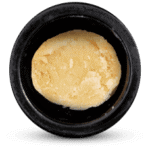
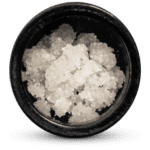
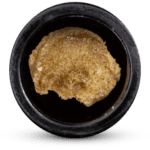
For cannabis extracts, potency is reported by weight: Total THC and Total CBD in mg/g. Solvent-based extracts may carry additional precautionary language. The standardized cannabis symbol applies here too, since most concentrates far exceed the 10 μg/g threshold once you account for THCA-to-THC conversion. If you’re curious about a specific concentrate format, Montrosecannabis’s guide to cannabis budder explains how potency is typically presented for that product class.
Topicals and tinctures
Topical cannabis products require an ingredient list that may include INCI (International Nomenclature of Cosmetic Ingredients) names or EU technical names. These are the only label elements exempt from the bilingual English/French requirement. Intended use statements are required, and the label must not make therapeutic claims.
Seeds and plants
Cannabis seeds and plants sold at retail carry a simplified label set: the class designation, lot number, packaging date, and licence holder contact are required, but nutrition facts and potency declarations in mg/g are not applicable.
| Product class | Extra label elements vs. standard |
|---|---|
| Dried flower | Total THC/CBD in mg/g; storage conditions specific to moisture |
| Edible cannabis | Nutrition facts table; ingredient list; mg THC per serving and per package |
| Cannabis extracts | Total THC/CBD by weight (mg/g); THCA conversion note; solvent precautions where applicable |
| Topicals | Ingredient list with INCI/EU names; intended use statement |
| Seeds / plants | Simplified label; no potency declaration required |
If a label looks wrong: how to report it
Spotted something off? Here’s exactly what to do.
- Keep the package and photograph it. Take clear photos of every panel, including the lot number, packaging date, and any area that looks non-compliant.
- Record the lot number and packaging date. These are the two pieces of information regulators and producers need first.
- Contact the licence holder. The label must include the manufacturer’s name, telephone number, and email address. This is your first point of contact for product concerns.
- Report to Health Canada. Use the Health Canada online complaint form or call their consumer information line. Provide photos, the lot number, packaging date, and your purchase receipt.
- Notify your provincial regulator or retailer. If you bought the product from a licensed retailer, let them know. Provincial cannabis authorities (such as the AGCO in Ontario or the BCLDB in British Columbia) have their own reporting channels and can escalate to Health Canada.
What to include in your complaint:
- Clear photos of all label panels
- Purchase receipt (date, store name, price)
- Lot number and packaging date
- Description of what appears non-compliant and why
Outcomes can include a product recall, corrective labelling orders, or enforcement action against the licence holder. Health Canada takes mislabelling seriously because accurate labels are a direct patient and consumer safety issue. For more on how lot numbers are used in recalls and quality tracking, the Montrosecannabis guide on cannabis lot numbers is a practical read.
A quick compliance checklist before you buy or use a product
Use this at the store or when your delivery arrives.
- Yellow health warning box on the front — confirms the label meets Health Canada’s mandatory format
- Standardized cannabis symbol (if applicable) — required for products with >10 μg/g THC; its absence on a low-THC product is normal
- Total THC and Total CBD declared — check the units match the product type (mg/g for flower, mg/serving for edibles)
- Lot number present — used for recalls and quality tracking; write it down if you have concerns
- Packaging date visible — freshness indicator and traceability anchor
- Bilingual text — all required information in both English and French
- Licence holder contact — name, phone, and email on the label
- Excise stamp on outer packaging — confirms the product is in the legal supply chain
Pro Tip: The standardized cannabis symbol’s absence doesn’t mean a product is non-compliant. Products with 10 μg/g THC or less are not required to carry it. This includes some CBD-dominant products and certain topicals. The threshold calculation also accounts for potential THCA-to-THC conversion, so a product with significant THCA content will still require the symbol even if the “active” THC reading appears low.
Key takeaways
Every legal Canadian cannabis product label must carry a health warning in a yellow box, Total THC and Total CBD declarations, a lot number, a packaging date, bilingual text, and the licence holder’s contact information, all governed by the Cannabis Regulations under the Cannabis Act.
| Point | Details |
|---|---|
| Yellow health warning | Mandatory on every front panel; messages updated by Health Canada, with a 12-month transition for amended versions. |
| THC symbol threshold | The standardized cannabis symbol is required when THC exceeds 10 μg/g, including potential THCA conversion. |
| Lot number purpose | Preceded by “Lot,” “Lot no.,” or “(L)”; essential for recalls, quality tracking, and complaint reporting. |
| Product-specific extras | Edibles need a nutrition facts table and mg-per-serving declaration; extracts report potency by weight (mg/g). |
| Where to report problems | Contact the licence holder first (details on the label), then report to Health Canada and your provincial regulator. |
Health Canada and the Cannabis Regulations (SOR/2018-144) are the authoritative sources for all labelling rules; consult them directly for the most current requirements.
If a label looks wrong, report it. Start with the licence holder contact on the package, then escalate to Health Canada if needed.
A retailer’s perspective on cannabis labelling
Cannabis labelling rules can feel like a lot to absorb, but from where we sit at Montrosecannabis, they’re actually one of the clearest signals of product quality and producer accountability. A well-labelled product tells you the producer takes compliance seriously, which usually correlates with how carefully they handle everything else: cultivation, testing, and storage.
When product shipments arrive, the first checks are always the excise stamp and the lot number. A missing stamp or a lot number that doesn’t match the packaging date is grounds to quarantine the shipment immediately, pending investigation. Consumers rarely see this process, but it’s the reason you can trust that what’s on the label matches what’s in the package. Some delivery operations apply similar checks at the dispatch stage; 562 GoGreen’s delivery process is one example of how retail-side verification works in practice.
One thing we’d encourage every consumer to do: look beyond the principal display panel. The front of the package is designed to catch your eye, but the back and sides carry the information that actually protects you: the lot number, the packaging date, the storage instructions, and the contact details you’ll need if something ever goes wrong. Those details are there because the regulations require them, and they’re worth a few seconds of your attention every time.
If you’re shopping with Montrosecannabis and want compliant, clearly labelled products delivered to your door, our cannabis delivery service covers the Durham Region and GTA with same-day options and a curated selection from licensed producers.
Authoritative sources and where to read more
These are the primary sources to consult when you want to verify a label requirement or check the current regulatory text.
- Cannabis Regulations (SOR/2018-144), Sections 123–132 — the legislative text that lists every mandatory label element, presentation rule, and product-specific requirement. This is the source to consult when you need the exact wording of a requirement or want to check a specific section number. Available at laws-lois.justice.gc.ca.
- Cannabis Regulations, Section 130 — covers bilingual presentation, legibility, type style, and minimum size requirements for all required label information. Useful when you want to understand the formatting rules behind what you see on a label.
- Health Canada: How to read and understand a cannabis product label — a practical consumer guide with annotated examples, explanations of the health warning, the standardized cannabis symbol, and how to interpret potency figures. Available at canada.ca/en/health-canada.
- Health Canada: Packaging and labelling guide for cannabis products — the detailed producer-facing guide that explains plain packaging rules, permitted brand elements, and how packaging requirements interact with labelling. Useful for understanding why labels look the way they do.
- Health Canada complaint and reporting page — use this to report suspected mislabelling, non-compliant packaging, or unsafe products. The licence holder’s contact information on the label is your first step; Health Canada’s reporting channel is the escalation path.
For Montrosecannabis’s own plain-language summaries of Health Canada rules and what they mean for consumers, the Health Canada cannabis regulation guide and the Montrosecannabis resource hub are good starting points.
This article is general consumer information, not legal or medical advice. For your specific situation, consult the current Cannabis Regulations at laws-lois.justice.gc.ca or speak with a qualified professional.
FAQ
What is the biggest problem with cannabis labelling in Canada?
The most common issue is consumer confusion around potency units: μg/g is used for the standardized symbol threshold, while mg/g and mg/serving appear on product labels, and mixing them up can lead to dosing errors. Transitional health warning messages (older versions remain valid for 12 months after an update) also create inconsistency across products on shelves at the same time.
What are the main categories of cannabis products in Canada?
Under Schedule 4 of the Cannabis Act, the main classes are dried cannabis, fresh cannabis, cannabis oil, cannabis plants, cannabis seeds, edible cannabis, cannabis extracts, and cannabis topicals. Each class has its own labelling requirements layered on top of the universal mandatory elements.
What does a CBD label look like on a Canadian cannabis product?
A Canadian CBD product label follows the same mandatory format as any cannabis product: brand name, lot number, packaging date, storage conditions, Total THC and Total CBD in mg/g (or mg/serving for edibles), the health warning in a yellow box, bilingual text, and licence holder contact. The standardized cannabis symbol is not required if THC is 10 μg/g or below.
What does “white label” mean in the cannabis industry?
White label cannabis refers to products manufactured by a licensed producer and sold under a retailer’s or third-party brand name. The label must still meet all Cannabis Regulations requirements, including the licence holder’s contact information, which means the original manufacturer’s details typically appear even when the brand name belongs to another company.
How do I report a non-compliant cannabis label?
Keep the package, photograph all panels, note the lot number and packaging date, then contact the licence holder using the name, phone number, and email on the label. If the issue is unresolved or serious, file a complaint with Health Canada and notify your provincial cannabis regulator.