Start with 2.5 mg of THC if you’re new to edibles, then wait a full four hours before deciding whether you need more. Health Canada caps every legal edible at 10 mg total THC per immediate container, so the legal ceiling and the safe starting point are close together on purpose. That gap between “start here” and “legal maximum” is the entire dosing conversation in Canada.
TL;DR:
- A 10 mg edible significantly exceeds the recommended starting dose for beginners, making it risky for first-time users to dose safely.
- Edibles with more than one legal unit or over 10 mg THC are illegal in Canada and potentially dangerous, especially if unlabeled or homemade.
- Effects from edibles can take 30 minutes to 2 hours to start and last up to 12 hours, increasing the chance of accidental overconsumption without proper patience.
- Splitting doses into smaller portions, such as halves or quarters, can help mitigate the risk of taking too much initially.
- People with health issues, on medications, or pregnant should consult a doctor before trying edibles, regardless of dose.
Table of Contents
- Edible dosing chart for Canada: how to pick your starting amount
- What does Canadian law limit edible THC potency to?
- Why do edibles hit harder and last longer than smoking?
- Titration plan: how to increase your edible dose safely
- How much edible should you take based on your experience?
- Why trust this guide on edible dosing in Canada?
- A Montrose perspective on safe edible dosing
- Where to buy compliant, clearly labelled edibles
- Sources
- FAQ
Edible dosing chart for Canada: how to pick your starting amount
Every dose band below assumes you’re consuming a legally purchased edible with an accurate label. Homemade edibles and unregulated products don’t come with that guarantee, which is exactly why dosing them is so much riskier.
- Microdose: up to 2.5 mg THC. Often barely perceptible for most adults. Good for daily function, mild mood lift, or testing sensitivity.
- Low dose: above 2.5 mg up to 5 mg THC. Mild relaxation or euphoria. This is Health Canada’s recommended entry point for anyone who hasn’t used cannabis edibles before.
- Moderate dose: above 5 mg up to 10 mg THC. Noticeable intoxication. Reasonable for consumers with some tolerance, not a first-timer’s starting line.
- High dose: 10 mg and up. This exceeds what a single legal container can hold in Canada, so reaching this level means eating more than one package or consuming an illicit product. Reserve this range for experienced users only, and even then, proceed carefully.
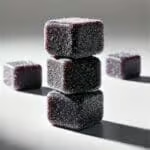
Pro Tip: Cut a gummy in half or in quarters if the smallest legal unit still feels like too much on your first try. There’s no rule against splitting a dose further.
Your starting point should shift based on who you are, not just what the package says. Body weight, metabolism, prior cannabis experience, and any medications you take all change how a given milligram amount hits you, a point Health Canada makes directly in its guidance on using cannabis products. Someone on sedatives or blood thinners, someone pregnant, or someone with a history of anxiety or psychosis should talk to a doctor before trying edibles at all, regardless of dose.
Before you eat anything, run through a short mental checklist. Are you home, or somewhere you can comfortably stay put for several hours? Is someone around who knows you’ve taken an edible, in case you need help? Do you have zero plans to drive, operate machinery, or make big decisions for the rest of the day? If any of those answers is no, wait for a better time.
What does Canadian law limit edible THC potency to?
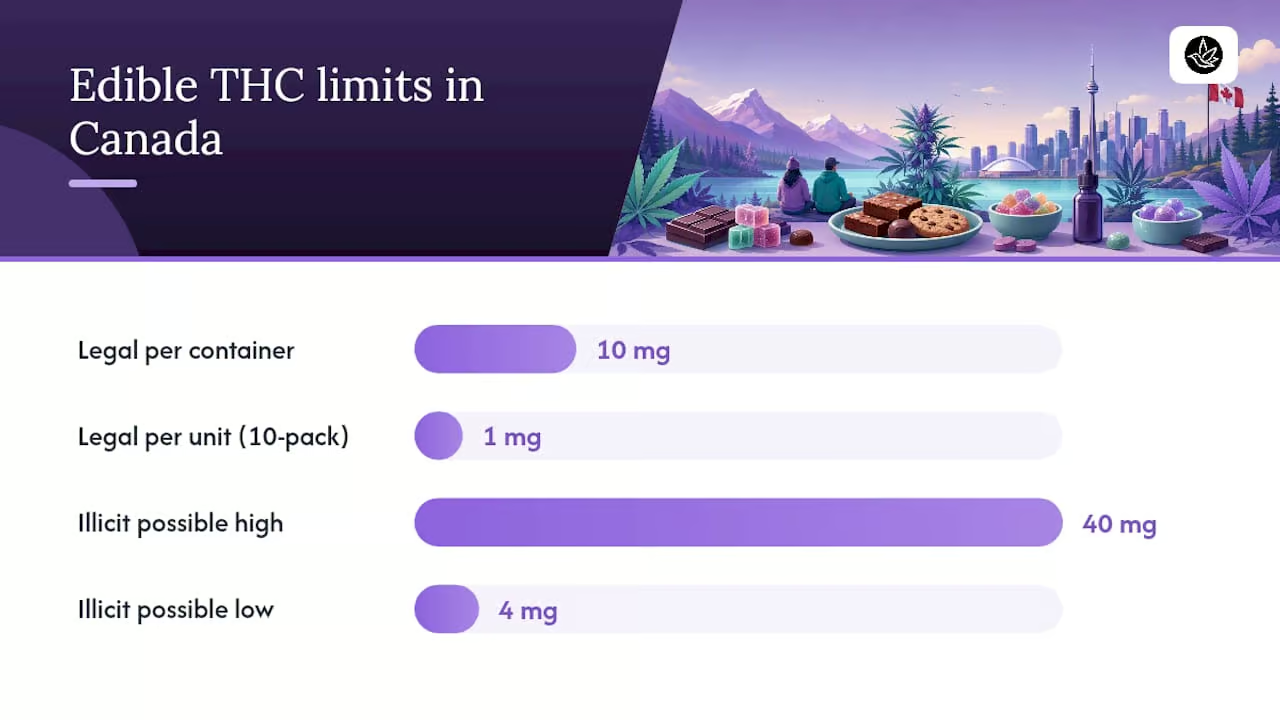
Canada’s 10 mg per immediate container rule isn’t a suggestion from a cautious retailer. It’s written into the Cannabis Regulations under SOR/2018-144, and it applies to every legally sold edible in the country, from gummies to chocolate bars to infused beverages. If a package holds multiple pieces, the 10 mg is split across the whole container, not per piece, which is why a bag of ten gummies might carry 1 mg each rather than 10 mg each.
Federal rules also require that edibles with more than one discrete unit divide the THC evenly and clearly, so a consumer can calculate exactly how much they’re eating per piece. When multiple intoxicating cannabinoids are present in one product, such as delta 9 THC alongside CBN, Health Canada’s guidance on intoxicating cannabinoids requires licensees to count the combined total against that same 10 mg ceiling.
A compliant label makes verifying all of this simple. Look for:
- Total THC per container, stated in milligrams
- Total THC per unit, if the package contains more than one piece
- The standardized cannabis symbol, a red diamond with a stylized leaf and “THC” printed inside
- An excise stamp, showing provincial or territorial tax compliance
- A bilingual health warning, in English and French, describing risks of use
Health Canada’s packaging and labelling guide also mandates child-resistant packaging, plain design with no cartoon imagery, and a nutrition facts panel for ingestible products. These requirements exist specifically to cut down on accidental ingestion, particularly by kids who might mistake a gummy for candy.
Unregulated edibles, whether bought from an illicit online shop or brought in from a market without Canada’s THC caps, skip every one of these safeguards. Licensed products go through mandatory testing that verifies potency claims; illicit ones don’t, so the “10 mg” on an unregulated label might actually be 40 mg, or 4 mg, or something else entirely. If a package has no excise stamp or standardized symbol, treat the dosing information on it as unreliable at best.
Why do edibles hit harder and last longer than smoking?
Edibles feel different from inhaled cannabis because your liver changes the THC molecule before it reaches your bloodstream. When you swallow THC, it passes through the liver and converts into 11 hydroxy THC, a metabolite that crosses into the brain more easily and tends to produce a stronger, longer-lasting effect than inhaled THC does. That’s the biological reason a 10 mg edible can feel far more intense than a 10 mg dose delivered by vape.

Timing compounds the risk. Effects from an edible typically begin 30 minutes to 2 hours after eating, peak around the 4 hour mark, and can last 4 to 12 hours, with residual effects like grogginess lingering up to 24 hours. That’s an enormous window compared to smoking, where effects show up in minutes.
Several factors stretch or compress that timeline for different people:
- Whether you’ve eaten recently. Food in your stomach slows absorption and delays onset.
- Your metabolism. Faster metabolisms tend to process THC quicker, though the difference is highly individual.
- Other medications. Some drugs compete for the same liver enzymes, changing how fast THC gets broken down.
- Your own cannabis history. Frequent users often build some tolerance to the psychoactive effects, though not always in a predictable way.
The real danger shows up when people don’t understand the delay. Eating a gummy, feeling nothing after 45 minutes, and eating a second one is the single most common way people accidentally overshoot their dose, because the first one hadn’t even started working yet.
Titration plan: how to increase your edible dose safely
Titration just means adjusting your dose gradually until you find the amount that works for you, and Health Canada frames this as the only sensible approach since there’s no universal correct dose. Follow it step by step:
- Choose a start dose of 2.5 mg THC or less, especially if you’ve never tried an edible or haven’t in a long time.
- Wait the full 4 hours before judging whether the dose was enough. This is the step almost everyone rushes.
- If the effect was too mild, increase by 1.25 to 2.5 mg on your next attempt, not by doubling or tripling the amount.
- Repeat over separate sessions, not the same day, until you land on an amount that gives you the effect you want without discomfort.
- Track what you took. Write down the product, the milligram amount, the time you ate it, and how you felt an hour, four hours, and the next morning.
Some practitioners suggest going even smaller, in 1.25 mg increments, for people who are especially sensitive to THC, and watching functional outcomes like sleep quality or anxiety levels rather than chasing a “high” feeling.
Never mix edibles with alcohol or sedatives. Both amplify THC’s effects on coordination and judgment, and combining them makes it much harder to gauge how intoxicated you actually are. Store edibles in their original child-resistant packaging, away from regular food, and never in a spot where kids or pets could mistake them for a snack.
Pro Tip: If you or someone with you takes too much, the response is almost always to wait it out somewhere calm and safe. Overconsumption of THC alone is rarely medically dangerous, but it can cause intense anxiety, nausea, or a racing heart. Sip water, lie down, and call Poison Control or 911 if symptoms include chest pain, difficulty breathing, or loss of consciousness.
How much edible should you take based on your experience?
Dosing looks different depending on how much cannabis history you’re bringing to the table.
- First-timers: 2.5 mg THC or less. This isn’t a starter dose in the sense of “small but still fun.” It’s genuinely meant to produce mild or barely noticeable effects while you learn how your body responds.
- Occasional users: 5 to 10 mg THC, split if the product allows it. Someone who has smoked or vaped a handful of times but is newer to edibles specifically should still treat the ingested route with extra caution given the delayed, amplified effect.
- Regular or daily users: Often 10 mg and above, sometimes across multiple legal units, guided by their own titration history rather than a fixed number.
The 10 mg mark matters because it’s the legal ceiling for an entire package, not a casual middle-of-the-road serving. A 200 mg gummy is not something you’ll find on a licensed Canadian shelf. Products in that range circulate through illicit online sellers or come from jurisdictions with far looser THC limits, and they carry real risk of severe nausea, panic, disorientation, or a trip to the emergency room, especially for anyone without a high tolerance.
To answer a few specific comparisons directly: a 10 mg edible is roughly comparable in total THC to a small portion of an average joint, though the ingested route delivers it slower and can feel more intense per milligram because of that liver conversion. A 50 mg edible, well beyond what’s legal in a single Canadian container, can produce effects lasting well past 12 hours in an inexperienced consumer, with grogginess extending into the next day. None of this is territory a beginner should explore.
Why trust this guide on edible dosing in Canada?
This guide draws on Health Canada’s own consumer guidance and the Canadian Centre on Substance Use and Addiction’s public education work, the two bodies setting the rules and the public-health messaging that shape safe edible use across the country. It’s written by Nick, a Montrosecannabis contributor focused on translating federal cannabis regulation into practical, everyday guidance for Ontario consumers.
Montrosecannabis backs that guidance with practice, not just theory. The company delivers curated, compliant cannabis products within one hour across Durham Region and the GTA, holds a 4.9 star Google rating, and stocks a curated edibles selection where every product’s label has already been checked against Health Canada’s requirements. For a deeper look at how THC limits and labelling rules apply to specific product categories, see this Canada THC limits guide.
A Montrose perspective on safe edible dosing
Curating a low-dose, clearly labelled edibles lineup is one of the more unglamorous parts of what we do at Montrosecannabis, and also one of the parts I care about most. Every edible we list has to pass the same test: can a first-timer read the label and know exactly what they’re getting into? That standard rules out a lot of flashy products.
We also lean hard into education because dosing confusion, not the cannabis itself, causes most bad edible experiences. If you’re unsure what dose fits your situation, our Montrose resources cover serving sizes and measurement conversions in plain language, and our customer support team is happy to walk through label details before you order.
— Nick
Where to buy compliant, clearly labelled edibles
Montrosecannabis exists because dosing an edible correctly starts with buying one that’s honestly labelled, and that’s harder to guarantee with an unregulated seller than with a licensed retailer built around fast, local service. We stock a curated lineup of edibles where every container carries verified THC totals, the standardized cannabis symbol, and an excise stamp, so the dosing math in this guide actually applies to what lands on your doorstep.

If you’re in Durham Region or the GTA, one-hour delivery means you’re not stuck waiting days to start your own titration process at a pace that suits you. For readers elsewhere in Ontario, our resources on cannabis delivery across Canada walk through how legal purchasing and shipping work province to province. Browse the current edibles selection, check the milligram totals against the dose bands above, and place an order sized to where you actually are in your own tolerance, not where you want to be.
Sources
Three sources anchor almost every claim in this guide. Health Canada’s cannabis product guidance covers starting doses, wait times, and titration directly from the federal regulator. The packaging and labelling guide details every mandatory label element for legal edibles. The CCSA’s edible cannabis fact sheet translates that regulation into plain-language safety advice worth reading in full before your first purchase.
This article is general information, not a substitute for advice from a qualified doctor. Consult a qualified healthcare professional about your own circumstances before acting on anything here.
- Cannabis Regulations (SOR/2018-144) — maximum THC quantities
- Cannabis for medical purposes: Using a cannabis product — Health Canada
- 7 things you need to know about edible cannabis — CCSA
FAQ
Is a 200 mg gummy edible a lot?
Yes. A legal edible container in Canada can hold no more than 10 mg total THC, so a 200 mg gummy far exceeds the legal package limit and is virtually guaranteed to be an illicit or foreign product carrying serious overconsumption risk.
Is a 10 mg edible too much for a beginner?
For most first-time consumers, yes. Health Canada recommends starting at 2.5 mg THC or less, so a 10 mg dose is closer to a moderate serving for someone with some existing tolerance.
How long should a 50 mg edible last?
A 50 mg dose, well above the legal 10 mg container limit, could produce effects lasting well beyond the typical 4 to 12 hour window, with residual grogginess persisting into the following day for an inexperienced consumer.
How strong is a 10 mg edible compared to a joint?
The total THC can be similar, but the ingested route converts THC into 11 hydroxy THC in the liver, which often feels stronger and lasts longer than the equivalent amount smoked or vaped.
What happens if I re-dose too early?
Eating more before the first dose fully kicks in is the leading cause of accidental overconsumption, since edibles can take up to 4 hours to reach peak effect.