A vegan cannabis edible contains zero animal-derived ingredients, meaning no gelatin, dairy, honey, or eggs anywhere in the ingredient list. You have two solid paths to get one: buy a product with clear labelling and lab results behind it, or make a vegan infusion yourself using coconut oil and a controlled decarboxylation process. Either way, in Canada, the label must show ingredients and total THC, capped at 10 mg per container.
TL;DR:
- Vegan cannabis edibles must clearly list ingredients to verify the absence of gelatin, dairy, honey, or eggs, as front labels are not always reliable.
- Checking lab certificates for potency, contaminants, and cross-contact protocols is essential, since vegan labels do not guarantee absence of animal residue.
- Homemade infusions rely on proper decarboxylation and controlled heating; skipping these steps yields weak or uneven effects.
- Edibles typically take 30 minutes to 2 hours to onset, so starting with 2.5 to 5 mg THC and waiting before redosing is safest.
- Cross-contamination risk remains if manufacturers produce both vegan and non-vegan products on shared equipment without strict sanitation.
Table of Contents
- What makes an edible vegan-friendly and common plant-based substitutes
- How do I check if an edible is actually vegan and legal?
- What types of vegan cannabis edibles can you buy?
- How do you make vegan cannabis edibles at home?
- How long do edibles take to work and how should you dose them?
- Montrose’s approach to vegan-friendly edibles
- Cross-contamination risks with vegan-labelled edibles
- Finding certified and trustworthy vegan edible brands
- What allergens show up in vegan cannabis edibles?
- Are there legal restrictions specific to vegan cannabis edibles?
- Why the “vegan” label matters less than you think
- Where to buy vegan-friendly edibles with confidence
- Sources
- FAQ
What makes an edible vegan-friendly and common plant-based substitutes
The animal products that sneak into cannabis edibles are usually the same ones that sneak into regular candy and baking. Gelatin shows up in gummies to give them their chew. Dairy butter and milk solids show up in chocolates and baked goods. Honey shows up as a sweetener in infused syrups and glazes, and whey protein sometimes appears in cannabis-infused snack bars marketed for fitness.
Swapping these out isn’t complicated once you know what to look for:
- Gelling agents: pectin or agar-agar instead of gelatin, both of which set firm and hold cannabinoid distribution evenly.
- Fats: coconut oil, cocoa butter, or olive oil instead of dairy butter, since plant-based fats bind cannabinoids just as effectively.
- Dairy replacements: oat, almond, or soy milk in place of cow’s milk in baked goods and beverages.
- Sweeteners: maple syrup or agave nectar instead of honey.
Fat choice matters beyond ethics. Cannabinoids are lipophilic, meaning they bind to fat molecules, not water. A vegan infusion made with coconut oil or cocoa butter carries THC and CBD through your digestive system efficiently, and it also shapes flavour. Coconut oil leans sweet and tropical, olive oil leans savoury and grassy. Choose the fat based on what you’re making, not just what’s on hand.
How do I check if an edible is actually vegan and legal?
Reading a Canadian cannabis label takes about thirty seconds once you know the four things to check. Skip this step and you risk either an accidental non-vegan ingredient or an edible with unclear potency.
- Full ingredient list — scan for gelatin, dairy solids, honey, whey, or egg derivatives hiding under technical names.
- Allergen declarations — Canadian edibles must flag common allergens separately from the general ingredient list.
- Total THC per container — Health Canada caps this at 10 mg THC per immediate container, so anything claiming more isn’t following the rules.
- Nutrition facts — not mandatory on every format, but a good sign of a brand that takes labelling seriously.
Fact check: Canadian regulations require ingredient lists, allergen declarations, and a hard 10 mg THC ceiling per container for all edible cannabis products sold legally.
A “vegan” claim on packaging isn’t independently certified in most cases, so it’s worth verifying against the actual ingredient list rather than the front-of-package label. If details are thin or the ingredient panel feels vague, ask the retailer directly or request the lab certificate before buying. Lab certificates matter because they confirm potency accuracy and screen for heavy metals, pesticides, and microbial contamination. Red flags include missing batch numbers, no visible THC total, or a product page that won’t link to test results at all.
What types of vegan cannabis edibles can you buy?
Commercial vegan cannabis edibles come in a handful of formats, and each one fits a different lifestyle. Understanding the differences helps you pick the right one for how fast you want effects, how discreet you need to be, and how precisely you want to dose.
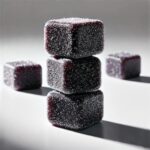
- Pectin gummies replace gelatin outright and are the easiest format for microdosing, since most brands cut them into 2.5 mg or 5 mg increments.
- Vegan chocolates, made with cocoa butter instead of milk chocolate, offer a smoother melt and a longer shelf life than gummies.
- Baked goods using plant fats and egg replacers (like flax or aquafaba) exist but are less common commercially and harder to dose evenly.
- Beverages and capsules skip the animal-product question almost by default, since most infused drinks and capsules use plant oils or water-soluble emulsions.
Single-dose packaging is your friend here. Look for measured pieces or clearly marked 2.5 mg increments rather than a whole chocolate bar you have to guess-cut. Gummies travel well and taste consistent, chocolates like Montrosecannabis’s Simply Dark Organic Chocolates hold up in a bag without melting fast, and beverages tend to kick in slightly quicker than solid edibles because there’s less digestion required to release the cannabinoids.
How do you make vegan cannabis edibles at home?
Making your own vegan-infused fat is straightforward once you understand the two non-negotiable steps: decarboxylation and slow, controlled heat. Skip either one and you’ll end up with weak or unevenly potent edibles.
- Decarboxylate first. Grind your cannabis coarsely for even heat exposure, then bake it at roughly 118°C (245°F) for 30 to 40 minutes to convert THCA into active THC without scorching it.
- Pick your fat. Coconut oil is the go to for sweet recipes because its MCT content binds cannabinoids well; olive oil suits savoury dishes; cocoa butter works for chocolate bases.
- Choose an infusion method. Stovetop simmering takes about 2 to 3 hours with constant attention. A slow cooker runs longer, roughly 4 to 8 hours, with less babysitting. A double boiler gives you the most temperature control. An Instant Pot or sous vide setup locks in consistent heat and cuts hands-on time significantly.
- Strain and store. Push the mixture through a fine mesh or cheesecloth, then refrigerate in a sealed, clearly labelled container.
Pro Tip: Add about one teaspoon of sunflower lecithin per cup of oil before infusing. It acts as an emulsifier, helping distribute cannabinoids more evenly through the fat and improving how your body absorbs them, without introducing a soy allergen the way regular lecithin might.
For potency math, convert your cannabis’s THC percentage and weight into total mg THC, then divide by the number of servings your batch makes. If you’re not comfortable eyeballing the decarb step, Montrosecannabis’s guide to decarboxylating cannabis at home walks through the process in more detail.
How long do edibles take to work and how should you dose them?
Edibles hit differently than smoking or vaping, and the wait catches a lot of people off guard. Because cannabinoids have to pass through your digestive system and liver before reaching your bloodstream, onset typically runs 30 minutes to 2 hours, with effects lasting several hours longer than inhaled cannabis. Your metabolism, what else you’ve eaten, and the fat content of the edible itself all shift that timeline.
Health Canada’s own labelling rules cap total THC at 10 mg per container specifically because delayed onset has led to over-consumption when people redose too soon, assuming a first dose “didn’t work.”
Start with 2.5 to 5 mg THC if you’re new to edibles or trying a new batch, then wait at least two hours before considering more. Microdosing at 1 to 2.5 mg is a smart strategy for daytime use or for anyone managing tolerance carefully.
- Store homemade edibles in opaque, clearly labelled containers, away from regular food and away from kids or pets.
- Note the THC per serving directly on the container, not just on a sticky note that can fall off.
- If you have household members with food allergies, keep vegan-labelled batches separate from anything containing dairy or gelatin to avoid cross-contact.
- Remember that promotion of edibles to minors, or packaging that could appeal to them, is restricted under Canadian rules regardless of vegan status.
Montrose’s approach to vegan-friendly edibles
Montrosecannabis curates its edible selection with an eye on ingredient transparency and lab-tested potency, not just marketing claims. Every product listed goes through the same scrutiny, whether it’s a chocolate bar, a gummy, or a capsule, and that curation is backed by one-hour delivery across Durham Region and the GTA for customers who don’t want to wait around.
Our educational content, including Nick’s breakdown of home decarboxylation and his guide to cannabis capsules, exists so you’re never guessing about how a product works or how to use it safely. If you want to check lab results or ingredient details before ordering, our resource hub is the place to start.
Cross-contamination risks with vegan-labelled edibles
A product labelled vegan doesn’t automatically mean it was made in a facility free of animal products. Cross-contamination happens when a manufacturer produces both vegan and non-vegan edibles on shared equipment, using the same mixing bowls, moulds, or conveyor lines without a full clean between runs. Trace dairy proteins or gelatin residue can end up in a batch that’s technically formulated without animal ingredients.
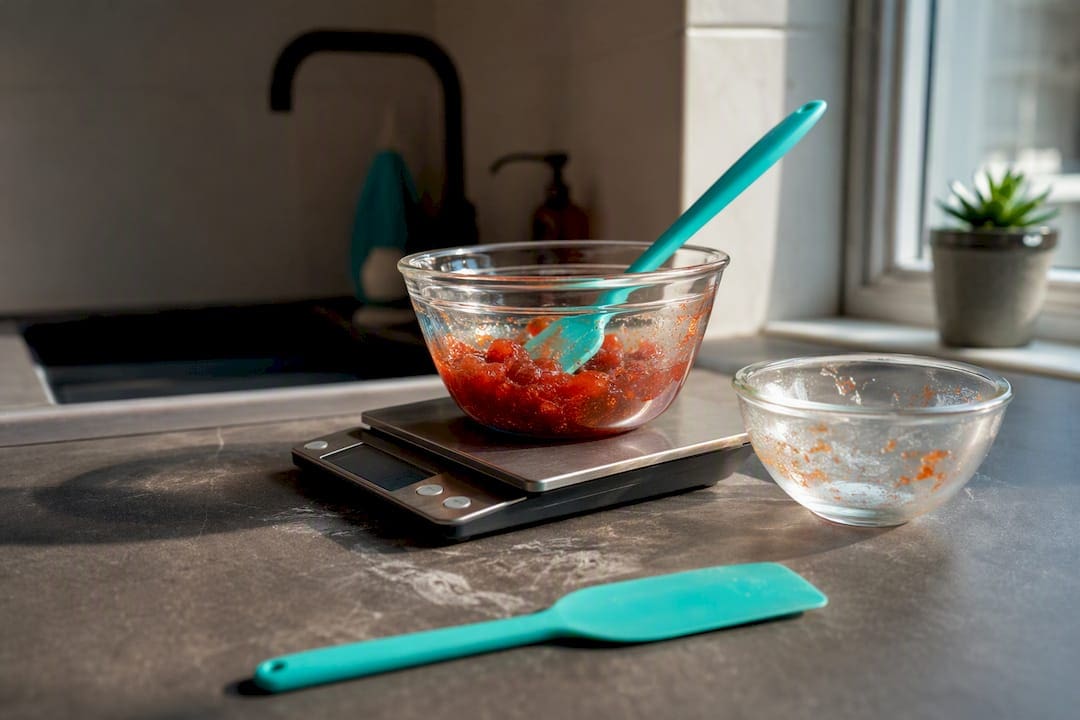
This matters most for two groups: strict vegans and people with genuine dairy or egg allergies. A gummy line that alternates between a dairy-based chocolate coating and a vegan pectin gummy on the same production floor carries real risk if sanitation between runs isn’t rigorous.
Look for brands that either dedicate separate lines to vegan products or state clearly on their packaging that cross-contact protocols are in place. If that information isn’t listed, it’s reasonable to ask the retailer or check the manufacturer’s website directly. Lab certificates focus on cannabinoid potency and contaminants like pesticides or heavy metals, but they rarely test for trace animal proteins, so this is one gap where reading the label carefully and asking questions does more than a lab report can.
Facilities that also produce common allergens like tree nuts, soy, or wheat carry the same cross-contact logic. If you’re managing an allergy alongside a vegan diet, treat “vegan” and “allergen-free” as two separate questions, not one.
Finding certified and trustworthy vegan edible brands
There’s no single national “vegan certified” stamp specific to cannabis edibles in Canada the way there is for some packaged foods, so sourcing well means doing a bit of your own homework rather than relying on a single badge. Start with the ingredient list every time, since that’s the most reliable indicator regardless of what the front label claims.
Brands worth trusting tend to share a few habits. They publish lab certificates openly on their product pages rather than making customers request them. They list full ingredient panels, including sub-ingredients in flavourings or colourings. They’re transparent about their facility’s production practices, especially around shared equipment.
Third-party lab testing for potency and contaminants is the strongest signal you can check yourself, since it’s independently verified rather than a marketing claim. When a product page won’t link to a certificate of analysis, or the certificate is outdated relative to the batch you’re buying, treat that as a reason to look elsewhere.
Retailers that curate their catalogue, rather than stocking anything available, tend to do this filtering for you. Ask your supplier directly if a specific chocolate or gummy line is genuinely dairy-free and gelatin-free at the ingredient level, not just marketed that way. A retailer that can answer quickly and specifically is usually one worth returning to.

What allergens show up in vegan cannabis edibles?
Cutting out animal products doesn’t mean an edible is allergen-free. Vegan formulations often lean harder on ingredients that carry their own allergen risks, and that swap can catch people off guard if they’re only screening for dairy or gelatin.
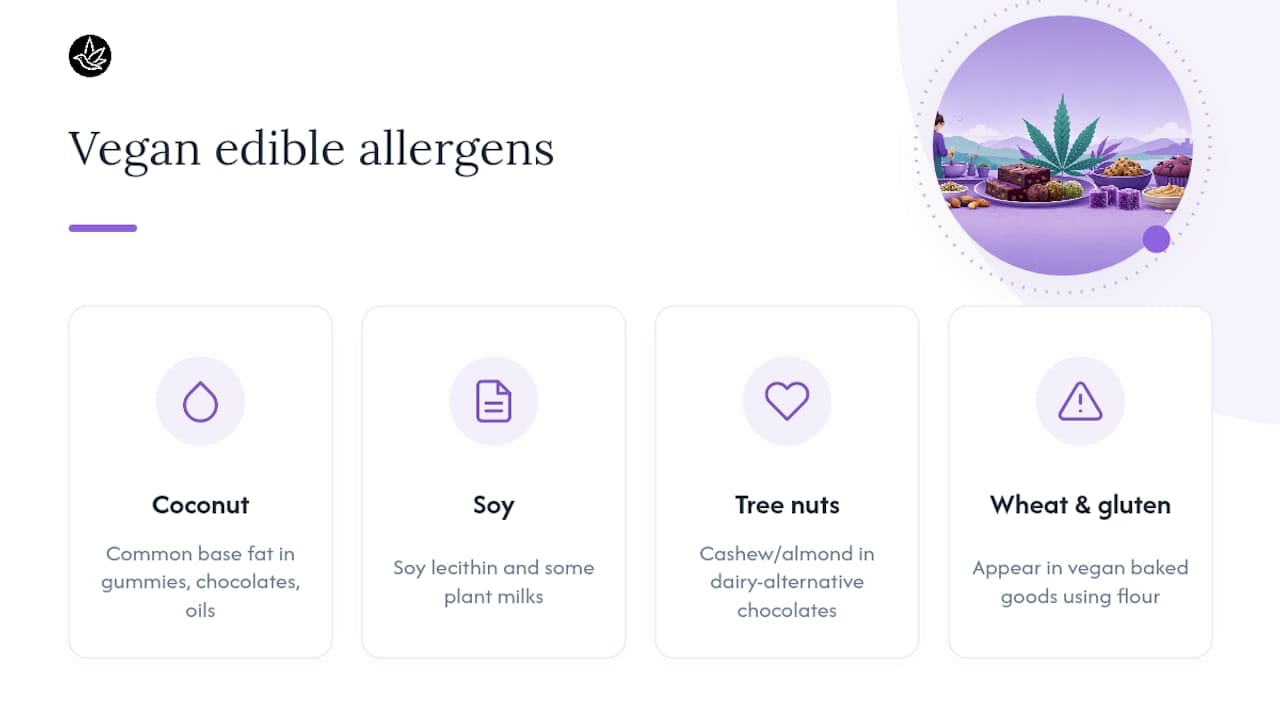
Coconut, while botanically a drupe rather than a tree nut, still triggers reactions in some people with tree nut allergies, and it’s now a common base fat across vegan gummies, chocolates, and infused oils. Soy shows up in soy lecithin, a common emulsifier, and in some plant milks used in baked goods. Tree nuts appear directly in cashew or almond based chocolates marketed as dairy alternatives. Wheat and gluten show up in vegan baked goods that use flour blends instead of dairy shortening.
Canadian labelling rules require these allergens to be declared clearly, separate from the general ingredient list, which makes them easier to spot than they might be on an ingredient panel alone. Check that declaration section specifically rather than scanning the ingredients line by line, since it’s designed to be the fast way to catch a problem ingredient.
If you’re making edibles at home, apply the same scrutiny to your own substitutions. Sunflower lecithin sidesteps the soy allergen that regular lecithin carries, which is one reason it’s a common recommendation for DIY infusions. Reading your own recipe as critically as you’d read a store label is a habit worth building early.
Are there legal restrictions specific to vegan cannabis edibles?
Vegan cannabis edibles follow the exact same legal framework as any other edible cannabis product in Canada. There’s no separate regulatory category or relaxed rule set for plant-based formulations, and no additional legal advantage to labelling something vegan.
The 10 mg THC per container limit applies regardless of ingredients, as does the requirement for full ingredient disclosure, allergen declarations, and standardized packaging that can’t appeal to minors. Where vegan formulations do intersect with the law is on the ingredient side: Canada’s Cannabis Regulations set out which food additives and ingredients are permitted in edible cannabis products, and manufacturers substituting gelatin or dairy still have to stay within that approved list.
This means a vegan gummy maker can’t simply swap in any plant-based gelling agent without checking it against the permitted ingredients list, the same way a non-vegan producer can’t use just any stabilizer. The rules exist to control quality and safety, not diet preference, so vegan status doesn’t earn any regulatory shortcut. If you’re buying from a licensed retailer, this compliance work is already done for you. If you’re making edibles at home for personal use, you’re working outside that commercial licensing structure entirely, though the underlying THC math and labelling habits are still worth following for your own safety.
Why the “vegan” label matters less than you think
The industry treats “vegan” like it’s the finish line, but it’s really just one filter among several you need to apply. A gummy can be entirely free of gelatin and dairy and still be a poor choice if the lab certificate is outdated, the potency claim doesn’t match the batch, or it was made on shared equipment with allergen cross-contact risk nobody disclosed.
Where I think most guides get it wrong is treating vegan status as a proxy for quality. It isn’t. It’s a proxy for one specific ingredient decision. The reader who actually wants a safe, well-dosed edible needs to check three things in this order: lab results first, allergen declarations second, vegan ingredient status third. Flip that order and you might end up with a technically vegan product that’s inconsistently dosed or produced in a facility that can’t guarantee it’s free of trace dairy anyway.
If you’re making edibles yourself, the priority shifts again. Decarboxylation technique matters more than which oil you pick, because a botched decarb wastes good cannabis regardless of how thoughtfully you sourced your coconut oil. Get the fundamentals right before worrying about the label.
— Nick
Where to buy vegan-friendly edibles with confidence
Skipping the guesswork on vegan status shouldn’t mean skipping quality, and that’s exactly where Montrosecannabis fits into your shopping routine. Every edible in our catalogue is chosen with ingredient transparency and lab testing in mind, so when you’re scanning for a vegan-friendly gummy or chocolate, you’re not starting from zero.
Browsing is simple: filter by product type, check the ingredient panel and lab certificate on any listing, and place your order. If you’re in Durham Region or the GTA, one-hour delivery gets your edibles to your door fast, and medical orders ship Canada-wide. Whether you’re picking up a pectin gummy for an easy 2.5 mg microdose or restocking on coconut oil-based infusion supplies for your next homemade batch, the goal is the same: know exactly what’s in your edible and how strong it is before you take a single bite. Check today’s drops and place your order through our delivery guide to get started.
This article is general information, not a substitute for advice from a qualified doctor. Consult a qualified healthcare professional about your own circumstances before acting on anything here.
Sources
- Canada
- Cannabis Regulations — edible cannabis labelling requirements (section 132.18)
- Cooking with cannabis — Leafwell
- Vegan cannabutter recipe: 4 methods — Cannabis Training University
- Pharmacokinetics and effects of oral cannabinoids — NCBI (PMCID)
FAQ
Which gummy brands are vegan?
Vegan gummy brands use pectin instead of gelatin as their gelling agent; check the ingredient list on any product page and confirm it against the lab certificate rather than trusting front-of-package claims alone.
Is a 10 mg edible better than a joint?
Neither is objectively “better,” but they behave differently: an edible’s 10 mg THC ceiling per container delivers slower, longer-lasting effects over several hours, while a joint acts within minutes and wears off faster.
What are the best edibles for arthritis pain?
There’s no single edible proven best for arthritis pain, but many people managing joint discomfort start with low-dose, consistent-potency formats like gummies or capsules and adjust gradually based on how they respond.
What are the best edibles for sciatica pain?
As with arthritis, no edible format is definitively superior for sciatica; a measured, low starting dose taken consistently tends to be a more reliable strategy than chasing a specific product type.
Are homemade vegan cannabutter and coconut oil infusions safe?
Yes, when you decarboxylate properly and use controlled, moderate heat throughout infusion, homemade vegan infusions are safe; the main risks come from skipping decarboxylation or overheating, which degrades cannabinoids.