THC gets you high; CBD does not. That’s the entire decision point behind thc vs cbd edibles, and everything else is detail. THC edibles produce intoxication through direct action on brain receptors, while CBD edibles offer calm, non-intoxicating effects. Both take up to two hours to kick in, so wait several hours before considering a second dose. Buy licensed products, and if you’re new to THC, start at 2.5 mg or less.
TL;DR:
- Edibles with THC can produce more intense and longer-lasting effects than smoking because of liver conversion to a more potent metabolite.
- CBD edibles do not cause intoxication and mainly offer subtle relaxation, with short-term safe use tolerated at doses between 20 to 200 mg daily.
- Beginners should start with 2.5 mg or less of THC and wait a full 2 to 4 hours before redosing to avoid overconsumption and adverse effects.
- Licensed retailers with lab-tested products are essential to ensure accurate dosing and avoid risks from illegal or mislabeled edibles.
- Patience in dosing and adhering to regulated limits are crucial for safe edible use, as the regulatory maximum dose may still be too high for many new consumers.
Table of Contents
- THC vs CBD edibles: why THC hits harder than you expect
- What CBD edibles actually do (and don’t do)
- THC vs CBD for pain, sleep, and anxiety: which one fits your situation
- How long do edibles take to work, and how long do they last
- THC and CBD edibles dosage guide: what Health Canada actually recommends
- Side effects, drug interactions, and the accidental ingestion problem nobody talks about enough
- How to choose and buy edibles without gambling on quality
- Montrose Cannabis: sourcing, compliance, and what to expect from us
- What the research actually supports, and where common advice falls short
- Ready to buy edibles that match what the label says
- Sources
- FAQ
THC vs CBD edibles: why THC hits harder than you expect
THC, or delta-9-tetrahydrocannabinol, is the compound responsible for the high people associate with cannabis. It works by binding directly to CB1 receptors concentrated in the brain and central nervous system, triggering the psychoactive effects most people picture when they think “getting stoned.”
Edibles change the equation in a way smoking never does. When you eat THC, your liver converts it into a metabolite called 11-hydroxy-THC before it reaches your bloodstream. That metabolite crosses the blood-brain barrier more efficiently than THC itself, which is part of why an edible dose can feel more intense and longer-lasting than the same amount smoked. Research on cannabinoid pharmacology confirms THC’s role as a CB1 agonist, distinct from CBD’s more indirect action.
At low doses, expect mild euphoria, relaxation, and a shift in sensory perception. Push into higher doses, and you’re looking at impaired coordination, altered time perception, anxiety, or paranoia for some people. The dose curve isn’t linear. Doubling the milligrams doesn’t just double the buzz; it can tip a pleasant afternoon into an uncomfortable one, which is exactly why edible dosing deserves more respect than most newcomers give it.
What CBD edibles actually do (and don’t do)
CBD doesn’t attach to CB1 receptors the way THC does. Instead, it works indirectly through several other pathways, including TRPV1, 5-HT1A, and GPR55 receptors, which explains why CBD is generally non-intoxicating even at meaningful doses. You won’t feel “high” from a CBD edible. You’ll more likely feel a subtle sense of ease.
People reach for CBD edibles to take the edge off daily tension, support a wind-down before bed, or as an adjunct for managing discomfort alongside other approaches. It’s not a sedative in the traditional sense. It’s closer to background support than a switch that flips.
A Health Canada expert committee reviewed oral CBD use and found short-term tolerability between 20 mg and 200 mg per day in healthy adults over periods up to 30 days. That’s reassuring for occasional use, but the same committee flagged limited data on long-term safety and possible drug interactions. If you’re using CBD edibles regularly rather than occasionally, that’s worth a conversation with a healthcare provider, not a guess.
THC vs CBD for pain, sleep, and anxiety: which one fits your situation
The honest answer is that it depends on what you’re trying to accomplish on a given day, and this is where most comparison guides oversimplify things.
When THC makes more sense:
- You want recreational effects, not just symptom relief
- You’re managing more intense discomfort and have cannabis tolerance already
- You’re in a low-stakes setting where impaired coordination or altered perception won’t be a problem
When CBD makes more sense:
- You need to function during the day, drive, or work
- You’re managing everyday tension or mild sleep disruption without wanting a psychoactive experience
- You’re cannabis-curious but nervous about intoxication
When a blend of both is worth trying:
- You want THC’s effects with a softer edge
- You’re sensitive to anxiety or paranoia from THC alone
There’s a reasonable, evidence-backed case that products with a higher CBD to THC ratio carry less severe risk profiles than high-THC products alone, and some people report CBD softening THC’s rougher edges. The clinical evidence on that interaction is still mixed, though, so don’t treat a hybrid edible as a guaranteed anxiety-proof option.
Pro Tip: If you’re deciding between THC vs CBD gummies for a first try, pick a low-THC, higher-CBD hybrid gummy over a pure THC one. It gives you a gentler introduction without committing to a fully non-intoxicating experience.
How long do edibles take to work, and how long do they last
Edibles run on a completely different clock than smoking or vaping, and that mismatch causes most of the overconsumption problems people report.
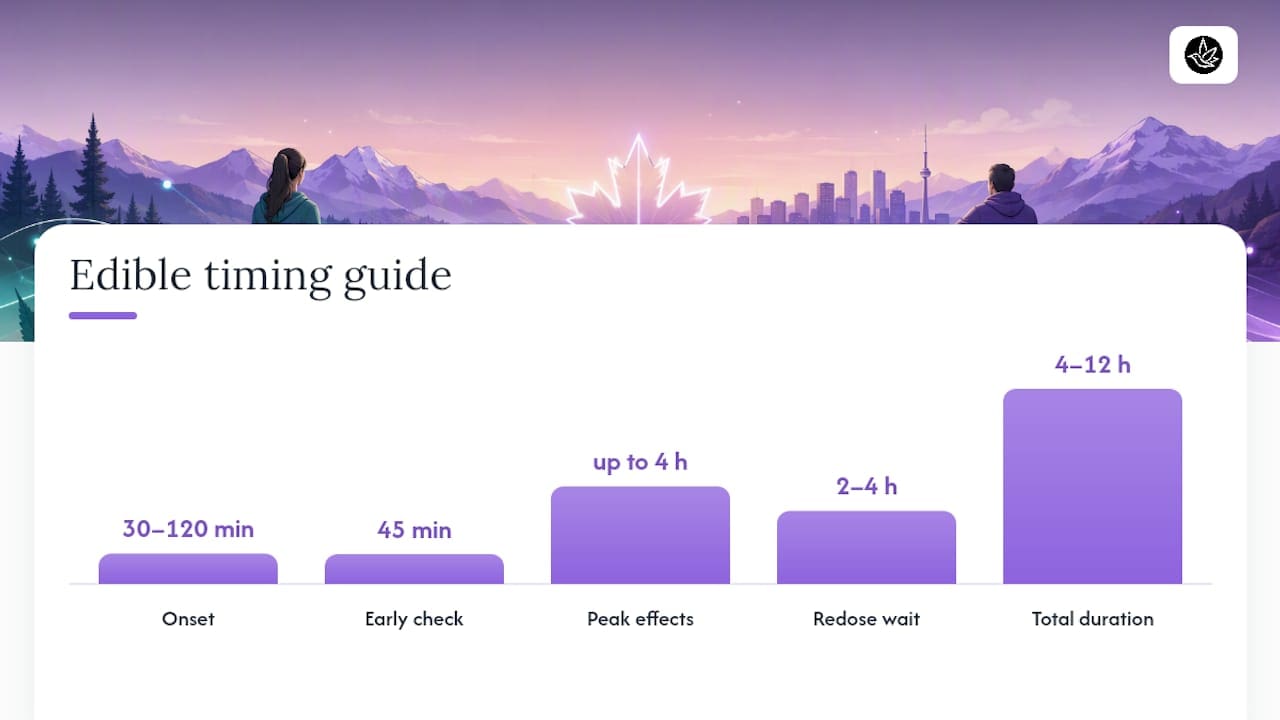
- Onset: 30 minutes to 2 hours. Your digestive system has to break the edible down before cannabinoids reach your bloodstream, which is dramatically slower than inhalation.
- Peak effects: up to 4 hours. This is the window where people who don’t feel anything after 45 minutes make the mistake of eating more.
- Total duration: 4 to 12 hours, depending on your dose, metabolism, and what else is in your stomach.
Food matters more than most people realize. Eating an edible alongside a high-fat meal can increase absorption and raise peak cannabinoid concentration, which means the exact same 5 mg gummy can hit differently on an empty stomach versus after a burger.
The redosing rule is simple and worth repeating because it’s the single most common mistake with edibles: wait a full 2 to 4 hours before taking more, even if you feel nothing at the 45 minute mark. Provincial guidance consistently backs this window, and it exists precisely because impatience is what turns a manageable dose into an unpleasant night.
THC and CBD edibles dosage guide: what Health Canada actually recommends
Health Canada’s public guidance is refreshingly specific, and it’s worth following even if you’ve used cannabis before in other formats.
- New THC consumers: start with 2.5 mg or less per serving, and treat 10 mg as a moderate-to-strong recreational dose rather than a beginner one.
- CBD for general use: short-term tolerability sits in the 20 to 200 mg per day range for healthy adults, though ongoing use above the lower end deserves practitioner input.
- Regulatory ceiling: Canadian rules cap edible cannabis at 10 mg THC per discrete unit and per immediate container, with variability allowances built in to prevent overconsumption from mislabelled batches.
- Label math: check mg per unit, the number of units in the package, and total mg per container before you buy, not after you’ve already eaten one.
That 10 mg regulatory limit exists specifically because edibles look and taste like ordinary food, and regulators wanted a hard ceiling that protects new consumers from accidentally overshooting.
Side effects, drug interactions, and the accidental ingestion problem nobody talks about enough
Overconsumption symptoms are more common than people expect, and they’re rarely dangerous in a medical sense, even though they feel awful in the moment.
- Severe sedation, rapid heart rate, or intense anxiety
- Hallucinations or a strong sense of disconnection from reality
- Nausea or vomiting, particularly at very high doses
If any severe symptoms occur, such as confusion or difficulty breathing, seek immediate medical care rather than waiting it out.
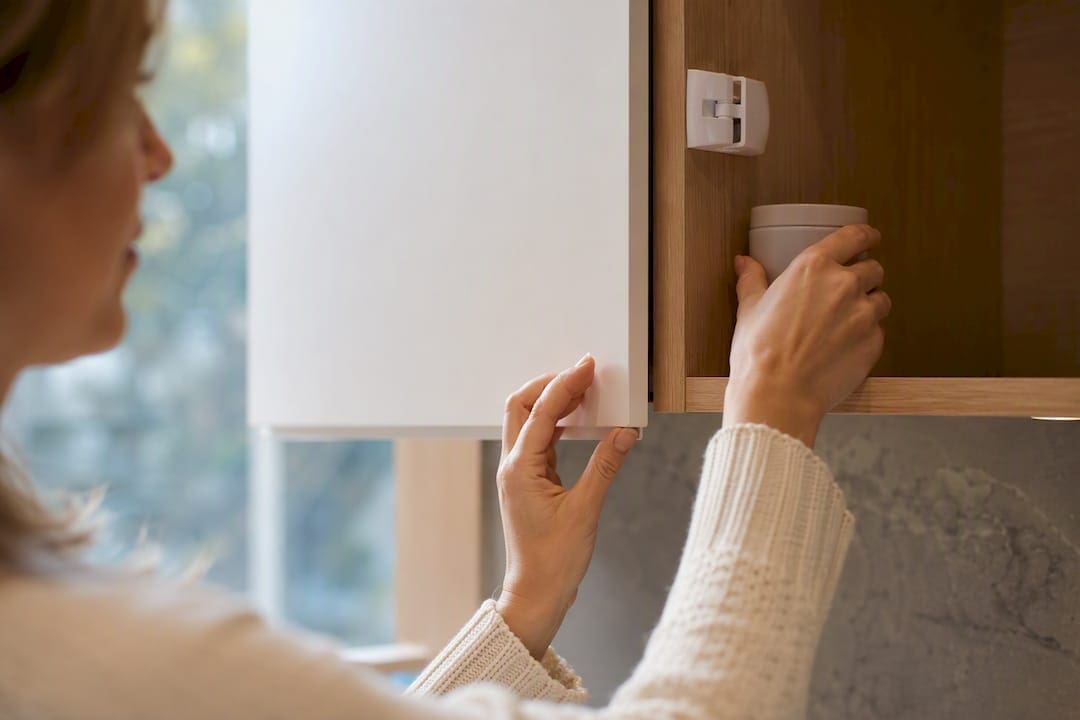
The accidental ingestion risk deserves more attention than it gets. Edibles are designed to taste like candy or baked goods, and copycat illicit products causing serious harm have shown up in real incidents, particularly affecting children who mistake them for regular treats. Store edibles in child-resistant, clearly labelled containers, away from other snacks.
One number worth remembering: Canadian regulators set the 10 mg per-unit limit specifically because higher THC potency is associated with increased acute and long-term harms, including a greater risk of dependence and mental health complications.
CBD also carries interaction risk, particularly with medications processed by liver enzymes. If you’re on prescription medication, ask a pharmacist or doctor before adding regular CBD edibles to your routine, especially at the higher end of the tolerability range.
How to choose and buy edibles without gambling on quality
A licensed retailer is non-negotiable, not a nice-to-have. Illicit-market edibles have no enforced testing standard, which means the mg on the package might have no relationship to what’s actually inside.
- Buy exclusively from licensed retailers with verifiable lab results for potency and contaminants
- Match the format to your goal: capsules for predictable, consistent dosing; gummies for convenience and taste; beverages for social settings where you want something to sip
- Confirm mg per unit and total package mg before purchase, not at checkout
- Look for plain packaging and required regulatory symbols, which signal the product went through Canada’s compliance process
Licensed producers test for solvents, pesticides, and microbial contamination as part of that compliance process, which is the entire point of buying regulated over illicit.
Montrose Cannabis: sourcing, compliance, and what to expect from us
Some retailers curate cannabis from top-tier growers with compliance and customer education built into how they operate, not bolted on afterward. That matters most with edibles, where the gap between a well-tested product and a guess-and-hope one can be the difference between a good evening and a bad one.
Some licensed cannabis retailers offer one-hour delivery across Durham Region and the GTA for recreational orders, with Canada-wide shipping available for medical orders. If you’re weighing THC against CBD edibles for a specific goal, whether that’s sleep, daytime function, or simply curiosity, product pages often list mg per unit and lab information so customers can decide from real numbers, not marketing copy.
What the research actually supports, and where common advice falls short
Most cannabis content treats THC and CBD edibles as a simple binary: one gets you high, one doesn’t, pick your lane. That’s true as far as it goes, but it undersells how much dosing discipline matters more than the compound choice itself.
The bigger failure in typical advice is downplaying the redosing window. Waiting up to four hours before a top-up isn’t a suggestion; it’s the single factor that separates a controlled experience from an emergency room visit. I’d argue the 10 mg regulatory ceiling gets treated as a beginner limit when, for most new consumers, even that is too much. Health Canada’s own 2.5 mg starting guidance exists for a reason, and it’s a quarter of the legal per-unit maximum.
If you take one thing from this comparison, prioritize the waiting period over the compound debate. THC versus CBD is a preference question once you understand the mechanisms. Patience with dosing is the actual safety issue, and it’s the one most people skip past to get to the fun part.
— Nick
Ready to buy edibles that match what the label says
Some licensed retailers provide lab-tested products with mg per unit clearly listed, helping customers avoid guessing the dose.

Whether you’re leaning toward a CBD edible for daytime calm or a THC option for the weekend, our edible dosing guidance walks through starting amounts before you commit to a purchase. Check the mg per unit and lab results on any product page, then place an order through our cannabis delivery service and get regulated edibles delivered the same day across Durham Region and the GTA.
This article is general information, not a substitute for advice from a qualified doctor. Consult a qualified healthcare professional about your own circumstances before acting on anything here.
Sources
- Canada
- Pharmacology review of cannabinoids — PMC
- Review of cannabidiol (CBD) — Health Canada committee report
- Cannabis edibles safe-use fact sheet — BC government
- Final regulations for edible cannabis — Health Canada (regulatory amendments PDF)
FAQ
Does THC or CBD give a better high?
THC produces intoxication by binding directly to CB1 receptors; CBD does not produce a high at all, working instead through indirect, non-intoxicating pathways.
Are CBD gummies as strong as THC gummies?
No. “Strong” means something different for each: CBD gummies can carry a high milligram count and still produce no intoxication, while a THC gummy at 10 mg or more delivers a noticeable psychoactive effect.
How strong is a 10 mg edible compared to smoking?
A 10 mg THC edible is generally considered a moderate-to-strong recreational dose, and because of liver conversion to 11-hydroxy-THC, it can feel more intense and last longer than an equivalent amount smoked.
Is 10 mg of THC and 10 mg of CBD a lot?
For a new consumer, 10 mg THC is well above the 2.5 mg starting recommendation and can produce strong effects; 10 mg of CBD, by contrast, sits at the low end of the 20 to 200 mg tolerability range and is considered a mild, low-risk amount.