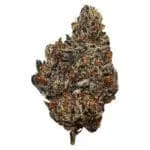
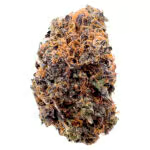
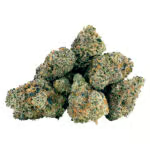
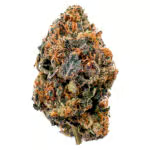
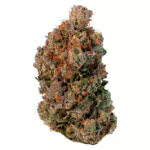
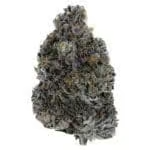
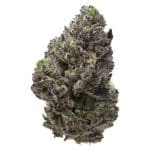
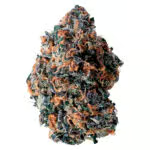
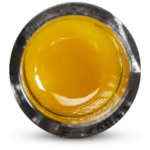
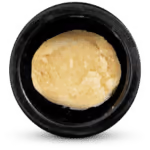
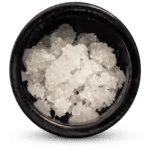
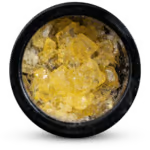
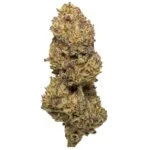
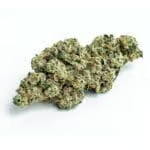
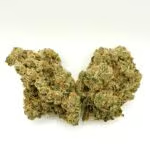
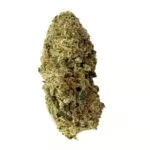
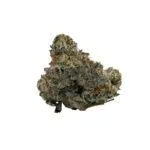
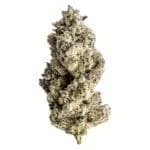
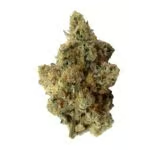
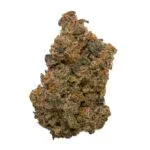
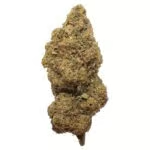
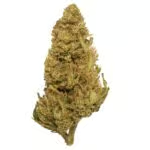
A micro producer is a small-scale cannabis grower holding a federal micro-cultivation licence from Health Canada, which caps the plant-growing area at 800 m². For you as a buyer, it usually means smaller harvests, tighter control over each batch and the kind of craft flower people hunt for. We curate craft cannabis from top-tier growers and deliver in about an hour across Durham Region and the GTA, so you can try the small-batch end of the market without chasing it shelf by shelf.
TL;DR
- A micro-cultivation licence is a federal licence. It lets a grower produce cannabis on up to 800 m² of grow surface, much less than a standard licence allows.
- Micro producers are regulated by Health Canada, so licensed small growers follow the same federal framework as large ones. Size is the main difference.
- A micro-cultivator on its own can sell in bulk to other licence holders. Packaged product for retailers comes through a processing licence.
- “Craft” is a quality claim, not a legal category. Look at the licence holder, harvest details, terpenes and how the product is described.
- Our shop carries a curated craft selection, with one-hour delivery in Durham Region and the GTA.
Table of Contents
- What a micro producer actually is
- What changed recently
- How micro-producer cannabis reaches you
- What this means for quality
- A quick worked example
- If you are thinking of becoming a micro producer
- Buying craft cannabis in Ontario, step by step
- Where we come in
- Our point of view
- FAQ
- Sources
What a micro producer actually is
In Canada, anyone who grows cannabis to sell needs a federal licence. Health Canada sets out several types on its licence types page. The two you will hear about most are standard cultivation and micro-cultivation.
A standard cultivation licence has no limit on grow surface area. That is the model behind the largest producers, with big facilities and high volume.
A micro-cultivation licence allows a grower to produce cannabis plants, seeds, pollen and fresh and dried cannabis, but only on up to 800 m² of grow surface. Storage and other non-growing areas are not limited, but the plants all have to live inside that defined area.
That 800 m² is not the footprint of the building. The Cannabis Regulations require the licence holder to clearly mark out a surface area of no more than 800 m² that holds all the cannabis plants, and they can only cultivate, propagate or harvest from that area. Stacked growing surfaces all count toward the total, as set out in section 13 of the Cannabis Regulations. Health Canada’s micro-cultivation guide adds that the limit covers horizontally and vertically arranged surfaces, indoor and outdoor, in use at any single time.
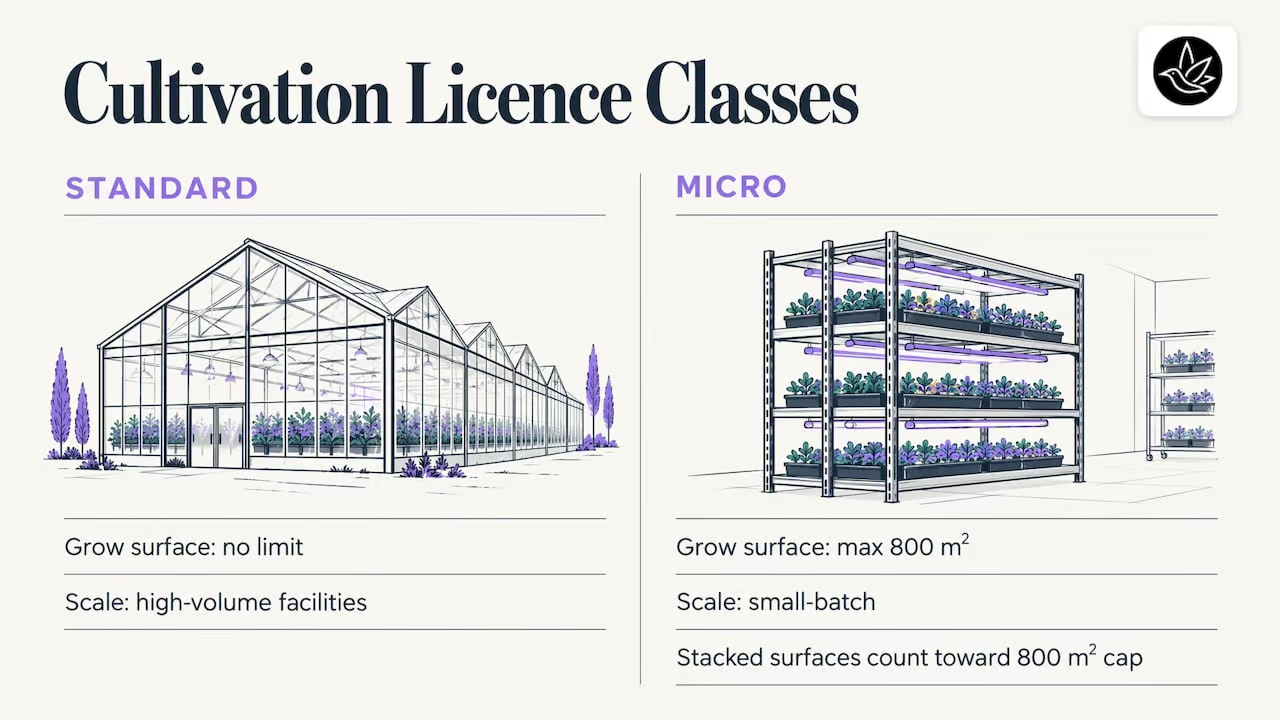
In plain terms: a micro producer has a hard ceiling on how many plants it can grow at once. That ceiling is why small-batch cannabis is small-batch.
Micro-cultivation, micro-processing and nursery: three different licences
The names sound alike, so here is the quick version, all drawn from the same Health Canada pages:
| Licence | What it allows | Key limit |
|---|---|---|
| Micro-cultivation | Growing plants, seeds, pollen, fresh and dried cannabis | 800 m² of grow surface |
| Micro-processing | Making cannabis products other than by growing it (think packaging, pre-rolls, extracts) | 2,400 kg of dried cannabis possessed per year, unless only its own same-site micro-cultivation cannabis is held |
| Nursery (micro-scale) | Plants and seeds | 200 m² of budding and flowering canopy, up to 20 kg of harvested flowering heads at any time |
| Standard cultivation | Same as micro-cultivation | No limit on grow surface |
Some small operations hold more than one of these. A grower that cultivates and processes on the same site can take a plant from seed to sealed package under one roof. That is part of why some craft brands can tell you so much about a batch.
What changed recently
The 800 m² figure is a newer one. Earlier, micro-cultivators were held to a much smaller area. Amendments published as SOR/2025-43 raised the ceiling, and the current wording sits in the Cannabis Regulations. For shoppers, the practical effect is that small licensed growers have more room to produce consistent harvests, so more craft product can reach the market.
Because rules like this are updated, Health Canada’s pages are the place to confirm the current limits.
How micro-producer cannabis reaches you
This is the part that surprises people. A micro-cultivation licence on its own does not let a grower sell packaged, labelled flower straight to shops. According to Health Canada, a micro-cultivation holder may sell bulk or wholesale plants, seeds, pollen and fresh or dried cannabis to the licence holders the department lists. Only micro- or standard-processing licence holders may sell packaged-and-labelled fresh or dried cannabis to provincial and territorial authorized retailers. This is all laid out on the licence types page.
So a small-batch jar on a shelf has usually gone through one of two routes:
- The grower also holds a processing licence, so it packages its own harvest.
- The grower sells dried cannabis in bulk to a processor, which packages and sells it.
Both routes sit inside the federal licensing system, so the product you buy through a legal retailer has been grown and handled by a licence holder. If you want more on the legal side of what you can buy and carry, our Ontario AGCO cannabis rules guide covers the compliance picture in Ontario.
What this means for quality
Small does not automatically mean better. What it does mean is a smaller number of plants for the grower to look after, which is the reason many craft brands exist. Growers in this class often talk about hand-trimming, slow drying and curing, and limited drops. Those are practices the licence permits and the scale makes realistic, though each brand is different.
When you are choosing, the licence class is only the starting point. These are the things worth reading on a product page:
- The producer’s name and licence class. A real craft brand is proud of who grew it.
- Harvest or packaged date. Fresher flower smells stronger and burns smoother.
- THC and terpene percentages. Terpenes are the aromatic compounds that shape the smell and flavour. A listed terpene total tells you the grower tested for it.
- Cultivar (strain) name and lineage. Consistent naming across batches shows the grower is working from stable genetics.
- Format and size. Craft flower tends to come in smaller packs, because the batches are small.
We go deeper on this in our guide to spotting real craft cannabis in Canada, and if you want to match a profile to your taste, our guide to cannabis strain types explains indica, sativa and hybrid labels in plain terms.
Craft is a description, not a licence
No federal licence is called “craft”. Brands use the word for small-batch, carefully handled product, and it often goes with micro-cultivation, but it is not a legal guarantee. Treat it as a pointer to read the product details, not a replacement for them. Our guide on what a cultivation class is in Canada helps you read those details.
A quick worked example
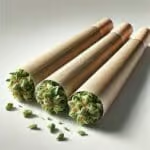
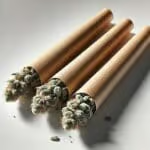
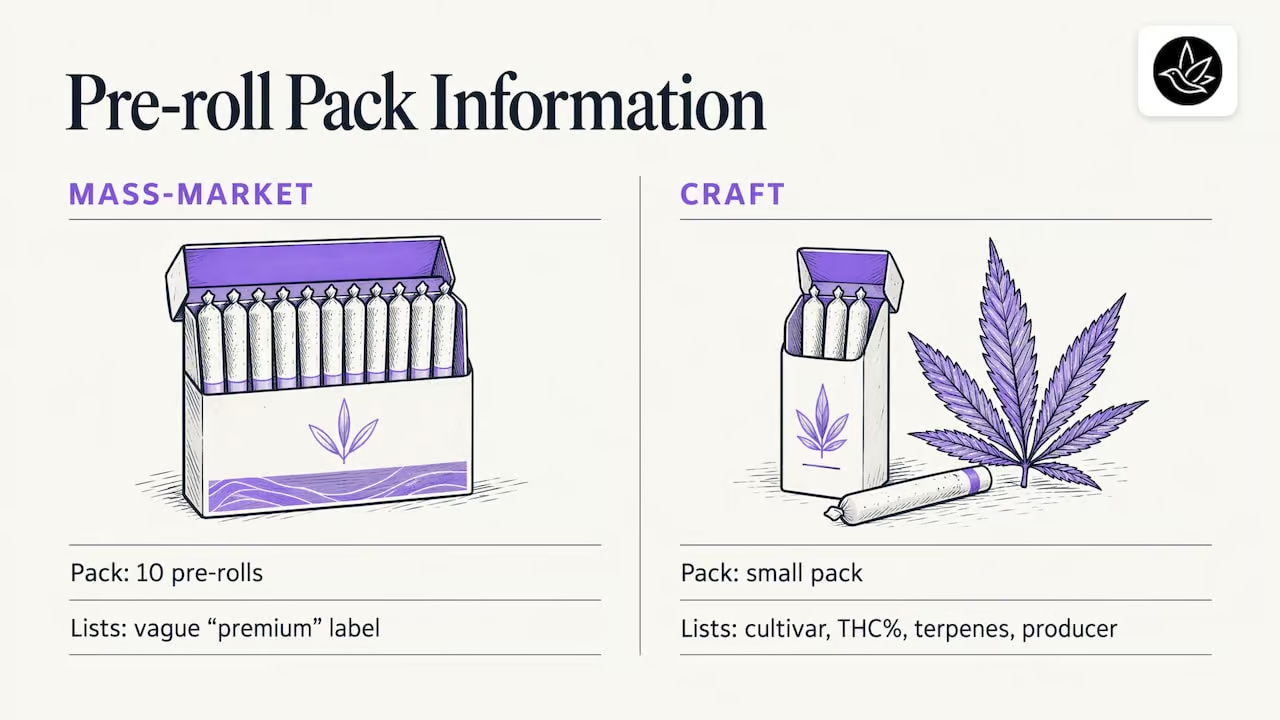
Say you are choosing between two pre-roll packs. One is a mass-market 10-pack with a vague “premium” label. The other is a small pack from a craft brand that lists the cultivar, a THC percentage, a terpene total and the producer’s name.
You are not guessing that the second is better. You are looking at which one gives you the information to decide. Our product pages show this detail, such as a 10-pack of Goofiez pre-rolls listing its THC and terpene figures, and a Sativa Runtz pre-roll pack. Read those numbers across brands and you start to notice what you like.
If you are thinking of becoming a micro producer
This article is written for people who buy cannabis, so we will keep this short. A federal micro-cultivation licence is applied for through Health Canada’s Cannabis Tracking and Licensing System, with security clearances for key people and a site evidence package. Health Canada sets out the full process on its application overview. That route is for aspiring licence holders, and the costs, timelines and site requirements belong in that official guidance.
Buying craft cannabis in Ontario, step by step
Here is a simple routine for shopping for small-batch product.
- Decide on a format. Flower, pre-rolls, vapes, extracts, edibles and drinks each have their own feel. Pick the one that suits how you like to consume.
- Read the label first. Producer, cultivar, THC and terpene content, and package date. Our dispensary checklist for Ontario walks through what to check.
- Start with a smaller pack. Small formats let you compare two or three producers without a big commitment.
- Note what you liked. Write down the cultivar and producer so you can find them again.
- Keep it legal. Adults only, buy from a licensed retailer, and know the possession and public use rules. Our guide to cannabis public use in Ontario is a good refresher.
At step 2, we do some of the work for you. Our product pages show the details above for each listing, and we curate craft cannabis from top-tier growers so you are not sorting through everything on the market.
Where we come in
We are an online retailer serving adults in Ontario, with recreational and medical options. If you are in Durham Region or the GTA, we offer one-hour delivery. Medical orders can go Canada-wide. Our range covers flower, pre-rolls, vapes, extracts, edibles, drinks, CBD and accessories, and we add new products in weekly drops, so small-batch picks come and go.
Our customers rate us 4.9 stars on Google, and that is mostly about two things: speed and product quality. Browse the full shop and filter by the formats you like.
Our point of view
Most people come to us asking what “micro” means because they have seen the word on a label and want to know if it matters. Our answer: it matters as a starting clue, not a verdict.
A micro licence tells you the grower works at a smaller scale. What you still want is the detail: who grew it, when it was packaged, what the terpene numbers say. That is why we put product information up front and why we curate what we carry.
We built Montrose around two ideas. First, convenience should not cost you quality, which is why we deliver in about an hour in Durham Region and the GTA. Second, you should know what you are buying, which is why we care about compliance and customer education. Weekly drops mean there is always something new from craft growers to try.
If you are curious about small-batch cannabis, start with one or two products, read the label, and come back to tell us what you liked. That is how you build a taste for it.
Nick
FAQ
Is micro-producer cannabis legal in Ontario?
Yes. Micro-cultivators hold a federal licence from Health Canada, and the product reaches adult consumers through licensed channels. Ontario’s retail and possession rules still apply to you as a buyer, so buy from a licensed retailer and keep within the legal possession limit.
How big can a micro-cultivation grow be?
Up to 800 m² of grow surface, counting every stacked or multi-level growing surface and any outdoor area in use. That limit appears in section 13 of the Cannabis Regulations. A standard cultivation licence has no limit on grow area.
Is craft cannabis the same as micro-producer cannabis?
Not exactly. “Craft” describes small-batch, carefully handled product and is not a licence category. Many craft brands are grown by small licence holders, but the label to trust is the detail on the product page: producer, cultivar, package date and terpenes.
Can a micro producer sell straight to a store?
Only in certain cases. Health Canada says a micro-cultivation holder can sell in bulk to other licence holders, while packaged-and-labelled dried cannabis for provincial retailers must come from a micro- or standard-processing licence holder. Many small brands hold both licences or work with a processor.
Do you deliver craft cannabis in Ontario?
We offer one-hour delivery in Durham Region and the GTA, and our medical orders can ship across Canada. You must be an adult to order.
Sources
- Types of cannabis and industrial hemp licences, Health Canada
- Applying for a cannabis micro-cultivation, nursery and micro-processing licence, Health Canada
- Cannabis Regulations, section 13, Justice Laws Website
- Cannabis cultivation, processing and sale for medical purposes: application overview, Health Canada