
TL;DR:
- Cannabis public use in Ontario is limited to outdoor spaces where tobacco smoking is permitted, with strict buffer zones and municipal restrictions. Possession is limited to 30 grams in THC equivalents, and violations can lead to fines or criminal charges, especially for impaired driving. Always check local bylaws before consuming, as municipal rules may be stricter than provincial laws.
Cannabis public use in Ontario is defined as consuming cannabis in outdoor or public spaces where tobacco smoking is legally permitted, subject to strict buffer zones, possession limits, and municipal bylaws. Ontario law sets the legal age at 19 and older for any cannabis purchase, possession, or consumption. The maximum possession limit in public is 30 grams of dried cannabis or an equivalent amount in other forms. Knowing what is cannabis public use in Ontario means understanding both the provincial baseline and the local rules that can tighten it further. This guide covers every layer, from buffer zones to driving laws, so you can consume confidently and legally.
Where can cannabis legally be consumed in public in Ontario?
Cannabis consumption is permitted in outdoor spaces where tobacco smoking is also allowed, but the list of prohibited locations is long and specific. Getting this wrong can result in a fine, so the details matter.
Permitted outdoor locations generally include:
- Sidewalks and streets (where no municipal ban applies)
- Designated smoking areas in public parks (where municipal bylaws allow it)
- Private residential properties, including backyards and balconies, with landlord permission
Prohibited locations under provincial law include:
- Within 20 metres of schools, playgrounds, and sports facilities
- Within 9 metres of restaurant and bar patios
- Enclosed public places, including restaurants, bars, hospitals, shopping malls, and entertainment venues
- Workplaces and common indoor areas of residential buildings, such as hallways, laundry rooms, and shared lounges
Provincial law prohibits smoking or vaping cannabis in any enclosed public space or workplace. This mirrors the Smoke-Free Ontario Act, which applies the same restrictions to tobacco. The logic is straightforward: indoor air is shared, and second-hand smoke affects everyone nearby.
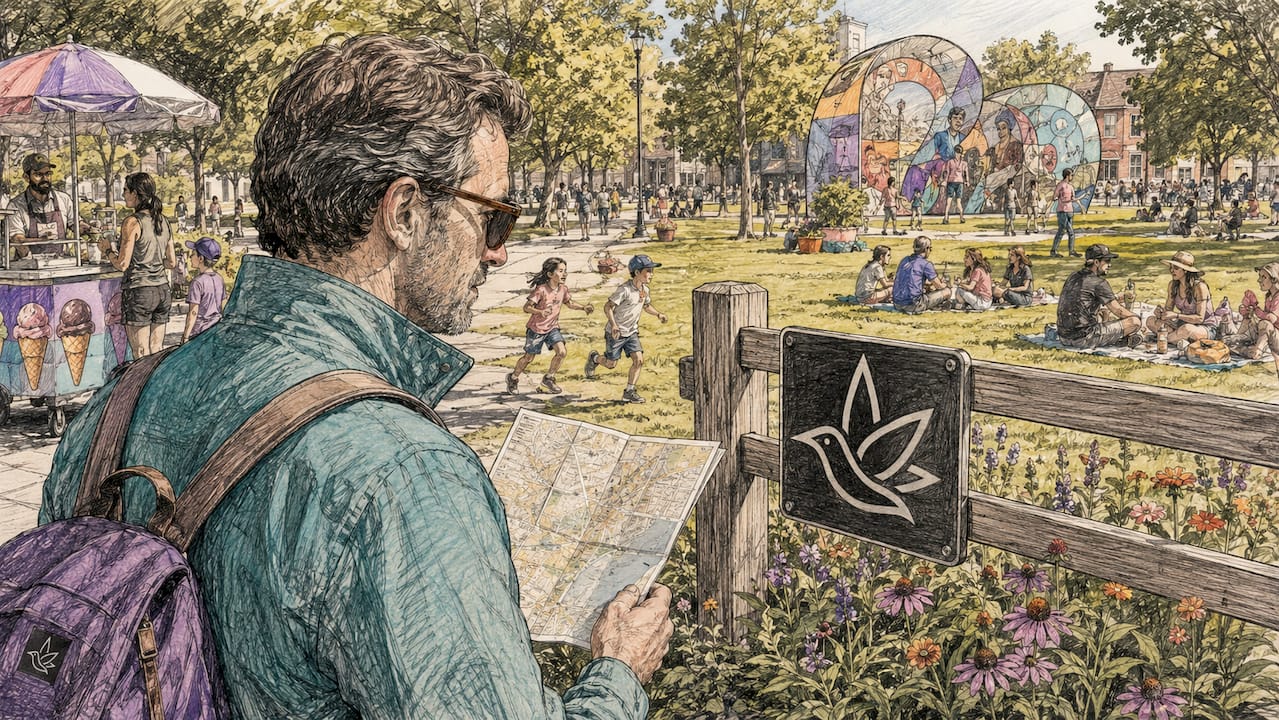
Pro Tip: Before you light up in any outdoor space, check whether you are within 20 metres of a school or playground. That buffer zone is larger than most people expect. A standard city block is roughly 80 metres, so a school can restrict use across a quarter of a block in every direction.
What are the possession limits and cannabis product types allowed in public?
The 30-gram possession limit applies to dried cannabis, but most people carry products in other forms. Ontario law uses THC-equivalent conversions to standardise the limit across all product types. This approach keeps enforcement consistent regardless of what form of cannabis you carry.
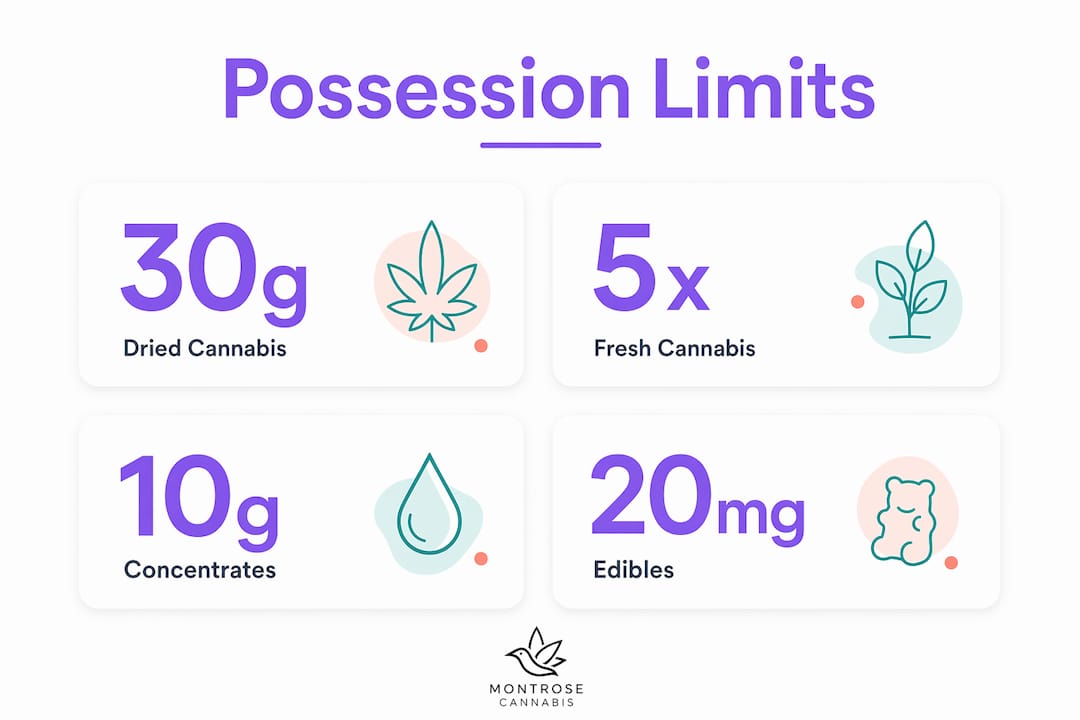
The equivalency system works like this:
| Cannabis form | Equivalent to 1 gram dried cannabis |
|---|---|
| Fresh cannabis | 5 grams |
| Solid edibles (e.g., gummies, chocolates) | 15 grams |
| Cannabis oil | 70 grams |
| Concentrates (e.g., budder, hash rosin) | 0.25 grams |
These equivalent THC content conversions standardise limits across diverse product types for consistent enforcement and public safety. If you carry a mix of product types, the combined equivalent must not exceed 30 grams of dried cannabis. For example, carrying 15 grams of dried flower and a 10-gram bag of solid edibles puts you right at the legal limit.
Understanding these equivalencies matters if you prefer concentrates or edibles over flower. Concentrates are potent and dense, so 0.25 grams of concentrate equals a full gram of dried cannabis. Carrying even a small container of budder or hash rosin can add up quickly against your 30-gram allowance. You can learn more about legal cannabis product types to understand how different forms are classified and regulated.
How do provincial laws interact with municipal bylaws?
The Smoke-Free Ontario Act sets the provincial baseline for cannabis consumption law, but municipalities have authority to impose stricter restrictions on top of it. This layered system means that being compliant with provincial law does not automatically mean you are compliant with local rules.
Toronto and Ottawa are the clearest examples of this gap. Both cities prohibit cannabis smoking in all city parks, even though provincial law would otherwise permit outdoor use in many of those spaces. A visitor who checks only provincial rules and then smokes in a Toronto park is technically breaking a municipal bylaw and can face a fine.
Municipal enforcement often extends to arenas, sports fields, public squares, and other city-owned properties. The patchwork of local rules is a real source of confusion. A regulation that applies in one Ontario city may not exist in the next. This is not a flaw in the system so much as a reflection of how Ontario balances provincial standards with local community values.
The practical consequence is that varied cannabis restrictions across municipalities cause confusion among residents and visitors who may face penalties despite following provincial rules. Checking your city’s official website before consuming cannabis in any public space is the only reliable way to stay compliant. Most Ontario city websites publish their cannabis bylaws in a searchable format.
Pro Tip: Search “[your city name] cannabis bylaw” on your city’s official .ca website before consuming anywhere other than private property. Municipal bylaws update regularly, and what was permitted last year may be restricted now.
What are the legal consequences for violating public cannabis rules?
Fines and penalties for public cannabis violations in Ontario range from municipal tickets to criminal charges, depending on the nature of the offence. The severity scales with the type of violation.
Common penalties include:
- Municipal fines for smoking in prohibited outdoor areas (amounts vary by city)
- Provincial fines under the Smoke-Free Ontario Act for consuming in enclosed public spaces
- Criminal charges for possession over 30 grams or supply to minors
- Immediate licence suspension and criminal charges for cannabis-impaired driving
The zero-tolerance policy for cannabis-impaired driving is one of the strictest provisions in Ontario cannabis law. Drivers aged 21 and under, novice drivers, and commercial drivers face immediate licence suspension and criminal charges if any cannabis is detected in their system while driving. There is no legal threshold for these groups. Even a trace amount triggers the full penalty.
For drivers over 21 with a full licence, the rules align more closely with alcohol law. Police use approved drug screening equipment at roadside stops, and a positive result leads to further testing. Impaired driving charges carry serious criminal consequences, including licence suspension, fines, and potential imprisonment.
“Cannabis-impaired driving is treated as seriously as alcohol-impaired driving under Ontario law. Zero tolerance for young, novice, and commercial drivers means any detectable amount of cannabis results in immediate suspension and criminal charges. There is no warning for a first offence.”
Police enforcement of public consumption rules typically starts with a warning for minor first-time violations, such as smoking in a prohibited outdoor area. Repeat offences or violations near schools and playgrounds are treated more seriously. Carrying over 30 grams in public is a criminal matter, not a bylaw issue, and is handled accordingly. You can review Canada’s THC laws for a broader picture of how federal and provincial rules interact.
Key takeaways
Ontario cannabis consumption law permits public use only where tobacco smoking is allowed, subject to buffer zones, possession limits, and municipal bylaws that can restrict use further than provincial law.
| Point | Details |
|---|---|
| Legal age is 19 and older | Anyone under 19 cannot legally possess, purchase, or consume cannabis anywhere in Ontario. |
| 30-gram possession limit applies | Carry no more than 30 grams of dried cannabis or the THC equivalent in other product forms. |
| Buffer zones are strictly enforced | Stay at least 20 metres from schools and playgrounds, and 9 metres from restaurant patios. |
| Municipal bylaws can be stricter | Cities like Toronto and Ottawa ban cannabis in parks; always check local rules before consuming. |
| Zero tolerance for young drivers | Drivers aged 21 and under face immediate suspension and criminal charges for any cannabis detected while driving. |
Why most people get public cannabis rules wrong in Ontario
People consistently underestimate how much local bylaws change the picture. I’ve spoken with plenty of people who read the provincial rules, felt confident, and then got a ticket in a Toronto park because they didn’t realise the city had its own ban. Provincial law is the floor, not the ceiling.
The buffer zone rules also catch people off guard. Twenty metres sounds like a lot of space, but in a dense urban neighbourhood, schools and playgrounds are everywhere. I’d argue the single most useful habit any cannabis consumer in Ontario can develop is checking a city map before consuming anywhere near a residential area.
Second-hand cannabis smoke is genuinely harmful to children and people with respiratory conditions. This isn’t just a legal consideration. Consuming near families, near playgrounds, or in shared residential spaces affects real people. Respecting those around you is not just good manners. It’s part of being a responsible part of the cannabis community.
The driving rules are where I see the most dangerous misconceptions. People assume that because they feel fine, they are fine to drive. Ontario law does not work that way, especially for young and novice drivers. Cannabis affects reaction time and judgement in ways that don’t always feel obvious to the person consuming. The zero-tolerance rule exists for a reason, and it’s enforced without exceptions.
My honest advice: consume on private property whenever possible, verify local bylaws before going public, and never get behind the wheel after consuming. The legal framework in Ontario is workable once you understand it. The people who get into trouble are almost always the ones who assumed the rules were simpler than they are.
— Nick
How Montrosecannabis supports responsible cannabis use in Ontario
Knowing the rules is only half the equation. Buying from a licensed, compliant retailer is the other half.

Montrosecannabis is a legal online cannabis retailer serving the Durham Region and GTA, with one-hour delivery and a curated selection of craft cannabis from top-tier growers. Every product meets Health Canada’s regulatory standards, so you know exactly what you’re getting. Whether you’re looking to buy cannabis online in Ontario or want to explore product guides before you order, Montrosecannabis has you covered. The Montrosecannabis journal also covers topics like cannabis seeds in Canada and product education to help you make informed choices. With a 4.9-star Google rating and a commitment to customer education, Montrosecannabis is built for consumers who take both quality and compliance seriously.
FAQ
Where is cannabis consumption allowed in Ontario?
Cannabis consumption is allowed outdoors where tobacco smoking is permitted, provided you are at least 20 metres from schools and playgrounds and 9 metres from restaurant patios. Indoor public spaces and workplaces are prohibited under the Smoke-Free Ontario Act.
What is the legal possession limit for cannabis in public in Ontario?
The legal limit is 30 grams of dried cannabis or the equivalent amount in other forms, such as edibles, oils, or concentrates. Carrying more than 30 grams in public is a criminal offence.
Can Ontario cities ban cannabis use in parks?
Yes. Municipalities like Toronto and Ottawa have banned cannabis smoking in all city parks, even though provincial law would otherwise permit outdoor use in many of those spaces. Always check your city’s bylaw before consuming in a park.
What is the cannabis driving law in Ontario?
Ontario enforces zero tolerance for cannabis-impaired driving among drivers aged 21 and under, novice drivers, and commercial drivers. Any detectable amount of cannabis results in immediate licence suspension and criminal charges.
What is the legal age for cannabis use in Ontario?
The legal age for cannabis purchase, possession, and consumption in Ontario is 19 years and older. Anyone under 19 is prohibited from any legal cannabis activity.


