To remove weed smell from an apartment, stop the smell at the source, move the air out with a window fan, wash or wipe every soft surface, and filter what’s left. Air fresheners, candles and incense only cover the smell for a while. Below is the full routine, plus how to deal with clothes, what to do when the smell is coming from next door, and what Ontario rules say about consuming in your unit.
TL;DR
- Ventilate during and after a session: a fan in a window pointing outward pulls stale air out, and it pays to keep air moving for 10 to 20 minutes after you finish.
- The smell sticks to fabric, not just air, so wash curtains, throws and clothes and wipe hard surfaces.
- Air fresheners, candles and incense mask the odour. They don’t remove it.
- Smell travels between units through gaps, ducts and outlets. If it’s your neighbour’s smoke, document it and talk to building management rather than altering vents yourself.
- Smoking and vaping are off limits in condo and apartment common areas in Ontario, so keep sessions in your unit or on your balcony where the rules allow it.
Table of Contents
- Why weed smell sticks around
- Step 1: Cut the smell at the source
- Step 2: Ventilate the right way
- Step 3: Clean what the air left behind
- Step 4: Filter the air
- What not to rely on: air fresheners, candles and incense
- Weed smell on clothes
- When the smell is coming from next door
- Ontario rules every apartment consumer should know
- Our perspective
- Shop for apartment-friendly picks
- A quick weekly routine
- FAQ
- Sources
Why weed smell sticks around
Cannabis odour comes from terpenes such as myrcene and limonene, mixed with whatever combustion produces when you smoke. Those compounds are fat-soluble, which is why they soak into soft surfaces instead of just floating in the air. Couches, curtains, bedding, carpet and your hoodie hold on to them long after the room “feels” fine.
That’s also why two sessions can behave so differently. A quick one by an open window clears fast. A long one in a closed bedroom leaves residue on the walls and in the fabric. Smoke leaves a film on walls and furniture that can keep giving off a bad smell long after the smoke is gone, and in heavy cases a professional cleaning service may be needed.
If you’re curious why different strains smell so different in the first place, we wrote about the science behind cannabis aroma.
Step 1: Cut the smell at the source
The cheapest odour fix is making less of it. A few habits that help:
- Pick a spot. Always use the same room, ideally the one with the best window, so the smell isn’t spread through the whole apartment.
- Choose a lower-odour format. Vaping generally leaves less lingering smell in a room than burning flower, though it isn’t odourless. Our guide on vaping vs smoking weed covers the trade-offs. Edibles and drinks produce no smoke at all.
- Smaller sessions. Fewer puffs means less to clear.
- Seal what you’re not using. Open jars and bags keep releasing aroma. Airtight, smell-proof storage with humidity control keeps the scent in the container and your terpenes intact.
When you’re ready to restock with lower-smoke options, we carry vapes, edibles, drinks and more.
Step 2: Ventilate the right way
Opening a window helps, but pushing air in the right direction helps more. Put a box fan in the window facing outward. It creates negative pressure that draws stale room air out while fresh air comes in elsewhere. One UK guide says a fan like this can clear a standard room in about 5 to 15 minutes, which fits what most people see in a small room, though your apartment’s layout will change the number.
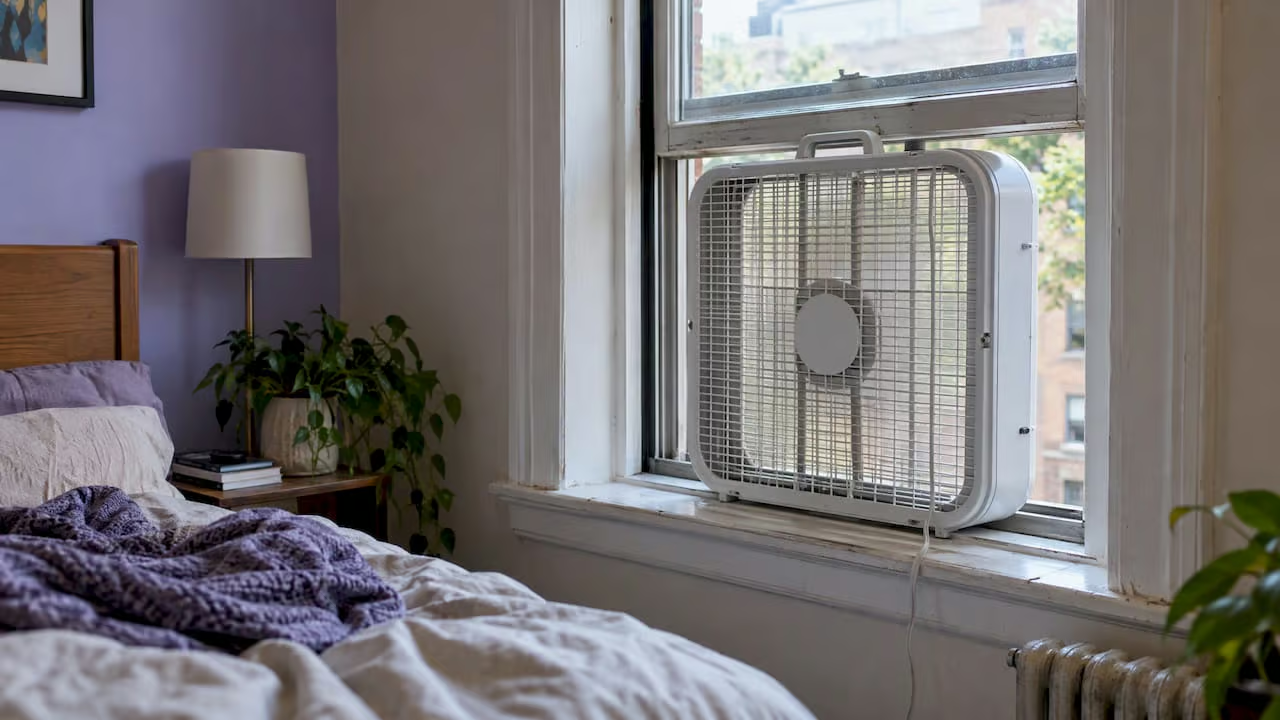
The common mistake is stopping too soon. One Ontario blogger advises keeping airflow going for 10 to 20 minutes after a session, because the air feels clean while compounds are still drifting and about to settle on surfaces.
A simple routine:
- Open a window and a second opening (a door to the hallway is not the one, use another window or the balcony door) to create a through-flow.
- Set the fan in the window, blowing out.
- Close the bedroom or room door behind you if you’re ventilating a single room, so smell doesn’t spread.
- Keep the fan running for 10 to 20 minutes after you finish.
- In winter, do this in shorter bursts. A cold apartment is still better than a smelly one.
How long will the smell hang around?
It depends on the room, the product and the airflow. A small amount of smoke in a well-ventilated room can fade within hours, while heavy smoke in a closed, fabric-heavy room can linger much longer. That’s the reason for dealing with soft surfaces in the next step.
Step 3: Clean what the air left behind
Once the air is moving, go after the residue.
- Hard surfaces: Wipe walls, window sills, tables and the inside of windows with a damp cloth and mild soapy water. Soapy water and fresh air make cannabis smell come out much easier than scented sprays do. (Skip harsh chemicals on painted walls and test a small patch first.)
- Soft furnishings: Wash throws, cushion covers, curtains and bedding on the warmest cycle the label allows. Cushions you can’t wash can be aired outside on a dry day.
- Carpets and rugs: Sprinkle baking soda, leave it for several hours, then vacuum.
- Bowls of baking soda: Leave a couple in corners of the room to absorb ambient odour between cleans.
- Ashtrays, grinders and pipes: These hold smell on their own. Empty and clean them after use.
Don’t forget your HVAC
If your unit has its own heating and cooling system or furnace, smoke particles can build up on filters and ducts and then get pushed back through the home every time the system runs. Swap the filter regularly. If the system is shared across the building, don’t touch it yourself. Tell your landlord or property manager.

Step 4: Filter the air
Ventilation moves smell out. Filtration catches what’s left. For a rental you can’t modify, a few options work without any installation:
- Portable air purifier with both a HEPA filter and an activated carbon filter. The carbon layer is what deals with odour molecules, the HEPA layer catches particles.
- Personal smoke filters you exhale into, which are small, cheap and good for people who share walls.
- Fresh carbon filter swaps. Carbon saturates over time, so follow the maker’s replacement schedule.
Carbon filtration is also what the pros rely on. Health Canada notes that licensed indoor producers must filter air leaving their buildings to limit odour, and that carbon filtration is the most commonly used option. The same logic scales down to your living room.
What not to rely on: air fresheners, candles and incense
It’s tempting to light something and call it done. It doesn’t work for long. Fragrance products add their own scent on top of the cannabis smell and don’t break the odour compounds down, so once the fragrance fades the smell comes back. Incense also adds its own combustion byproducts to your surfaces.
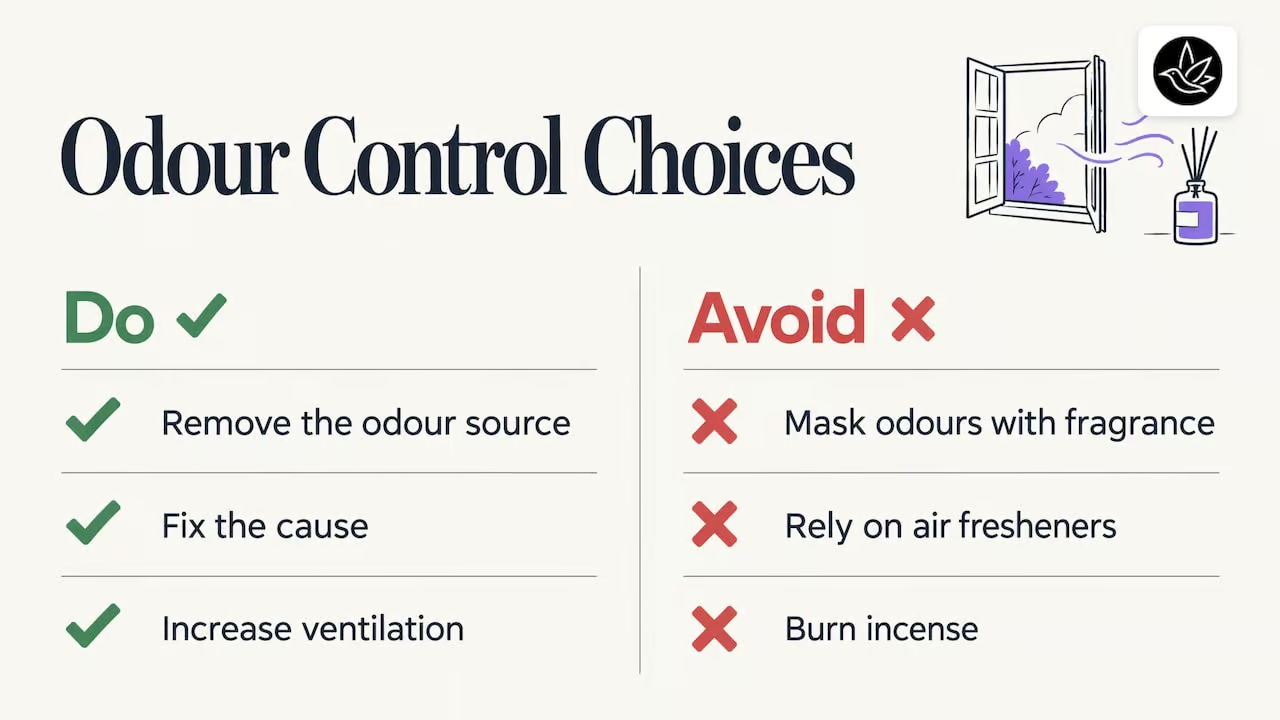
There’s an air quality angle too. A peer-reviewed review of air fresheners found that using one can create or worsen an indoor air quality problem by adding a chemical mixture to the air. The author’s advice for unwanted odours is to remove the source, fix the cause or increase ventilation instead of masking. That’s the order of this whole guide.
Weed smell on clothes
Clothes pick up smoke fast, especially wool, fleece and anything thick. What helps:
- Air them out first. Hang the item outside or by an open window for a few hours before it goes anywhere near your closet.
- Wash with baking soda. Appliance makers suggest adding about half a cup of baking soda to the drum along with detergent, or pre-soaking stubborn items in warm water and baking soda for 30 to 60 minutes.
- Try a vinegar soak for stubborn smell. The same source suggests a quarter vinegar to one cup water mix for a 30-minute soak, then a thorough rinse. Check the care label first, and never mix vinegar with bleach.
- Check before drying. Heat can set smell into fabric. If it still smells after washing, wash again or air-dry and check again.
- Dry-clean-only items: Hang them in a steamy bathroom, then air them out, or take them to a dry cleaner.
To keep clothes from picking up smell in the first place, use a dedicated hoodie or throw for sessions and leave it in the room where you consume. Keep closet doors closed during sessions.
When the smell is coming from next door
If you’re the one smelling someone else’s cannabis, the fix is different, because the source isn’t yours to change.
How smell travels between units
For odour to travel between two units, there must be openings for air to pass through and pressure to push it. Canada Mortgage and Housing Corporation points to wind, stack effect and ventilation pressure differences as the driving forces behind odour moving between condo units. In practice the culprits are often small: an Ontario building-science firm notes that electrical and plumbing penetrations are the primary culprits, and the offending unit can be above or below as often as beside you. Buildings are also not required to be 100 per cent airtight.
What you can do
- Document it. Note dates, times, how long the smell lasts and where you notice it most (bathroom fan, outlets, under the door).
- Seal what’s yours. Weatherstrip your door and use door sweeps to block the gap under it. Don’t alter fire-rated walls, vents or shared ventilation.
- Run a carbon-filter air purifier in the room you’re most affected.
- Talk to management. Share your notes and ask them to check building pathways. Condo owners can ask the board to look into it.
- Know the rules. The Condo Act prohibits unreasonable smoke or vapour in units and common elements regardless of governing documents, and boards or owners can apply to the Condominium Authority Tribunal over it. Tenants in rental buildings should read their lease and speak to the landlord.
Ontario rules every apartment consumer should know
In Ontario, people can generally smoke, vape or consume edibles in their residential unit and on a balcony or terrace, unless a law or rule prohibits it. Smoking or vaping cannabis in the common areas of apartment and condo buildings is not allowed. Under the Smoke-Free Ontario Act, 2017, that covers indoor common areas, including lobbies, parking garages, party rooms and laundry facilities.
Leases and condo declarations can set stricter rules for your own unit, so check yours. For more on provincial rules, see our Ontario AGCO cannabis rules guide.
Our perspective
We hear the same thing from customers in condos and apartments across Durham Region and the GTA: they want to enjoy cannabis without the whole building knowing about it. The good news is that smell control is mostly habits, not gadgets.
Our take is simple. Start with how you buy and store. Craft flower is aromatic by design, so a good airtight, humidity-controlled container matters as much as any fan. Then pick the format that suits your space: pre-rolls that skip the grinding, vapes, edibles and drinks for the days you don’t want any smoke at all.
We built our menu to make that easy, and our one-hour delivery in Durham Region and the GTA means you can pick something that fits your living situation without a trip to the store. Our packaging is made to stay discreet at the door as well.
Whatever you choose, ventilate, wash the soft stuff and be a good neighbour. That’s what keeps things relaxed for everyone.
Nick
Shop for apartment-friendly picks
Living in a shared building? Our full shop covers dried flower, pre-rolls, vapes, extracts, edibles, drinks and CBD, with one-hour delivery across Durham Region and the GTA and medical orders shipped Canada-wide. If you’re building a low-odour routine, start with vapes or edibles and add accessories like sealed jars to keep things fresh.
We also share tips on how to store cannabis properly and discreet packaging for deliveries in Canada.
A quick weekly routine
| When | What to do |
|---|---|
| During a session | Fan in window pointing out, door closed, use one room |
| Right after | Keep airflow going 10 to 20 minutes, empty and clean your tools |
| Same day | Wipe hard surfaces, air or wash anything that smells |
| Weekly | Wash throws and curtains, vacuum carpets, replace baking soda bowls |
| Monthly | Check purifier and HVAC filters, swap carbon when due |
FAQ
Can air freshener remove weed smell?
No. Air fresheners add fragrance on top of the odour, they don’t break down the compounds behind it. When the fragrance fades, the smell returns. Ventilation, cleaning and carbon filtration are the better route.
How far does weed smell travel?
It depends on your building. Smell moves along air paths such as ducts, outlets, plumbing gaps and doors, and it can reach units above and below as well as beside you. Better ventilation and sealing gaps in your own unit cut down how much leaves.
Can weed smoke damage walls?
Smoke leaves a residue on walls, furniture and surfaces that can keep smelling long after the smoke is gone. Regular wiping with soapy water helps, and heavy build-up may need professional cleaning.
How do I get weed smell out of clothes?
Air the item outside first, then wash with detergent and baking soda, or pre-soak stubborn pieces in warm water with baking soda. A short vinegar soak followed by a good rinse can help too. Check the care label and avoid heat-drying until the smell is gone.
Sources
- How to Get Rid of the Weed Smell (fan and airflow guidance)
- How to Reduce Weed Smell in an Apartment: Ventilation, Storage and Habits
- How to Get Weed Smell Out of Your House
- What’s That Smell? Keep Marijuana from Smelling Up Your Home
- How to Get Rid of Weed Smell from Cars, Clothes, Homes
- Cannabis odours and odour control, Health Canada
- Ten questions concerning air fresheners and indoor built environments
- 4 Ways to Help Remove Smoke Smell From Clothes
- Cannabis and condo: a foul odor of problems on the horizon
- Assessing odour transfer between condominium units
- Smoke and vapour: legal considerations, Condominium Authority of Ontario
- Questions and answers on cannabis and the Human Rights Code, OHRC