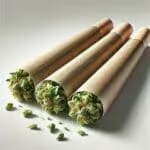
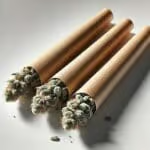
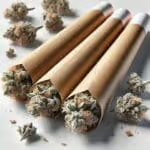
A joint canoes when one side burns faster than the other, leaving a long, uneven edge that looks a bit like a boat. You can usually fix it on the spot by rotating the joint so the slow side faces up, relighting that side, and taking slower pulls. You can prevent it next time with an even grind, a loose but even pack, a thin paper and a proper light around the whole tip. We’ve got you covered below, step by step.
TL;DR
- Canoeing means the ember runs down one side of the joint, which wastes flower and makes the smoke harsher.
- The usual causes are uneven grinding, uneven packing, damp or unevenly dried flower, thick paper, a lopsided light and wind.
- To fix a canoe mid-smoke, stop pulling, rotate the slow side up, and relight it evenly.
- To prevent it, grind well, remove stems and seeds, pack evenly, light the whole circumference and rotate as you go.
- If you’d rather skip the rolling, a well-made pre-roll takes most of the guesswork out.
Table of Contents
- What canoeing actually is
- Why your joint canoes
- How to fix a joint that’s already canoeing
- How to stop canoeing before it starts
- Quick troubleshooting by symptom
- Does the flower matter?
- Pre-rolls that canoe
- Smoking smarter, whichever way you consume
- Need gear, flower or pre-rolls? We deliver
- Our take on canoeing
- FAQ
- Sources
What canoeing actually is
Canoeing, sometimes called running, is when the ember travels farther down one side of a joint or pre-roll than the other. The result is an uneven edge that can resemble a canoe, and a deep run can waste material, as Herb explains in its guide to stopping a canoeing joint.
It isn’t only cosmetic. When one side races ahead, the unburnt side stays behind like a wall. The burning side gets hotter and the paper next to it chars faster, so you get a harsher draw and less of the flower you paid for. Left alone, the joint can burn so lopsided that the lagging side never really lights at all.
The good news: canoeing is one of the most fixable problems in smoking. It’s rarely about the quality of the flower. It’s almost always about how the joint was prepared, lit and smoked.
Why your joint canoes
If you keep asking why your joint canoes every time, the answer is usually a combination of small things. A joint can run because of uneven grinding, packing, moisture, lighting or wind, and it’s worth checking each one in turn.
Uneven grind
When the grind is a mix of fine powder and big chunks, the pieces burn at different rates. Different particle sizes mean different airflow and different burn speeds, which raises the risk of one side getting ahead. A grinder helps you avoid large chunks and air pockets, according to Herb. Tearing buds apart by hand is the most common way to end up with a lumpy fill.
Uneven packing
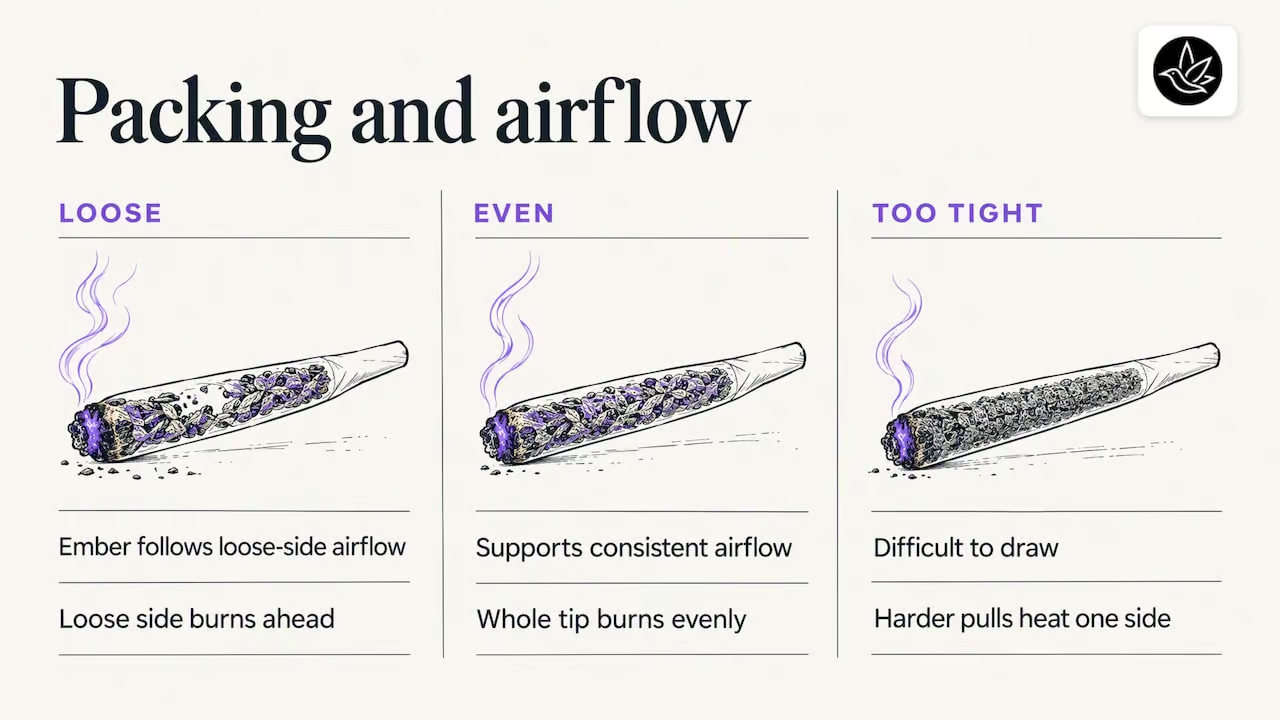
Air follows the path of least resistance. If one side of the joint is packed loosely and the other tightly, the ember chases the airflow down the loose side. Even packing supports consistent airflow, so the whole tip burns at the same speed. Packing too hard creates the opposite problem: the joint is tough to draw on, you pull harder, and you heat one side more than the other.
Moisture
Flower that’s too moist, or dried unevenly, is more likely to canoe, according to Herb. Damp pockets smoulder slowly while drier patches burn quickly, so the ember skips ahead through the dry stretch. Flower that’s very dry has its own issues: it burns hot and fast and can feel harsh. Properly cured flower with a steady, even moisture is the sweet spot.
Paper
Thicker, lower-quality paper can burn unevenly, per Herb. A thin, even paper burns at a steady pace and gets out of the flower’s way. If you’ve been rolling with thick or glossy-feeling papers, try swapping.
Lighting
Holding a flame to one point and puffing is the classic cause. The side you lit becomes the lead side, and it keeps leading. Lighting the whole tip evenly helps prevent canoeing, and that means rotating the joint through the flame until the entire edge is glowing before you start pulling.
Wind
Wind can disrupt the burn and make a joint burn unevenly from the very first puff, per Herb. Outdoors in a Canadian fall breeze, the windward side races ahead. Cup your hand around the tip or turn your body to block the gust.
How to fix a joint that’s already canoeing
Don’t panic and don’t keep puffing hard. Hard pulls bring in more heat and oxygen, which makes the lead side run even further. Here’s a simple routine:
- Stop drawing. Rest the joint over a fire-safe ashtray so nothing falls on you or your furniture.
- Rotate the slow side up. Turn the joint so the unburnt side faces the sky. Heat rises, so the ember on the fast side tends to pull the slow side along.
- Relight the lagging side. Gently touch the flame to the unburnt edge, turning the joint until the whole tip glows evenly.
- Try the wet-finger trick for a mild run. Some smokers dab a tiny bit of moisture on the side that’s racing ahead to slow it. It can help with a small canoe, but go light: too much moisture makes the paper soggy and tears it.
- Extinguish and relight if the gap keeps growing. If the run is deep and isn’t evening out, put the joint out, trim or square off the tip, and relight it properly around the full circumference.
- Slow your pulls. Easy, steady draws preserve balance. Rotate the joint now and then as you smoke.
A quick note on what not to do: don’t compensate by inhaling harder to “pull” the slow side alight. The Public Health Agency of Canada advises that if you do smoke cannabis, you should avoid deep inhalation and breath-holding. Fixing a canoe is a job for the lighter and a quarter turn, not for bigger lungfuls.
How to stop canoeing before it starts
Most of the work happens before you ever light up. Run through this checklist the next time you roll.
1. Grind it evenly
Use a grinder and aim for a consistent, fluffy texture, not powder and not chunks. If you’re a tear-it-by-hand person, take a minute to break the pieces down to similar sizes.
2. Clean out stems and seeds
Hard stems and seeds create firm spots and air gaps. Removing them is one of the simplest ways to keep the burn consistent, and Herb recommends it too.
3. Check the moisture
If your flower feels wet or spongy, let it air out briefly before rolling. If it’s crumbly and brittle, it will burn fast and hot. Aim for flower that’s springy and breaks apart cleanly.
4. Pick a thin paper
A fine, even paper burns at a steady rate. If you roll often, it’s worth keeping a pack you trust. Our Raw Classic Ethereal 1 1/4 papers and Premium Black 1 1/4 papers are both options if you want to try a different feel in the same size.
5. Pack loose but firm
Think “even” rather than “tight.” Spread the ground flower in a uniform line along the paper, with a slightly fuller middle if you like a taper. Then roll and give it a gentle tap on the end to settle things. If you’re new to this, our beginner’s guide to rolling a perfect joint walks through the whole process, including shaping and twisting the end.
6. Light the whole circumference
Hold the flame near the tip, rotate the joint slowly, and let the entire edge catch before your first real pull. Take your time. That ten extra seconds saves the whole joint.
7. Rotate and pace yourself
Turn the joint gently between hits so no single side takes all the heat. Rotating the joint helps prevent one side from burning faster, and it takes no effort once it becomes habit.
8. Shield it from wind
If you’re outside, find a sheltered spot or cup your hand around the tip. Sheltering the tip is the easiest fix on this list.
Quick troubleshooting by symptom
| What you see | Likely cause | What to do |
|---|---|---|
| Canoe starts right after lighting | Uneven light or wind | Extinguish, relight evenly, shield from wind |
| Run grows halfway down | Loose side in the pack | Rotate slow side up, relight, slow your pulls |
| Joint keeps going out | Packed too tight or flower too damp | Loosen the fill next time, let flower air out |
| Burns fast and hot | Flower too dry, or paper too thin for the fill | Smoke slower, rehydrate slightly, check the cure |
| Lumpy burn with crackling | Seeds, stems or large chunks | Grind finer, clean the flower before rolling |
| Soggy, torn paper | Too much moisture from fingers | Use a lighter touch, relight carefully |
Does the flower matter?
It does, but mostly through moisture and cure. Flower that’s been stored well and dried evenly is easier to roll and burns more predictably. If a joint begins canoeing often, even with good technique, the flower may be too dry or not cured properly. That’s one reason we put so much weight on sourcing from growers who take drying and curing seriously, and on giving you detailed product information so you know what you’re buying. If you want to understand more about what’s in your flower, our page on knowing more about the cannabis you smoke is a good place to start.
Pre-rolls that canoe
Pre-rolls canoe too, and the reasons are the same: fill distribution, grind, moisture, cone quality and how you light them. The difference is that you can’t change the fill, so the fix comes down to your lighting and pacing:
- Light the crown all the way around before you start pulling.
- If it starts to run, rotate the slow side up and relight.
- Smoke slowly. Pre-rolls are often packed to be consistent, so a gentle pace lets that consistency work.
- Store them away from heat and dry air so they don’t dry out and burn fast.
If you’d like to skip rolling, browse our pre-roll range. A multi-pack like the Shuffle 4-pack of J’s pre-rolls makes it easy to compare how different fills burn, which is a handy way to learn what you prefer.
Smoking smarter, whichever way you consume
Canoeing is a nuisance, not a danger. But it’s a good reminder to slow down and pay attention to how you’re smoking. The Public Health Agency of Canada notes that using cannabis in ways that don’t involve smoking is one way to reduce risks. If you’re curious about alternatives, we break down the trade-offs in vaping vs smoking weed, and our guide to why edibles hit harder than smoking covers how different methods affect you in Canada.
If you’re a medical patient or have a health condition, check with your healthcare provider about the method that’s right for you.
Need gear, flower or pre-rolls? We deliver
We’re an online cannabis retailer serving Durham Region and the GTA with one-hour delivery, plus Canada-wide delivery for medical orders. Our curated selection covers flower, pre-rolls, vapes, extracts, edibles, drinks, CBD and accessories, with weekly product drops and detailed product information so you know what you’re getting.

Ready to stock up on papers, flower or ready-rolled options? Browse the full shop and pick what suits your routine. Our team is built around fast, discreet service and plain-language product info, so whether you’re new or experienced, you’ll find what you need without the guesswork.
Our take on canoeing
Here’s the honest truth from our side of the counter: most canoeing complaints come down to technique and storage, not to “bad weed.” A joint is a tiny machine. It needs an even fill, steady airflow and an even light. Get those three right and the burn takes care of itself.
That’s why we care so much about the details behind the product page: how flower is dried and cured, what the format is, and what you need to know before you buy. We work with craft growers and producers because consistent product makes for a smoother experience, and we’d rather you understand what’s in your hands than guess.
If you roll your own, invest in a decent grinder and thin papers, and give the light a few extra seconds. If you’d rather not, a good pre-roll is a great shortcut. Either way, we’re here to make it simple, discreet and fast.
Nick
FAQ
Why do I always canoe joints?
It’s usually a repeat habit: uneven grinding, a lopsided pack, or lighting just one spot on the tip. Moisture and wind can also play a part. Change one thing at a time, starting with the grind and the light, and you’ll see which habit was responsible.
Can I fix a canoeing joint without relighting it?
Sometimes. For a mild run, rotate the joint so the slow side faces up and pace your pulls. Heat rises, so the lagging side often catches up. If the gap keeps growing, extinguish the joint and relight it evenly around the whole tip.
Why do pre-rolls burn unevenly?
Pre-rolls canoe for the same reasons hand-rolled joints do: fill distribution, moisture, cone quality and how they’re lit. Since you can’t change the fill, light the whole crown evenly, rotate while smoking and store pre-rolls somewhere cool so they don’t dry out.
Does the wet-finger trick really work?
For a small run, a tiny dab of moisture on the fast-burning side can slow it down. Use very little, because too much will make the paper soggy or tear it. For a deep canoe, relighting the slow side is more reliable.
Does thinner paper stop canoeing?
It helps. Thicker, lower-quality paper can burn unevenly, while a thin, even paper burns at a steadier pace. Paper is only one piece, though. Grind, pack and lighting matter just as much.
Sources
- How To Stop A Joint From Canoeing | Herb
- Cannabis and your health: 10 ways to reduce risks | Public Health Agency of Canada