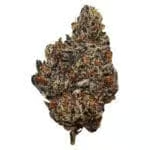
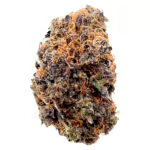
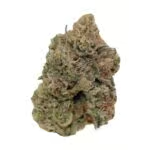
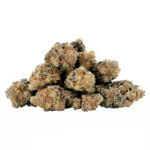
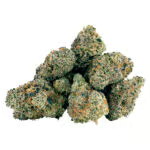
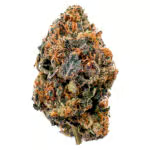
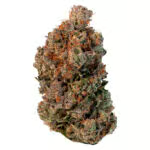
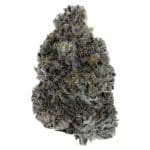
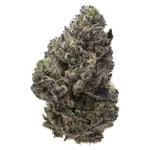
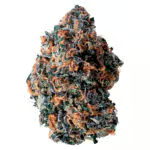
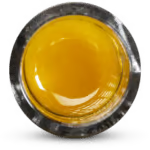
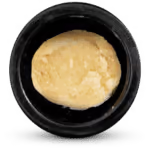
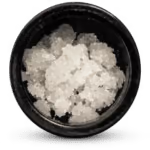
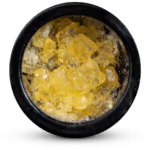
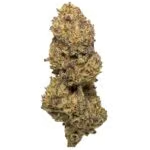
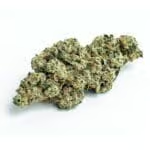
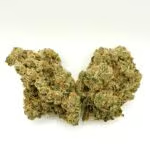
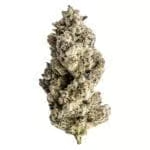
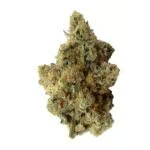
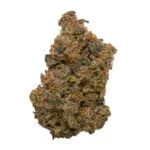
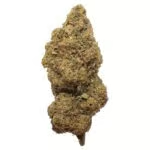
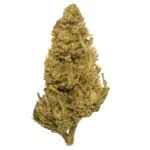
The strains Canadians most often search for when they want a clear, daytime feel are the ones sold as sativa-dominant or “energizing”: Sour Diesel, Jack Herer, Durban Poison, Green Crack and Blue Dream come up on almost every list. But the name on the jar tells you less than the label does. The most useful way to choose is to read the THC and CBD percentages and the terpene content, start with a small amount, and keep it for a time when you aren’t driving or doing safety-critical work. We’ve put this guide together so you can do that with confidence, and so your order reaches you within one hour if you’re in Durham Region or the GTA.
TL;DR
- Names like Sour Diesel, Jack Herer, Durban Poison and Blue Dream are the usual “daytime” picks, but the label’s THC, CBD and terpene numbers are a better guide than the strain name.
- Research from Dalhousie University found indica and sativa labels are only weakly tied to a product’s chemistry, so compare terpene totals and cannabinoid ratios.
- Health Canada suggests new or cautious consumers look for products under 10% THC with equal or higher CBD, and start low, go slow.
- Inhaled effects usually last about 2 to 4 hours and edibles about 4 to 8, so plan your day around that, and never drive after using.
- You must be 19 or older to buy and use cannabis in Ontario.
Table of Contents
- What people mean by “strains for focus”
- The strains you’ll see on Canadian “focus” lists
- Why the indica and sativa label only gets you part of the way
- Reading THC and CBD for a daytime feel
- Terpenes: what to look at beyond THC
- Choose your format by how long you need it to last
- Safe daytime use in Ontario
- A simple first-order plan for a daytime product
- Order what you’ve picked, fast
- Our view on choosing a daytime strain
- FAQ
- Sources
What people mean by “strains for focus”
When readers ask for a focus strain, they usually want one of three things: a bright, upbeat head feel without heavy sedation, something that fits a morning or afternoon routine, or a product they can use in a small amount so the day stays on track. That’s a fair thing to look for, and it’s a product-selection problem: which category, which potency, which cannabinoid balance, which terpenes.
It also helps to be clear about what any strain can promise. Health Canada says effects vary between people and from one occasion to another, and that includes changes in thinking, attention and memory. Its guidance on the topic lists the factors that shape your response: sex, age, experience, frequency of use, THC and CBD content, and what else you’ve consumed. So a strain that feels crisp for your friend can feel different for you. The goal is to give yourself the best odds and a safe way to find out.
The strains you’ll see on Canadian “focus” lists
Search for this topic and the same names repeat. Here is what they have in common, based on how Canadian retailers and guides commonly group them:
| Name on the list | How it’s usually described | What to check on the label |
|---|---|---|
| Sour Diesel | Sativa-leaning, energetic, pungent | THC %, total terpenes, lineage of the specific licensed producer |
| Jack Herer | Sativa-dominant or balanced hybrid, “clear” | THC %, CBD %, dominant terpene |
| Durban Poison | Landrace-style sativa, daytime reputation | THC %, harvest date, terpene total |
| Green Crack | Sativa-leaning, bright and zippy | THC %, whether it’s flower or pre-roll |
| Blue Dream | Sativa-leaning hybrid, mellow | THC %, CBD %, format |
Treat these descriptions as reputation, not a guarantee. The same strain name from two licensed producers can differ in potency and terpene profile, and a name can’t tell you how a particular batch will feel. That’s why we list THC and terpene percentages in the product title wherever the producer provides them, as in our Fossil Fuel pre-rolls, a sativa at 25.6% THC with 2.54% terpenes. Numbers like these let you compare batches side by side instead of trusting a name.
Why the indica and sativa label only gets you part of the way
Most shoppers start with indica versus sativa, and it’s a reasonable first filter. Just don’t stop there. A 2022 study from Dalhousie University researchers in Nature Plants found the labels are only weakly linked to chemistry. Products labelled sativa did tend to have more sweet and herbal terpenes such as farnesene and bergamotene, but the correlation was small.
A 2023 study by Okey and colleagues, published in Cannabis and Cannabinoid Research, looked at the same question from the user side. It found that cultivar names and terpene claims don’t reliably predict subjective effects, though cultivars with pinene as the main terpene were associated with fewer negative effects than the average. That is a small, early finding, but it points somewhere useful: pay attention to the terpene line on the label.
So here is the practical order of operations:
- Use indica, sativa or hybrid as a starting filter for what you want your day to feel like.
- Compare THC and CBD percentages.
- Look at the total terpene percentage and the named dominant terpenes.
- Write down what you pick and how it felt, so your next order is better than the last.
If you want to go deeper on how Canadian categories work, our 2026 guide to cannabis strain types in Canada and our beginner’s guide to choosing a strain walk through each one. If aroma is what draws you in, there is also a short read on why cannabis smells different.
Reading THC and CBD for a daytime feel
THC is the compound behind cannabis’s intoxicating and impairing effects, while CBD is not intoxicating, according to Health Canada’s consumer information. That’s the single most useful fact for a daytime shopper, because it means potency is the lever you control.
Health Canada’s guidance for new consumers, or anyone who wants to minimize risk, is to look for a product under 100 mg/g (10%) THC with equal or higher CBD, and to take the most care with anything above 200 mg/g (20%) THC, since higher levels can cause greater impairment. Its lower-risk use guidelines add that higher THC potency is strongly associated with more acute and long-term problems, and that occasional use carries lower risk than daily or near-daily use.
For a daytime plan, that translates into a simple approach:
- Pick a lower-THC or balanced THC:CBD product when you want to keep a clear head. A 2024 systematic review in Frontiers in Pharmacology found acute effects are dose-dependent and may depend on the CBD:THC ratio and on how much cannabis you’ve used before.
- Start with a small amount and wait before taking more.
- Keep your use occasional, not a daily default.
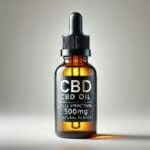
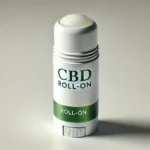
Our explainer on what THC percentage labels mean in Canada breaks the numbers down further, and our piece on what the evidence supports for CBD products is a good read if you want a CBD-forward option. We carry CBD products alongside flower, pre-rolls, vapes, extracts, edibles and drinks in our shop.
Terpenes: what to look at beyond THC
Terpenes are the aromatic compounds that give a strain its smell, and they’re printed on many Canadian labels as a percentage. The research above suggests they matter more than the strain name, even if scientists are still working out exactly how. A few practical habits help:
- Compare total terpene percentage across similar products, since it varies a lot from batch to batch.
- Note the dominant terpenes the producer lists. Citrusy, piney and herbal profiles are the ones people commonly reach for in the daytime, while myrcene is often associated with a heavier feel. See what myrcene does if you want the detail.
- Check the harvest or packaged-on date where it’s listed, because freshness shapes aroma.
Keep your notes simple: strain name, producer, THC, CBD, top terpenes, how much you used, and how you felt two hours later. After three or four orders you’ll have your own data, and that beats any list on the internet.
Choose your format by how long you need it to last
The format changes the timeline more than the strain does. Health Canada’s consumer guidance says inhaled effects begin within seconds to minutes and last about 2 to 4 hours, while ingested effects begin after 30 minutes to 2 hours and last about 4 to 8 hours, and lingering effects can last 12 to 24 hours.
| Format | Onset | Typical duration | Daytime note |
|---|---|---|---|
| Dried flower or pre-roll | Seconds to minutes | About 2 to 4 hours | Easiest to dose in small steps |
| Vape | Seconds to minutes | About 2 to 4 hours | Take a single small puff and wait |
| Edible or drink | 30 minutes to 2 hours | About 4 to 8 hours | Long window, so low doses only |
If you’re leaning toward inhalation, Health Canada’s guidelines recommend avoiding deep inhalation and breath-holding, and note that vaping and edibles are not risk-free. The same page notes that edibles have a delayed onset and can lead people to take too much. Our guides on how edibles kick in and why edibles hit harder than smoking explain why patience matters.
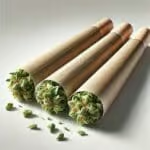
For most people planning a working day, a pre-roll or flower in small amounts is the more predictable choice because you can feel the effect quickly and stop. Our pre-roll selection includes sativa, hybrid and indica options with the THC and terpene numbers on the page.
Safe daytime use in Ontario
A focus-minded plan is also a safety plan. Keep these points in front of you:
- Don’t drive. Health Canada says cannabis can affect concentration, attention, coordination and reaction time, and that impairing effects can last at least six hours or longer. A Canadian randomized driving study found inhaled cannabis impaired complex attention for up to 5 hours. In Ontario you also can’t consume cannabis in a vehicle that is being driven or will be driven, per the province’s cannabis laws.
- Save it for the right moment. Use it when your task is low-stakes, like tidying, planning, music or a creative project, not when you need to operate equipment, make a safety-critical decision or take part in an exam.
- Skip alcohol. Health Canada’s consumer guidance advises against mixing the two.
- Check the label. Health Canada reminds consumers that CBD products can contain THC.
- Talk to your doctor or pharmacist if you take other medications or have a health condition, including ADHD. Health Canada advises discussing cannabis and your other medicines with a health-care professional, and the Canadian ADHD Resource Alliance (CADDRA) has a position statement on cannabis and ADHD you can bring to that appointment.
- Adults over 55 should begin with the lowest available amount. Health Canada’s examples are edibles with 2.5 mg THC or less per unit and dried cannabis at 10% THC or the lowest available.
- Store it properly. Keep products in their original child-resistant packaging, away from children and pets. Our guide to keeping edibles safe from kids covers it in French.
The legal basics: the minimum age in Ontario is 19, and adults can carry up to 30 grams of dried cannabis or its equivalent in public, as set out on ontario.ca. Municipal bylaws, leases and employers may add their own limits on smoking and vaping.
A simple first-order plan for a daytime product
Here is a routine we’d hand to a friend who wants a daytime option:
- Decide the window. Pick a time when you don’t need to drive and have a few hours free.
- Pick a format. Pre-roll or flower for quick, adjustable effects; a low-dose edible if you want a longer, steadier window.
- Filter by label. Start with sativa-dominant or hybrid options, then narrow by lower THC or a balanced THC:CBD ratio.
- Compare terpenes. Choose a profile whose aroma you actually like.
- Start small. One or two small puffs, or an edible at the lowest dose. Wait at least a couple of hours with an edible before you even think about more.
- Log it. Note what you used and how you felt.
- Adjust next time. Change one variable at a time, either dose or product.
If you plan to try edibles, our dose and safety guide and the article on starting at 2.5 mg THC explain low-dose habits in plain language.
Order what you’ve picked, fast
We deliver within one hour across Durham Region and the GTA, and our medical orders ship Canada-wide. Our shop carries flower, pre-rolls, vapes, extracts, edibles, drinks, CBD and accessories, with new product drops each week and a curated lineup of craft cannabis from growers we trust. Customers rate us 4.9 stars on Google. Browse the full shop, filter by sativa, hybrid or CBD, and check the THC and terpene numbers before you add anything to your cart.
Not sure where to begin? Our product pages carry the details covered above, and our guide to strain types is a quick way to get your bearings first.
Our view on choosing a daytime strain
We get this question a lot, and our answer is the same every time: pick by the label, not by the legend. A strain name is a starting point. The THC, the CBD and the terpene numbers are what you can actually compare, batch to batch.
We built our catalogue around that idea. We work with craft growers, we list potency and terpene numbers where producers provide them, and we write guides so you know what you’re buying before it’s in your cart. If you want a bright, daytime feel, start with a sativa-dominant or hybrid pre-roll at a modest potency, use a little, and see how your day goes.
Keep it simple. Use cannabis when you’re not driving, keep your dose small, write down what worked, and come back for more of it. Our one-hour delivery in Durham Region and the GTA means you can reorder the exact product you liked, whenever you’re ready.
Nick
FAQ
What is the best strain for focus in Canada?
There isn’t one best strain, because responses differ from person to person. Sour Diesel, Jack Herer, Durban Poison, Green Crack and Blue Dream are the names Canadian shoppers most often look at for daytime use. Choose the batch with a THC level and terpene profile you’re comfortable with, and start with a small amount.
Are sativa strains better for daytime use than indica?
Sativa-labelled products are the usual starting point for daytime shoppers, but the label is not a precise guide. Dalhousie researchers found only weak links between indica and sativa labels and chemistry. Use the label as a first filter, then compare THC, CBD and terpenes.
How much THC should I look for if I want a clear head?
Health Canada’s advice for new consumers or anyone wanting to minimize risk is a product under 10% THC with equal or higher CBD. It says to take the most care with products above 20% THC. Start with a small amount and wait to see the effect before using more.
How long will a daytime product last?
Health Canada’s consumer guidance says inhaled effects last about 2 to 4 hours, and ingested effects about 4 to 8 hours. Lingering effects can last 12 to 24 hours. Plan your day around that window and don’t drive.
Can I order a focus-friendly strain for delivery in Durham or the GTA?
Yes. We deliver within one hour in Durham Region and the GTA, and you must be 19 or older in Ontario to order. Browse flower, pre-rolls, vapes and more in our shop.
Sources
- Cannabis laws | ontario.ca
- Consumer information: Cannabis | Health Canada
- What you need to know if you choose to consume cannabis | Health Canada
- Canada’s lower-risk cannabis use guidelines | Health Canada
- Is cannabis safe to use? Facts for youth aged 18-25 | Health Canada
- Health effects of cannabis on adults over 55 | Health Canada
- Indica and sativa labels are largely meaningless | Dalhousie University
- An Ecological Examination of Indica Versus Sativa | PubMed
- The effects of standardized cannabis products in healthy volunteers | Frontiers in Pharmacology
- Cannabis use and driving-related performance in young adults | PMC
- Cannabis and ADHD: a CADDRA position statement