TL;DR:
- Myrcene is the most common terpene in cannabis, offering sedative, muscle-relaxing, and potential analgesic effects. It appears in everyday foods like hops and mangoes, with concentrations varying widely among cannabis strains, best confirmed through product analysis. Limited human studies show possible impairment and relaxation effects, but more research is needed to fully understand its benefits and risks.
Myrcene is the most abundant terpene in most commercially grown cannabis, and it mainly contributes sedative, muscle-relaxing, earthy-musky aroma, and potential analgesic effects. The evidence is strongest in animal models; human data are limited but suggestive. Here’s what you need to know before choosing a high-myrcene product:
- Sedation and “couch-lock”: Animal studies consistently show sedative and muscle-relaxant activity; consumer reports align, though controlled human trials are still sparse.
- Analgesia and anti-inflammation: Rat studies demonstrate myrcene reduces responses to noxious stimuli and joint inflammation; human equivalents are not yet established.
- Anxiolytic signals: Mouse vapour studies found anxiety-reducing effects, particularly in female mice, with sex-specific differences in response.
- Impairment risk: A double-blind pilot study found 15 mg β-myrcene produced statistically significant reductions in simulated driving performance. Do not drive or operate machinery after consuming high-myrcene cannabis.
- Regulatory status: Health Canada requires licensed producers to test and label terpene content; myrcene at typical dietary and inhalation exposures is not considered a public-health concern by major regulatory bodies.
Table of Contents
- What is myrcene, and where does it come from?
- How common is myrcene in cannabis, and which strains tend to have more?
- How can myrcene make you feel? What the evidence actually shows
- Does myrcene enhance THC or CBD through the entourage effect?
- Is myrcene safe? Toxicology and Canadian regulatory context
- How to find and use myrcene-rich cannabis safely
- What researchers still need to figure out about myrcene
- Key takeaways
- A retailer’s perspective on myrcene and product education
- Useful sources for further reading
- FAQ
What is myrcene, and where does it come from?
β-Myrcene is a monoterpene, meaning it belongs to the simplest class of terpenes built from two isoprene units (C₁₀H₁₆). It is an acyclic, open-chain compound with a characteristic earthy, herbal, and musky scent, often described as carrying notes of clove, ripe mango, and fresh hops. That aroma is not a coincidence: myrcene is the compound responsible for the distinctive smell of fresh hops in craft beer, and it appears in a wide range of plants that humans have used for centuries.
Its boiling point sits at approximately 167°C, which is notably lower than THC’s vaporisation point near 180°C. That gap matters practically: myrcene is highly volatile and will evaporate off flower or concentrate quickly when exposed to heat, light, or air. Proper storage in airtight, opaque containers slows that loss.

Common non-cannabis sources of myrcene
| Plant source | Typical use | Why it matters |
|---|---|---|
| Hops (Humulus lupulus) | Craft beer, herbal medicine | Highest non-cannabis myrcene concentrations found here |
| Mango (Mangifera indica) | Food, juice | Basis of the popular “eat mango before cannabis” folk claim |
| Lemongrass (Cymbopogon citratus) | Cooking, aromatherapy | Common dietary exposure source |
| Basil (Ocimum basilicum) | Cooking | Contributes to the herb’s earthy base note |
| Bay laurel (Laurus nobilis) | Cooking, traditional medicine | Used in historical sedative preparations |
The fact that myrcene appears in everyday foods is directly relevant to the safety discussion: humans have a long history of dietary exposure at low concentrations, which informs how regulatory bodies assess risk.
How common is myrcene in cannabis, and which strains tend to have more?
Myrcene is typically the dominant terpene in cannabis flower, and literature commonly cites >0.5% by dry weight is often cited as a threshold for a “high-myrcene” product. In practice, many popular cultivars exceed that figure comfortably, with some craft-grown flowers testing above typical moderate myrcene levels. Concentrations vary significantly by cultivar genetics, growing conditions, harvest timing, curing method, and storage duration.
A note on Indica vs. Sativa labels: Relying on “Indica” to predict high myrcene content is an imprecise method. Chemotype and terpene profile are not reliably predicted by those marketing labels. The only accurate way to confirm myrcene levels is to check the Certificate of Analysis (CoA) for the specific batch you are buying.
Cultivars frequently reported as myrcene-forward in the literature and among Canadian licensed producers include:
- OG Kush and its crosses (e.g., Fire OG, Tahoe OG): consistently high myrcene in lab reports
- Blue Dream: often shows myrcene as the primary terpene alongside caryophyllene
- Granddaddy Purple: myrcene commonly leads the terpene profile
- Mango Kush: named partly for the mango-myrcene aroma connection
- Bubba Kush: earthy, musky profile driven largely by myrcene
These are starting points, not guarantees. Batch-to-batch variation is real, and a cultivar that tested high in one harvest may shift after a different cure or storage period.
How to read a CoA for myrcene content
- Find the terpene panel — not all CoAs include terpenes; confirm your producer runs a full terpene profile, not just cannabinoids.
- Check the units — results should be expressed as a percentage of dry weight (% w/w) or mg/g; confirm which unit is used before comparing products.
- Note the sample date — terpene content degrades over time. A CoA from six months ago may not reflect what is in the package today. Prefer CoAs dated within 90 days of purchase.
- Confirm lab accreditation — in Canada, licensed producers must use ISO/IEC 17025-accredited labs. Look for that accreditation reference on the CoA header.
- Compare myrcene to total terpenes — if myrcene is listed at 0.8% and total terpenes are 1.2%, myrcene is the clear dominant. If total terpenes are 3.5%, myrcene at 0.8% is one of several players.
How can myrcene make you feel? What the evidence actually shows
This is where the honest answer gets a bit nuanced, and that nuance is worth your time.
What animal studies show
A comprehensive review of myrcene’s pharmacological activity summarises multiple animal studies demonstrating sedative, muscle-relaxant, analgesic, and anxiolytic effects. Rodent models show myrcene reduces responses to both thermal and mechanical pain stimuli, and a rat adjuvant monoarthritis model found myrcene reduced chronic joint inflammation and associated pain behaviours. Zebrafish studies add another data point: acute myrcene exposure decreased locomotion and anxiety-like behaviour, though repeated exposure over seven days produced no significant effect, suggesting tolerance or adaptation may develop.

Sex differences also appear in the animal data. Mouse vapour studies found anxiolytic effects in female mice with repeated exposures, while male mice showed different locomotor responses. This is a meaningful signal for researchers designing human trials.
What human studies show
Human data are limited but not absent. A double-blind, placebo-controlled crossover pilot study found that 15 mg β-myrcene produced statistically significant reductions in divided-attention performance and speed control in a driving simulator compared to placebo. That is a small sample and a single dose of isolated myrcene, so it cannot be directly extrapolated to whole-plant cannabis use, but it does confirm that myrcene alone can produce measurable impairment in humans.
Pro Tip: When you read a consumer review claiming a strain “knocked them out,” remember that the strain’s THC content, CBD ratio, set, setting, and tolerance all interact with terpene levels. Attributing the effect solely to myrcene oversimplifies what is almost certainly a multi-compound experience.
Evidence comparison: animal vs. human
| Effect | Animal evidence | Human evidence |
|---|---|---|
| Sedation / muscle relaxation | Strong (multiple rodent models) | Suggestive (pilot driving study, consumer reports) |
| Analgesia | Strong (thermal, mechanical, arthritis models) | Not yet established in controlled trials |
| Anti-inflammation | Strong (rat monoarthritis model) | Not yet established in controlled trials |
| Anxiolytic effects | Moderate (sex-dependent in mice) | No controlled human trial to date |
| Impairment / divided attention | Moderate (zebrafish locomotion) | Confirmed in one small pilot study |
Does myrcene enhance THC or CBD through the entourage effect?
The entourage effect is the idea that cannabis compounds work better together than in isolation. Proponents specifically claim myrcene may increase blood-brain barrier permeability, allowing more THC to reach central receptors faster, and that it modifies the character of the THC experience toward sedation rather than stimulation.
The experimental picture is genuinely mixed. Some studies support the idea that terpenes modify cannabinoid activity through indirect pathways. Others, including controlled studies testing terpenes alone and in combination with THC or CBD, did not find direct effects at CB1 or CB2 receptors, suggesting any interaction operates through other mechanisms or is highly context-dependent.
What this means practically:
- The blood-brain barrier claim is plausible based on myrcene’s lipophilicity and volatility, but direct human evidence is not available.
- Whole-plant vs. isolated terpene studies produce different results, making it hard to isolate myrcene’s specific contribution in a real cannabis product.
- Dose matters enormously. The concentrations used in some positive entourage studies may not match what you actually inhale from a typical vape session.
- Broad-spectrum and full-spectrum products are formulated to preserve the full terpene and cannabinoid profile. If the entourage effect is real, these formats are the most likely to express it. You can explore what broad-spectrum cannabis means for more context on how these products are made.
The honest takeaway: the entourage effect is a legitimate area of scientific inquiry, not settled fact. Be cautious about products marketed with specific myrcene-potentiation claims that go beyond what the current evidence supports.
Is myrcene safe? Toxicology and Canadian regulatory context
For most adults consuming cannabis through licensed Canadian channels, myrcene at typical concentrations poses no established public-health risk. That said, the full toxicological picture is worth understanding.
The rodent carcinogenicity history
High-dose rodent studies historically raised questions about myrcene’s safety, which led the U.S. Food and Drug Administration to remove certain myrcene approvals as a food additive under the Delaney Clause in the late 2010s. Subsequent assessments by the FDA and other expert panels concluded that myrcene at normal intended-use levels poses no public-health concern. The rodent findings involved doses far exceeding anything a person would encounter through food or cannabis inhalation.
A comprehensive review of myrcene’s health profile confirms this consensus: the evidence does not support a public-health concern at typical dietary or inhalation exposures. Context and dose are the key variables.
Canadian consumer safety points
Health Canada requires licensed producers to conduct product testing, including terpene profiling, and to label products accurately. This means Canadian consumers have access to CoA data that many other markets do not provide as consistently.
Pro Tip: If a product label does not list terpenes or does not reference a CoA, ask your retailer for the batch-specific lab report before purchasing. In Canada, licensed producers are required to have this documentation.
Key safety considerations include options such as the Seriously Soothing Pain Balm Cinnamon Clove, which offers topical relief incorporating CBD and terpene formulations.
- Impairment: As the pilot driving study confirmed, myrcene can impair divided attention and motor control. Do not drive, operate heavy machinery, or make high-stakes decisions after consuming high-myrcene cannabis.
- Start low: If you are new to high-myrcene products, begin with a small amount and wait at least 30 minutes before re-dosing, especially with edibles or concentrates.
- Children and pets: Keep all cannabis products, including high-terpene concentrates, securely stored away from children and animals. Terpenes are aromatic and can attract curious pets.
- Storage: Store flower and concentrates in airtight, opaque containers away from heat and light to slow myrcene degradation.
- Vaporisation temperature: Heating cannabis above 230°C can produce degradation byproducts. Stay within recommended vaping ranges (see the next section).
This article provides general information about myrcene and cannabis. It is not medical or legal advice. Confirm current regulations and consult a qualified health professional for personal health decisions.
How to find and use myrcene-rich cannabis safely
You know what myrcene does and what the evidence says. Here is how to put that knowledge to work when choosing and consuming products.
Step-by-step product selection checklist
- Request the CoA for the specific batch, not just the cultivar name. Terpene content varies by harvest.
- Confirm myrcene is listed above 0.5% by dry weight if you want a noticeably myrcene-forward experience.
- Check the sample date on the CoA. Terpene content degrades; a CoA older than 90 days is less reliable.
- Verify lab accreditation — look for ISO/IEC 17025 on the CoA header.
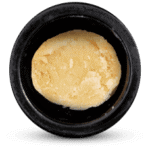
- Choose your format thoughtfully. Flower preserves the full terpene profile when stored well. Concentrates like cannabis budder can be rich in terpenes but vary by extraction method. Vapes offer precise temperature control.
- Match the product to your intent. If you want the sedative, relaxing profile myrcene is associated with, an evening session with a high-myrcene flower or full-spectrum vape is a reasonable starting point.
Vaporisation temperature guide for myrcene
Because myrcene’s boiling point is approximately 167°C, it vaporises earlier than THC (around 180°C). Experienced vapers use a stepwise temperature approach to capture terpenes first, then release cannabinoids.

| Temperature range | What happens | Practical note |
|---|---|---|
| — | Light terpene release, minimal cannabinoids | Flavour-forward, mild effect |
| 165–175°C | Peak myrcene vaporisation zone | Best window for terpene capture |
| — | THC and CBD begin vaporising | Stronger psychoactive effect |
| — | Full cannabinoid release, some terpene degradation | Denser vapour, harsher draw |
| Above 230°C | Risk of degradation byproducts | Avoid this range |
Myrcene’s role in lowering viscosity in vape mixtures also means it aids wicking in cartridge-style vapes, which is why some formulations intentionally preserve or enrich myrcene content. If a product is enriched, that should be documented on the label or CoA.
Pro Tip: Start your vape session at 160–165°C for two or three draws to capture the terpene profile, then step up to 175–180°C for the cannabinoid effect. You will get more flavour and a more predictable experience than blasting at maximum heat from the first draw.
For a practical example of a vape product designed with terpene profile in mind, the Chill Cherry CBD:CBN Blend 510 Vape from Montrosecannabis is a full-spectrum option worth reviewing for its formulation details.
What researchers still need to figure out about myrcene
The animal data on myrcene is genuinely compelling. The human data is not there yet, and that gap matters for anyone making health or wellness decisions based on terpene profiles.
The most significant unanswered questions:
- Controlled human dose-response trials. No published study has systematically tested multiple doses of myrcene in humans to establish a dose-effect curve for sedation, analgesia, or anxiolysis. Without this, “start low” is the only defensible consumer guidance.
- Whole-plant interaction trials. Most human work uses isolated myrcene. How myrcene behaves alongside THC, CBD, and other terpenes in a real cannabis product has not been studied in controlled human trials. This is the core gap in entourage-effect research.
- Long-term inhalation exposure studies. Chronic inhalation of any terpene at cannabis-use concentrations has not been studied in humans over months or years. The zebrafish tolerance findings (effects disappearing after seven days of repeated exposure) raise questions about whether regular users experience diminishing returns from myrcene specifically.
- Sex-based differences in humans. The mouse data showing sex-specific anxiolytic responses is a clear signal that human trials need to be designed with sex as a variable, not an afterthought.
- Standardised inhalation protocols. Studies use different delivery methods, doses, and exposure durations, making cross-study comparison difficult. Agreed-upon protocols would accelerate progress significantly.
Until these gaps are filled, the prudent approach is to use myrcene-profile data as one input among several when choosing products, not as a therapeutic guarantee. Check CoAs, start with lower doses, and pay attention to how your body responds.
Key takeaways
Myrcene is the most common cannabis terpene, with sedative and analgesic effects confirmed in animal models and impairment signals emerging in limited human pilot work — always check the CoA and start low.
| Point | Details |
|---|---|
| Animal evidence is strong | Sedation, analgesia, and anxiolytic effects are well-documented in rodent and zebrafish models. |
| Human data are limited | A pilot study found impairment after a dose of isolated myrcene; controlled therapeutic trials in humans do not yet exist. |
| >0.5% myrcene signals a high-myrcene product | Check the batch CoA, not just the cultivar name or Indica/Sativa label. |
| Vape at 165–175°C to capture myrcene | Myrcene vaporises before THC; step up temperature to release cannabinoids after terpenes. |
| Do not drive after high-myrcene use | Pilot study data confirm divided-attention impairment; Health Canada labelling reflects this risk. |
A retailer’s perspective on myrcene and product education
At Montrosecannabis, we think terpene education is one of the most underserved parts of the cannabis conversation in Canada. Most consumers have heard of THC percentages, but far fewer know to ask for a CoA or to check whether myrcene is listed above 0.5% before making a purchase. That knowledge gap is exactly what we try to close.
We curate our product selection with this in mind. Whether you are exploring a full-spectrum oil like our CBG+CBD Full Spectrum Oil for its whole-plant profile or browsing our cannabis wellness resources for broader context, we want you to feel informed, not overwhelmed. Our one-hour delivery across the Durham Region and GTA means you can get the right product quickly, and our team is always ready to help you read a label or interpret a CoA.
If you are ready to explore high-myrcene options or want to learn more about how terpene profiles shape your experience, our cannabis delivery guide is a good next step.

Useful sources for further reading
These are the primary peer-reviewed and regulatory sources behind the claims in this article. Each is worth bookmarking if you want to go deeper.
| Source | What it covers | Why it is useful |
|---|---|---|
| Myrcene: Potential Health Benefits (PMC) | Comprehensive review of myrcene’s pharmacology, animal studies, and regulatory history | Best single starting point for evidence on myrcene effects |
| Anti-Inflammatory and Analgesic Properties in Rat Monoarthritis (PMC) | Rat model of chronic joint inflammation treated with myrcene and CBD | Key study for understanding myrcene’s analgesic and anti-inflammatory signals |
| β-Myrcene Driving Pilot Study (PMC) | Double-blind crossover study of myrcene’s effect on simulated driving | Only controlled human impairment study available; essential for safety discussions |
| Sex Differences in Anxiolytic Properties (PMC) | Mouse vapour study on linalool and myrcene anxiolytic effects by sex | Highlights sex-specific responses and exposure-method importance |
| Zebrafish Behavioural Study (Nature/Scientific Reports) | Acute vs. repeated terpene exposure in zebrafish | Reveals tolerance patterns and limits of acute animal findings |
| Myrcene and Vaporisation Properties (RSC) | Effect of myrcene on boiling point and wicking in vape mixtures | Practical basis for temperature guidance and formulation labelling |
| Myrcene Regulatory Review | FDA regulatory history and expert panel conclusions on myrcene safety | Clarifies the rodent carcinogenicity debate and current consensus |
| Montrosecannabis Resources | Montrosecannabis educational hub for Canadian consumers | Starting point for product-specific questions and Canadian purchasing context |
FAQ
How does myrcene make you feel?
Myrcene is most commonly associated with sedation, muscle relaxation, and a calming, earthy sensory experience. Animal models consistently show these effects; a human pilot study confirmed measurable impairment in divided attention at 15 mg of isolated myrcene.
Does a higher terpene percentage mean a better high?
Not necessarily. A higher total terpene percentage means a richer aromatic and flavour profile, but the relationship between terpene concentration and subjective effect is not linear. THC content, cannabinoid ratios, your personal tolerance, and consumption method all shape the experience alongside terpenes.
What strains tend to be highest in myrcene?
OG Kush crosses, Blue Dream, Granddaddy Purple, Mango Kush, and Bubba Kush are frequently reported as high-myrcene cultivars. Batch-to-batch variation is significant, so always confirm with the CoA for the specific product you are purchasing rather than relying on the cultivar name alone.
Are there any terpenes to be cautious about?
Myrcene itself warrants caution around impairment: the pilot driving study found statistically significant reductions in performance at 15 mg. Any terpene-rich cannabis product should be treated with the same care as any psychoactive substance. Avoid driving, operating machinery, or making high-stakes decisions after use, and keep products away from children and pets.
How do I find high-myrcene cannabis in Canada?
Request the Certificate of Analysis for the batch you are considering and look for myrcene listed above 0.5% by dry weight. Confirm the CoA is from an ISO/IEC 17025-accredited lab and dated within 90 days. Canadian licensed producers are required to have this documentation available.