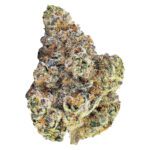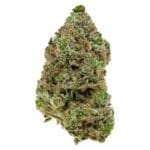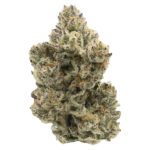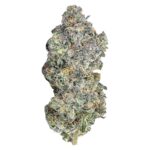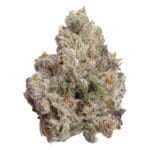
A hybrid strain is cannabis bred from both indica- and sativa-type parent plants, but the label barely predicts how it will make you feel. The chemistry inside the flower, its cannabinoids and terpenes, does the real work. Understanding that difference is the single most useful thing you can learn before your next order, and it changes how you should read a menu, a label, or a COA.
TL;DR:
- Most modern cannabis products are hybrids, resulting from extensive crossing of landrace populations, which makes their genetic makeup highly diverse.
- Labels like indica-dominant or sativa-dominant poorly predict actual effects, as they only loosely relate to the plant’s chemical profile, which varies widely.
- Chemovar classification based on measured cannabinoid and terpene content provides a more consistent and predictable way to understand a hybrid’s effects than just relying on the hybrid label.
- Checking lab test results, especially the full cannabinoid and terpene profile, is essential to accurately determine the product’s potency and expected experience.
- Prioritizing lab data over strain names significantly improves shopping accuracy, as names often do not reflect the chemical makeup of the product.
Table of Contents
- What is a hybrid strain, really? Botanical vs commercial meanings
- Where the indica and sativa vocabulary came from
- Why almost all modern cannabis is technically a hybrid
- Shelf labels explained: indica-dominant, sativa-dominant and balanced hybrids
- How hybrids are bred: genetics and production methods consumers should know
- Chemovars, cannabinoids and terpenes: the chemistry that predicts effects
- How to read a product label and COA: a shopper’s checklist for hybrid products
- How Montrosecannabis applies chemovar-first shopping
- Short list of authoritative research and consumer resources
- Why the chemovar approach beats guessing by name
- Sources
- FAQ
What is a hybrid strain, really? Botanical vs commercial meanings
In botany, a hybrid is simple: it’s the offspring of two genetically distinct parent plants. Breeders cross an indica-type mother with a sativa-type father (or vice versa) to combine traits, faster flowering from one side, bigger yields from the other, and the resulting plant carries genes from both lines. That part of the story is straightforward and has been true of commercial cannabis breeding for decades.

Where things get messy is the word “strain” itself. In cannabis retail, “strain” gets used to describe everything from a specific genetic lineage to a marketing name dreamed up for a particular harvest. Scientists prefer the terms cultivar (a named, vegetatively propagated plant variety) or chemovar (a plant classified by its actual chemical output, cannabinoids and terpenes, rather than by name or appearance). Both are more accurate than “strain” because they describe something you can measure.
That distinction matters at checkout. The same strain name can show up on menus in Ontario, British Columbia, and Colorado with three different chemical fingerprints, because the name follows the marketing, not the genetics. Another grower’s version, same name, different phenotype selection or growing conditions, might run higher in limonene and test five points lower. Neither is wrong. They’re just not the same plant chemically, even if the label says otherwise.
A few practical consequences follow from this:
- A strain name is a starting point for a search, not a guarantee of a specific experience.
- Two batches from two different licensed producers carrying an identical name can differ meaningfully in potency and terpene content.
- The only way to know what’s actually in the jar is to check the lab data, not the name on the label.
This is also why the industry has started separating “hybrid” as a genetic descriptor from “hybrid vape effects” or “hybrid high” as a consumer shorthand for a specific feeling. They’re related but not identical claims, and confusing them is where a lot of shopping frustration starts.
Where the indica and sativa vocabulary came from
The indica/sativa split didn’t originate as a chemistry classification. It started as botanical taxonomy, a way to describe plant morphology.
- Landrace origins. Early taxonomists grouped cannabis populations by where they grew and how they looked. Tall, narrow-leafed plants from equatorial regions got labelled sativa. Shorter, broad-leafed plants adapted to harsher climates, often around the Hindu Kush region, got labelled indica.
- Shift toward effects shorthand. Over decades of underground and then legal breeding, growers and consumers started using those same labels to predict experience: sativa for energizing, indica for sedating. That leap, from describing leaf shape to predicting mental state, was never backed by rigorous evidence. It became convention because it was simple, not because it was accurate.
- Genetic evidence complicates the story. Modern DNA analysis shows the sativa/indica split doesn’t hold up cleanly across neutral genetic markers. Population genomic research has found relationships among cannabis populations far more tangled than a simple two-category system, and strain names frequently don’t reflect real genetic identity.
The vocabulary survives because it’s useful shorthand for budtenders and quick conversations, not because it’s scientifically precise. Knowing that history helps explain why so much of what you read on a shelf card should be treated as a rough guess rather than a lab result.
Why almost all modern cannabis is technically a hybrid
If you’re shopping today, you’re almost certainly buying a hybrid whether the label says so or not. Here’s how that happened.
Wild and traditional landrace populations, plants that grew in relative isolation for generations in specific regions, were the closest things to “pure” sativa or indica. Once breeders started crossing those landraces for hybrid vigour (the tendency for a cross to outperform either parent in yield, resilience, or potency), the genetic pool started mixing permanently. Decades of further crossing produced what geneticists sometimes call polyhybrids: plants with ancestry traceable to dozens of different lineages, not two clean parent lines.
Commercial pressure accelerated this. Breeders aren’t optimizing for taxonomic purity. They’re chasing:
- Aroma and flavour that stand out on a crowded menu
- Potency that satisfies both recreational and medical buyers
- Yield that makes a crop commercially viable
- Disease and pest resistance that reduces crop losses
Every one of those goals pulls breeding further away from anything resembling a pure sativa or pure indica plant. The practical result: a plant’s morphology (how tall it grows, how the leaves look) tells you almost nothing reliable about how it will make you feel. Predicting effects from appearance alone is largely guesswork at this point, which is exactly why chemistry-based classification has become the more useful tool for consumers who actually want consistent results.
Shelf labels explained: indica-dominant, sativa-dominant and balanced hybrids
Walk into any dispensary menu and you’ll see three common hybrid categories: indica-dominant, sativa-dominant, and balanced (sometimes called 50/50). Here’s what each one is supposed to signal, and where that signal breaks down.
- Indica-dominant hybrid meaning: genetically weighted more toward indica-type ancestry, marketed as more likely to produce a body-heavy, relaxing effect.
- Sativa-dominant hybrid meaning: weighted toward sativa-type ancestry, marketed as more likely to produce an alert, energizing effect.
- Balanced hybrid: marketed as roughly even ancestry, positioned as a middle ground between the other two.
These categories can be a decent starting filter when you’re new to hybrid strains and want a rough sorting mechanism. But genetic analyses have repeatedly found that these labels correlate weakly with actual chemistry. One widely cited study found genomic structure explained only about 37% of the variance in how products were labelled, meaning the label was a poor predictor of the plant’s real genetic makeup more often than not. Large multi-state chemical surveys have found the same disconnect: phytochemical diversity across commercial cannabis frequently doesn’t match the indica/sativa/hybrid category printed on the package.
Quick rules of thumb worth keeping in your back pocket:
- Use dominance labels to narrow a browsing session, not to make a final decision.
- Trust cannabinoid and terpene percentages on the COA over the dominance label every time they’re both available.
- If a product only lists a dominance category with no lab data, treat the label as a guess, not a guarantee.
Pro Tip: When two hybrids both say “sativa-dominant,” compare their terpene tables side by side before assuming they’ll feel the same. A myrcene-heavy sativa-dominant hybrid can feel closer to a classic indica-dominant experience than another sativa-dominant option loaded with limonene and pinene.
How hybrids are bred: genetics and production methods consumers should know
Breeding cannabis is part art, part statistics. Some traits follow simple, predictable inheritance patterns. Others are messy and polygenic, meaning many genes contribute small effects that are much harder to control breeding for.
The major cannabinoid pathway, whether a plant produces mostly THC, mostly CBD, or a mix of both, follows relatively simple inheritance rules tied to a small number of genetic loci. That’s part of why breeders can reliably stabilize a high-THC or high-CBD line over a few generations. Terpene profiles and yield are a different story. They’re polygenic, shaped by dozens of interacting genes plus environmental factors like light, temperature, and soil chemistry. That’s a major reason why the same cultivar grown in two different facilities can smell and taste noticeably different.
Here’s how that plays out in actual breeding practice:
- F1 hybrids are the first-generation cross between two distinct parent lines. They tend to show strong hybrid vigour but can vary plant to plant within the same batch.
- Backcrossing repeatedly crosses hybrid offspring back to one parent line to stabilize a specific trait, useful for locking in a desired cannabinoid ratio.
- Phenohunting involves growing out many seeds from the same cross and selecting individual plants (phenotypes) with the most desirable chemistry or structure, then propagating that specific plant.
- Cloning takes cuttings from a chosen “mother” plant to produce genetically identical copies, which is how a grower locks in a phenotype they like for commercial production.
A proof-of-concept study on F1 hybrid seed production demonstrates that breeders are actively working on ways to produce more uniform hybrid seed lines using techniques like single seed descent and induced sex reversion, aimed directly at the consistency problem. That research signals real progress, but it also confirms the current baseline problem: a cultivar name alone doesn’t guarantee you’ll get the same chemical profile twice, even from the same seed bank.
Chemovars, cannabinoids and terpenes: the chemistry that predicts effects
Chemistry beats naming convention every time you’re trying to predict how a hybrid will actually feel. That’s the core idea behind classifying cannabis by chemovar, a category defined by measured cannabinoid and terpene content rather than a marketing name or morphology.
The major cannabinoids worth knowing:
- THC drives the psychoactive, intoxicating effect most people associate with getting high.
- CBD doesn’t produce the same intoxication and is associated with a calmer, clearer-headed effect, often used to soften THC’s edge.
- CBG, a minor cannabinoid, is gaining attention for a milder, non-intoxicating profile some users describe as focus-supportive.
Terpenes matter just as much, sometimes more, for how a hybrid actually presents:
- Myrcene, common in many indica-leaning chemovars, is associated with a heavier, more sedating body feel.
- Limonene, often prominent in sativa-leaning chemovars, is associated with an uplifted, brighter mood.
- Pinene shows up frequently alongside alertness and a clearer-headed sensation, and can offset some of THC’s foggier effects.
A genome-wide association study actually traced this back to hard genetics: researchers found that specific terpene synthase gene clusters correlate with the terpenes tied to sativa and indica labelling, meaning a small number of genetic loci may be doing most of the work behind those aroma and effect differences people associate with the vernacular labels. That’s a meaningful finding. It suggests the labels aren’t pure fiction, they’re picking up on a real but narrow slice of the plant’s chemistry, while ignoring everything else that actually shapes the experience.
Multivariate research backs up the case for chemistry over naming. Multivariate chemometric models that combine cannabinoid and terpene data together have shown higher classification accuracy than cannabinoid-only models when sorting cannabis samples into meaningful chemovar groups.
The strongest available evidence points the same direction from three separate angles: genetics, large-sample chemical surveys, and medical-market audits. Vernacular labels correlate weakly with actual chemistry, while chemovar classification based on lab-measured cannabinoids and terpenes consistently predicts effects and product identity more reliably.
A medical-market survey out of Nevada reinforced this from a patient-safety angle, finding that breeder-reported names frequently failed to identify a consistent chemical profile, which matters enormously for patients relying on a specific chemovar for symptom relief. If you want to go deeper on how cannabinoids and terpenes interact together rather than in isolation, the entourage effect explains why the combination often outperforms any single compound.
How to read a product label and COA: a shopper’s checklist for hybrid products
A Certificate of Analysis (COA) is the single most useful document in your hybrid shopping toolkit, and most shoppers never open one. Here’s what to actually look for.
Start with the basics printed right on the package:
- Total THC and total CBD, usually expressed as a percentage range or a specific batch number.
- Declared terpenes, listed either as a total percentage or broken down by individual compound.
- Harvest and batch information, which tells you whether you’re looking at fresh data or an old average.
Then move to the full lab report if it’s available:
- Confirm the lab is accredited and independent from the producer, since in-house testing carries an obvious conflict of interest.
- Check the sample date against the harvest date; older samples may not reflect what’s currently on the shelf.
- Review the full cannabinoid and terpene tables, not just the headline THC number, since two hybrids with similar THC can feel completely different based on terpene ratios.
- Note the limits of detection, since trace compounds below a lab’s detection threshold won’t show up even if they’re technically present.
- Remember that batch variability is normal, even for the same cultivar grown by the same producer.
Pro Tip: Before you buy, pick two or three terpenes that match what you’re actually looking for, myrcene for relaxation, limonene for mood lift, pinene for clarity, and scan the COA for those first. It’s a faster filter than trying to interpret the strain name.
If you want a step-by-step walkthrough, reading a COA in under 30 seconds breaks down exactly which numbers to prioritize when you’re standing in front of a menu trying to decide fast. For a more detailed approach to terpene-first shopping, the guide on using top terpenes to pick cannabis walks through the logic in more depth.
How Montrosecannabis applies chemovar-first shopping
We built our product pages around the same principle this whole article is making: chemistry tells you more than a name ever will. Every hybrid listing we carry is meant to give you enough real data to make an informed call, not just a strain name and a vibe.
Here’s how that shows up in practice:
- Our terpene and THC explainers walk you through reading lab data quickly, without needing a chemistry background.
- Our beginner’s guide to choosing a strain is built for shoppers who are overwhelmed by menu jargon and want a practical starting point.
- We offer delivery services across the Durham Region and GTA, plus shipping for medical orders, so getting a properly labelled, lab-tested hybrid is convenient.
- Customer feedback has been consistently positive, which we treat as a signal that delivery and accurate product information matter to the people ordering.
If you’re ready to put chemovar-first shopping into practice, our full flower, pre-rolls, vapes, and extracts catalogue lists terpene and potency data on every product page, so you can compare hybrids the same way this article recommends: by chemistry first, name second.
Short list of authoritative research and consumer resources
The genetics and chemistry claims in this article draw from peer-reviewed sources: the PMC study on strain reliability, the Nature Plants terpene synthase research, the phytochemical diversity survey, and the Nevada chemovar nomenclature study. For consumer-facing context on why names mislead, Dalhousie University’s coverage of the strain labelling research is worth a read. If cannabis use is affecting your health or someone else’s, the SAMHSA national helpline offers free, confidential support and referrals.
Why the chemovar approach beats guessing by name
The conventional wisdom on hybrids treats “indica-dominant” and “sativa-dominant” as if they’re precise instructions. They’re not. They’re rough historical shorthand that survived because it’s easy to say at a counter, not because the genetics back it up cleanly.
What the evidence actually supports is narrower and more useful: a handful of terpene-linked genes probably do drive some of the aroma and effect patterns people associate with those labels, but the labels themselves are inconsistent predictors of what’s actually in the jar. That’s not a reason to distrust hybrids. It’s a reason to distrust names as a whole and put your trust in lab numbers instead.
If you take one thing from this, prioritize the COA before the category. Look at cannabinoid ratios and terpene percentages first, then use the dominance label as a rough tiebreaker, not a decision-maker. That single habit change will do more for your shopping accuracy than memorizing strain names ever will.
— Nick
This article is general information, not a substitute for advice from a qualified doctor. Consult a qualified healthcare professional about your own circumstances before acting on anything here.
Sources
- Genetic tools weed out misconceptions of strain reliability in Cannabis sativa: implications for a budding industry
- Cannabis labelling is associated with genetic variation in terpene synthase genes | Nature Plants
- The phytochemical diversity of commercial Cannabis in the United States
FAQ
What are hybrid strains best for?
Hybrid strains are best for shoppers who want flexibility, since breeders combine traits from indica- and sativa-type parents to target specific effects, flavours, or potency levels. The real answer to “best for what” depends on the specific chemovar’s cannabinoid and terpene profile, not the hybrid category alone, so checking the lab data matters more than the general classification.
Is a hybrid an upper or a downer?
A hybrid can lean either way, or land somewhere in between, depending on its chemistry rather than its hybrid status alone. Terpenes like limonene and pinene tend to push toward an alert, uplifted feel, while myrcene-heavy chemovars tend to feel heavier and more sedating.
What strain is better, sativa or hybrid?
Neither is inherently better since most cannabis sold today, including plants sold under a sativa label, carries mixed ancestry and functions as a hybrid genetically. Genetic research shows the sativa/indica split doesn’t hold up cleanly across neutral genetic markers, so choosing based on measured cannabinoid and terpene content will serve you better than choosing based on the sativa or hybrid label alone.
Do hybrid strains get you more high?
Not inherently. A hybrid’s intensity depends on its total THC content and the interaction between cannabinoids and terpenes, not on the fact that it’s a hybrid. A hybrid with 24% THC and a terpene profile rich in myrcene can feel considerably stronger than a different hybrid at the same THC level with a lighter terpene load, which is why comparing lab numbers matters more than comparing labels.