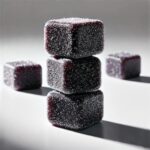
Edibles typically start working within 30 minutes to 2 hours, with full effects taking up to 4 hours to peak and lingering for as long as 12 hours. The one thing you need to do right now: don’t take a second dose during that window, no matter how “nothing” seems to be happening. Start with 2.5 mg or less, read the label carefully, and give your body time to catch up before you consider more.
TL;DR:
- Effects from edibles can take up to four hours to peak and may last as long as 12 hours, so patience and timing are crucial to avoid overconsumption.
- Product format, food intake, metabolism, and individual physiology significantly influence onset time and intensity, even at the same dosage.
- Starting with 2.5 mg or less of THC and waiting at least two hours before dosing again minimizes the risk of excessive impairment.
- Commercial edibles have variability between brands and batches, making standard doses unreliable and emphasizing the importance of slow, careful dosing.
- Consuming edibles in familiar, controlled environments and with trusted company enhances safety during delayed onset and potential peak effects.
Table of Contents
- Edibles onset time: what to expect, hour by hour
- What actually changes when your edible kicks in
- How much should you actually take?
- How to manage the wait without wrecking your night
- Montrose Cannabis: choosing regulated, low-dose edibles you can trust
- Homemade edibles vs store-bought: why the timing differs
- Why the same dose can feel different every time
- Where you should actually be when edibles kick in
- What the research actually tells us about edible timing
- Sources
- FAQ
Edibles onset time: what to expect, hour by hour
That 30 minute to 2 hour onset window isn’t a guess. It comes straight from Health Canada’s guidance on cannabis consumption, which also notes that peak effects usually land around the 4 hour mark, with some impact lasting up to 12 hours and mild residual effects stretching as far as 24 hours. British Columbia’s public safety factsheet echoes the same pattern, reinforcing that edible effects may not be felt for up to 2 hours and can take roughly 4 hours to fully peak.
Here’s how that plays out in real time:
- 0 to 30 minutes: Usually nothing noticeable yet. Your digestive system is still breaking down the edible, and THC hasn’t reached meaningful blood levels.
- 30 to 120 minutes: The first signs typically show up here, a lighter head, subtle shifts in mood or focus, maybe some warmth or relaxation. This is the window where impatience causes trouble.
- 2 to 4 hours: Effects build toward their peak. If you’re going to feel strongly impaired, this is usually when it happens.
- 4-plus hours: Effects level off and gradually taper. Some people still feel subdued or foggy well into the next several hours.
Pro Tip: Your blood THC level and how “high” you feel don’t always move together. A crossover pharmacokinetic study found peak plasma concentrations (Tmax) between 35 and 90 minutes, yet plenty of people don’t feel the full subjective effect until well past that point. That mismatch is exactly why re-dosing at the 45-minute mark, because you “don’t feel anything,” is one of the most common ways people end up far more impaired than they intended.
The takeaway is simple: the clock on paper and the clock in your body aren’t the same clock. Plan around the longer estimate, not the optimistic one.
What actually changes when your edible kicks in
Not every edible behaves the same way, even at an identical dose. A handful of variables push onset earlier or later, and understanding them helps you predict your own experience instead of guessing.
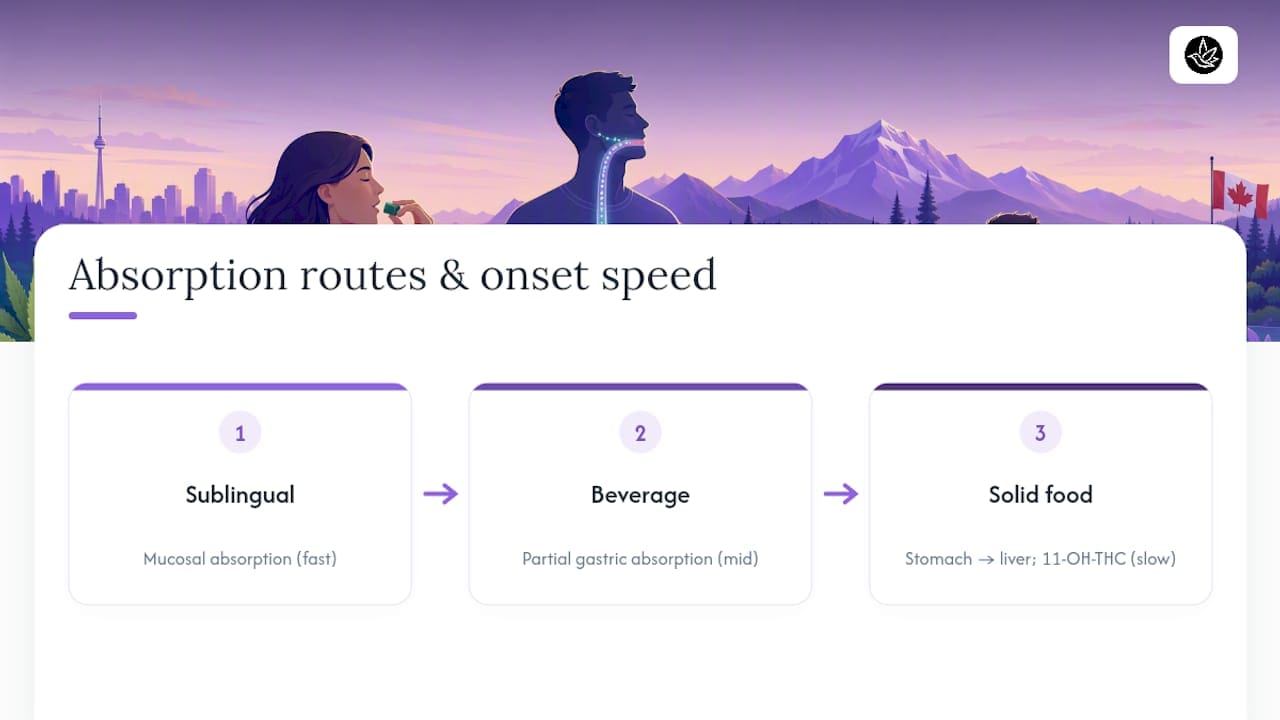
Product format matters more than most people realize. Sublingual products like lozenges and dissolving strips get absorbed through the mouth’s mucous membranes, skipping a chunk of digestion and often kicking in faster. Gummies, baked goods, and chewables have to pass through your stomach and liver first, where THC converts into 11-hydroxy-THC, a metabolite that tends to hit harder and last longer. Beverages sit somewhere in between, generally absorbing a bit faster than solid food but slower than sublingual formats.
Whether you’ve eaten changes the math. A randomized crossover trial found that a high-fat meal increased both the time to peak concentration and the total THC exposure (AUC) compared to a fasted state. Eating a fatty meal beforehand doesn’t just delay onset, it can also intensify the eventual effect.
Dose, tolerance, and metabolism shift how strong things feel, even when timing stays similar. A higher dose combined with low tolerance almost always produces a more intense experience, while regular users often report needing more product to feel the same effect.
Sex and body composition play a role too. That same crossover trial found females had greater peak plasma concentrations after a 5 mg THC dose in a fasted state, a reminder that individual physiology, not just dosage, shapes the outcome.
Manufacturing consistency explains why two products labelled “10 mg” can feel completely different. Research on commercial edible pharmacokinetics found meaningful differences in plasma THC concentration between products during the first 20 to 30 minutes, even at matching doses. Formulation and food-matrix design genuinely change how fast cannabinoids get absorbed, according to a review on cannabis edible bioavailability. If you want a steadier starting point, our THC vs CBD edibles guide breaks down which formats tend to behave more predictably.
How much should you actually take?
Canada’s dosing guidance is clear, and it exists for a good reason: edibles are unforgiving when you get impatient. Follow these steps in order.
- Start with 2.5 mg of THC or less. Health Canada specifically recommends this threshold for anyone new to edibles or returning after a break.
- Wait a minimum of 2 hours before considering more. Given that full effects can take up to 4 hours to peak, waiting even longer is the safer call.
- Check the package limit. Canadian regulations cap THC at 10 mg per package, whether that’s one strong piece or several smaller servings.
- Read the label for servings per package. A single package might contain four 2.5 mg servings rather than one dose, and it’s easy to eat the whole thing without realizing you just took 10 mg.
- Store edibles clearly labelled and out of reach. Cannabis-infused food can look identical to regular snacks, which is a real risk for kids and pets.
To put those numbers in perspective: 2.5 mg is a reasonable starting dose for a first-timer or an occasional user. 10 mg, the full legal package limit, can feel substantial for anyone without regular tolerance. 20 mg or more, which shows up in some multi-serving packages, is generally something to approach cautiously, and typically not a starting point for anyone new. Our safe edible dosing guide walks through label-reading in more detail if you want a closer look before your next order.
How to manage the wait without wrecking your night
Delayed onset isn’t a flaw, it’s just how edibles work. Planning around it makes the whole experience smoother and safer.
- Clear your schedule. Don’t plan to drive, operate machinery, or handle anything demanding for several hours after taking an edible.
- Have trusted company nearby, especially for a first try or a new product.
- Think about food timing deliberately. Eating beforehand slows onset but can intensify the eventual peak; taking an edible on an empty stomach may act faster but produce a sharper hit.
- Skip alcohol and other depressants. Combining substances makes it much harder to judge how you’re actually feeling.
- Keep edibles stored and labelled properly, away from anywhere kids or pets might find them.
Pro Tip: If you start feeling more impaired than expected, sit or lie down somewhere comfortable, sip water, and remind yourself that even a strong reaction will pass. Most uncomfortable edible experiences resolve within a few hours. If symptoms feel severe (racing heart, extreme confusion, difficulty breathing), contact poison control or emergency services rather than waiting it out alone.
Montrose Cannabis: choosing regulated, low-dose edibles you can trust
Part of managing onset time well starts before you even take a bite, it starts with choosing a product you actually understand. Choosing products from a retailer that offers clear, detailed product information helps ensure you know what’s in your gummy or chocolate bar.
Here’s what that looks like in practice:
- Clear labelling on every product page, so you can check THC per serving before you order.
- Both medical and recreational options.
- Delivery services to various regions.
- Positive customer feedback reflected in high ratings.
If you’re new to edibles, start with our safe edible dosing guide before you shop, then browse low-dose edibles in our shop and pick a single-serving option to start.
Homemade edibles vs store-bought: why the timing differs
Homemade edibles are notoriously unpredictable, and that’s not a knock on anyone’s baking skills. When you infuse butter or oil at home, THC doesn’t distribute evenly through the batter. One brownie corner might carry double the dose of another, purely because of how the mixture settled before baking.
Commercial edibles go through standardized dosing and lab testing, which is why Canadian packaging can legally state an exact THC content per serving. That doesn’t mean every commercial product behaves identically. The pharmacokinetic study on commercial edibles found real variability between brands even at the same labelled dose, driven by differences in fat content, particle size, and how the cannabinoids are bound into the food matrix.
Homemade edibles add another layer of uncertainty: the type of fat used, how long the mixture was heated, and whether the THC was properly decarboxylated before infusion all change both strength and onset speed. A homemade batch might kick in faster or slower than a commercial product with an identical “10 mg” label, simply because the underlying chemistry isn’t standardized. If you’re transitioning from homemade edibles to store-bought ones, treat it as starting over with dosing. Familiarity with your usual homemade brownie tells you nothing reliable about how a lab-tested gummy will hit.
Why the same dose can feel different every time
Two people can eat the exact same 5 mg gummy and have completely different experiences, one barely feels it, the other feels noticeably impaired. Metabolism, gut bacteria, liver enzyme activity, body fat percentage, and even stress levels on a given day all influence how quickly THC gets processed and how strongly it registers.
This variability means your own past experience with edibles isn’t a perfectly reliable predictor either. The same product that felt mild last month might feel stronger this month if you’ve eaten less that day, slept poorly, or you’re simply more stressed. Tolerance also shifts with frequency of use, so someone who took a break for a few weeks may find their old “usual dose” hits harder than remembered.
The practical response to this uncertainty isn’t trying to calculate a perfect personalized dose. It’s building in margin. Always default to the lower end of your usual range when trying a new product or returning after time away. Treat the first 2 hours as pure observation, not evaluation, since your body is still working through absorption regardless of how you feel in the moment. And recognize that a slower-than-usual onset doesn’t mean the edible failed. It often just means digestion is running slower that day, not that a bigger dose is needed.
Where you should actually be when edibles kick in
Delayed onset means your surroundings matter as much as your dose. The setting you’re in when effects finally build should be one where feeling unexpectedly impaired isn’t a problem.
Home, or another familiar space you control, is usually the safest choice for a first try or a new product. You’re not navigating unfamiliar surroundings while your coordination or focus shifts. Save public events, driving, or work commitments for a different day entirely, since effects can still be building at the 3 or 4 hour mark, long after most people assume they’re in the clear.

Being around someone you trust, who knows you’ve taken an edible and understands what to watch for, adds a real safety layer. If effects come on stronger than expected, having company means you’re not managing that alone. Keep water nearby, skip alcohol, and avoid layering on other substances that could compound the effect unpredictably.
If you’re consuming somewhere other than home, confirm there’s a way to get to a comfortable, private space quickly if needed.
What the research actually tells us about edible timing
Most advice about edibles boils down to “start low, go slow,” and that phrase gets repeated so often it starts to feel like a throwaway line. It shouldn’t. The pharmacokinetic research backs it up in a specific way that most casual advice misses: the mismatch between blood concentration and subjective feeling is the real danger zone, not the dose itself.
Where conventional advice falls short is treating all edibles as interchangeable once you know the milligram count. They aren’t. Format, food-matrix design, and manufacturing consistency all shift onset speed in ways a label alone can’t capture, and that gap is exactly why two “identical” 10 mg products can produce different nights. If there’s one thing worth prioritizing above dose calculation, it’s patience through that first 4 hour window, because no amount of formulation knowledge replaces just waiting long enough to know how you actually feel.
— Nick
This article is general information, not a substitute for advice from a qualified doctor. Consult a qualified healthcare professional about your own circumstances before acting on anything here.
Sources
- What you need to know if you choose to consume cannabis — Health Canada
- Cannabis: lower your risks — Health Canada
- Pharmacokinetics of commercial edible products — PMC (2021)
- Pharmacokinetic study of THC capsules under fed and fasted states — PubMed (2019)
- Enhancing efficacy, performance and reliability of cannabis edibles — Annual Reviews (2020)
FAQ
How long does it take for edibles to kick in?
Most people start feeling effects within 30 minutes to 2 hours, with full effects peaking around 4 hours after ingestion, according to Health Canada. Effects can last up to 12 hours, with mild residual effects lingering as long as 24 hours.
Is 20 mg of THC in an edible strong?
Yes, 20 mg is considered a substantial dose, especially for anyone without regular cannabis tolerance. Health Canada recommends starting at 2.5 mg or less, so 20 mg represents roughly eight times that starting point.
Is a 100 mg gummy edible a lot?
Yes, 10 mg is the legal per-package limit for THC in Canada, which is far above a typical single serving. If you encounter a product with many milligrams per package, check the servings-per-package information carefully, since it is meant to be divided across many doses, not consumed at once.
Do edibles hit faster if you’re already high?
Not necessarily faster, but the combined effect can feel stronger or more confusing to track. Being already impaired makes it harder to judge new onset accurately, which is part of why waiting between doses matters even more when THC is layered on top of existing effects.
What does a 2.5 mg edible feel like?
A 2.5 mg dose typically produces a mild, manageable effect, light relaxation or a subtle mood lift rather than strong impairment. It’s the starting dose Health Canada recommends precisely because it gives new or returning users room to gauge their reaction without overwhelming intensity.