
Cannabis safety recall in Ontario is the formal removal or restriction of a cannabis product from sale because it poses a health or safety risk, initiated by Health Canada, a Licensed Producer, or the Ontario Cannabis Store (OCS). Understanding what is cannabis safety recall Ontario means knowing which agencies govern the process, where to find official notices, and exactly what to do if a product you own gets pulled. This guide covers all of it, with real 2026 examples, so you can protect yourself with confidence.
What is a cannabis safety recall in Ontario?
A cannabis safety recall is an official public health action, not a voluntary brand decision. Health Canada holds the authority to initiate or oversee recalls and operates the central portal for recall notices, adverse reaction reporting, and consumer inquiries. The OCS acts alongside Health Canada, publishing its own product recall listings that include specific lot numbers, product names, and recall dates. Together, these two bodies form the backbone of Ontario’s cannabis product safety system.

The term “cannabis safety recall” is the plain language description most consumers search for. The formal regulatory term is a “cannabis product recall,” and both refer to the same process. Recalls can affect dried flower, vapes, edibles, concentrates, and any other regulated cannabis format sold through authorised Ontario retailers.
Where to find official Ontario cannabis safety recall notices
Two sources are definitive for Ontario cannabis product recalls.
Health Canada’s recall portal: The Health Canada cannabis recalls page lists all active and archived recall notices. You can search by product name, producer, or date. This is the most complete national database.
OCS product recall page: The OCS recall listings include product names, lot numbers, and the date each recall was posted. In 2026, OCS posted recalls for Wild West and Simply Bare products, among others. This page is updated regularly and is specific to products sold through Ontario’s regulated retail network.
Retailer notifications: Authorised retailers receive direct communication from OCS when a recall is issued. They are required to quarantine recalled inventory and post visible signage so customers are not sold affected products.
Health Canada email alerts: You can subscribe to Health Canada’s recall and safety alert notifications to receive updates directly in your inbox.
Pro Tip: Bookmark both the Health Canada cannabis recalls page and the OCS product recall blog. Check them any time you hear about a product issue, even before a formal recall is announced.
Recalls are communicated quickly through this network. The gap between a recall announcement and retailer action is typically very short because OCS wholesale protocols require immediate quarantine of affected stock.
Common reasons for cannabis safety recalls in Ontario
Ontario cannabis recalls fall into a small number of recurring categories. Knowing these helps you understand the real risks behind a notice.
THC or CBD potency mislabelling. This is the most common trigger. A product label may understate or overstate actual cannabinoid content, which directly affects dosing decisions. The Jays Pin Pennifer vape recall in 2026 is a clear example. The label reported THC at 350 mg/g while lab testing found the actual concentration was 972 mg/g. That is nearly triple the stated amount. Consuming a product at that potency without knowing it creates a serious risk of over-intoxication.
Incorrect cannabinoid values on packaging. JC Green Cannabis recalled certain Jonny Chronic dried cannabis products after printed THC values were found to be higher than actual amounts. That recall affected 4,659 units sold in Ontario between september and december 2025 through authorised retailers. In this case, the label overstated potency rather than understating it, which affects consumers who rely on accurate values for medical dosing.
Contamination and mould. Microbial contamination, including mould, can occur during cultivation or packaging. Contaminated products pose direct health risks, particularly for consumers with compromised immune systems.
Non-routine testing failures. Occasionally, post-market testing by Health Canada or a producer identifies a problem that routine pre-sale testing missed. These findings trigger precautionary recalls even when no adverse reactions have been reported yet.
Recalls are often issued before any adverse reactions are reported. Health Canada confirmed that no adverse reactions had been reported for the Jays vape recall lot at the time of announcement. The absence of reported harm does not mean a product is safe to continue using.
What to do after a cannabis recall in Ontario
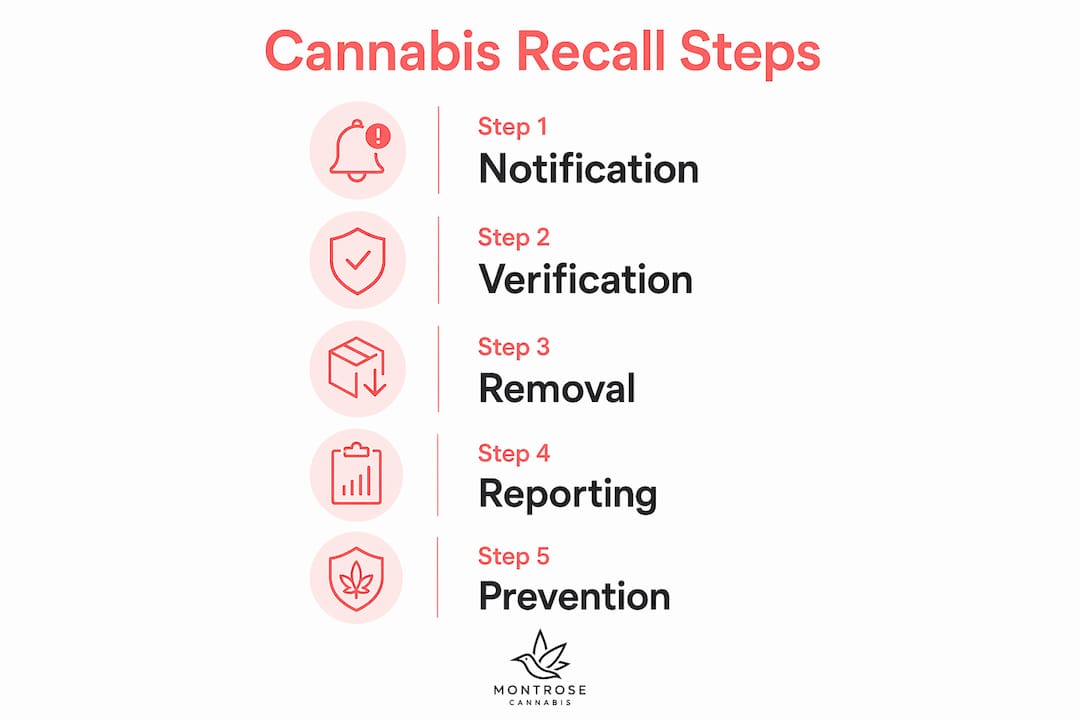
If you own a recalled product, the steps are straightforward. Acting quickly matters.
Stop using the product immediately. Do not finish the product or share it with others. Set it aside in its original packaging.
Check the lot number. Not every unit from a brand or flavour is always recalled. The recall notice will specify exact lot numbers. Check your packaging against the notice before assuming your product is affected. Understanding how lot numbers work is genuinely useful here.
Return the product to the retailer. Contact the store where you purchased it. Authorised retailers are required to accept returns of recalled products and process refunds or exchanges. Bring your original packaging and receipt if you have it.
Dispose safely if return is not possible. If you cannot return the product, follow the disposal instructions in the recall notice. Do not flush cannabis products or put them in regular recycling.
Report adverse reactions separately. If you experienced any health effects after using the product, report them to Health Canada using their adverse reaction reporting system. This step is separate from the product return and helps regulators track safety patterns.
Pro Tip: Even mild symptoms like unexpected dizziness or a stronger-than-expected effect are worth reporting. Health Canada uses this data to improve recall detection and response times.
Recall notices and adverse reaction reports serve different purposes. Recall notices focus on product removal. Adverse reaction reports feed into ongoing safety surveillance. Both matter, and you can submit them independently.
How Ontario’s regulated supply chain supports recall traceability
Ontario’s regulated cannabis supply chain is built for exactly this kind of situation. The system works because every product sold through the OCS network carries a lot and batch number that ties it back to a specific production run. When a problem is identified, regulators can isolate the exact affected units rather than pulling an entire brand or product line.
| Feature | How it protects you |
|---|---|
| Lot number traceability | Identifies the exact production batch affected, so only unsafe units are recalled |
| OCS quarantine protocols | Retailers must segregate recalled stock and post signage before any further sales occur |
| Retailer return workflows | Authorised stores are required to accept recalled products and process consumer refunds |
| Health Canada oversight | Federal regulator monitors the full recall process and publishes notices publicly |
| Post-market testing | Ongoing testing catches issues that pre-sale checks may have missed |
Retailers in Ontario’s regulated network receive direct recall instructions from OCS, including requirements for quarantine signage and return processing. This is a meaningful difference between buying from an authorised retailer and buying from an unregulated source. An unregulated seller has no obligation to act on a recall at all.
The lot number is your most important tool as a consumer. Checking it takes less than a minute and tells you definitively whether your specific product is affected.
Key takeaways
Ontario cannabis safety recalls are official Health Canada and OCS actions that remove specific product lots from sale, and consumers must check lot numbers, stop use immediately, return affected products, and report any adverse reactions.
| Point | Details |
|---|---|
| Official recall sources | Check Health Canada’s recall portal and the OCS product recall page for current notices. |
| Lot number is critical | Recalls target specific lots, not entire brands. Always verify your lot number against the notice. |
| Stop use immediately | Do not continue using a recalled product, even if you feel fine and no reactions have been reported. |
| Return or dispose safely | Contact your authorised retailer for a return. Follow disposal instructions if a return is not possible. |
| Report adverse reactions | Submit health concerns to Health Canada separately from the product return process. |
Why I think most Ontario cannabis consumers are caught off guard by recalls
Most people I talk to assume a recall means something went badly wrong and someone got hurt. That is not how it works in Ontario. The Jays vape recall in 2026 is a perfect example. Health Canada confirmed no adverse reactions had been reported when the recall was announced. The product was pulled because lab testing found THC nearly three times higher than the label stated. That is a serious risk, but it was caught proactively.
The system is actually working well. The problem is that consumers are not watching it closely enough. Most people do not bookmark the OCS recall page. Most people do not know their product’s lot number. Most people would not notice a recall unless a friend sent them a news article about it.
My honest advice: treat the OCS recall page the way you treat your bank’s fraud alerts. You hope you never need it, but you check it regularly because the cost of missing something is real. Checking cannabis product safety in Ontario starts with knowing where to look, and that takes about 30 seconds to set up.
The other thing worth saying: buying from an authorised retailer is not just a legal formality. It is the mechanism that guarantees someone is legally required to quarantine recalled stock and process your return. An unregulated seller owes you nothing when a recall drops. That gap matters.
— Nick
Montrosecannabis keeps you covered on quality and compliance
At Montrosecannabis, we source exclusively from licensed producers and carry products that meet Ontario’s regulated safety standards. Every product in our catalogue comes with full lot number information so you can cross-reference any recall notice in seconds.
We serve the Durham Region and GTA with same-day delivery, and our team stays current on cannabis safety regulations in Ontario so you do not have to do it alone. Whether you are looking for verified cannabis seeds or want to browse our full product range, we have got you covered with products from producers who take compliance seriously. Questions about a product or a recent recall? Reach out to us directly. We are here to help.
FAQ
What is a cannabis safety recall in Ontario?
A cannabis safety recall in Ontario is an official action by Health Canada or the OCS to remove a specific cannabis product lot from sale due to a health or safety concern, such as potency mislabelling or contamination.
How do I check for cannabis recalls in Ontario?
Check the Health Canada cannabis recalls portal and the OCS product recall page. Both are updated regularly and list affected product names, lot numbers, and recall dates.
What should I do if I have a recalled cannabis product?
Stop using the product immediately, check the lot number against the recall notice, and return it to the authorised retailer where you purchased it for a refund or exchange.
Are recalls only issued after someone gets sick?
No. Health Canada issues recalls as a precautionary measure, often before any adverse reactions are reported. The 2026 Jays vape recall was announced with no reported adverse reactions at the time.
Why does the lot number matter in a cannabis recall?
Recalls target specific production batches, not entire brands or product lines. Your lot number tells you definitively whether your specific unit is affected, so you are not discarding safe product unnecessarily.


