If you’re new to cannabis, the single best starting point is a low-THC or balanced CBD:THC product at the smallest available dose. That one decision reduces your risk of an uncomfortable first experience more than any other choice you’ll make. Health Canada’s lower-risk guidelines back this up directly, recommending products with lower THC content and higher CBD:THC ratios to reduce potential health risks.
Here’s a quick five-step checklist before you buy or try anything:
- Define your goal. Sleep, stress relief, mild relaxation, or something else? Your goal shapes everything.
- Check the label. Look for total THC and total CBD percentages or milligrams before you decide.
- Prefer lower THC or balanced ratios. For a first try, aim for under 10% THC in dried flower, or a 1:1 CBD:THC oil.
- Pick a beginner-friendly consumption method. Tinctures and low-dose edibles give you more control than smoking.
- Set a conservative starter dose. Less is genuinely more when you’re starting out.
Two solid beginner options to look for: a CBD-dominant oil (CBD:THC ratio of 10:1 or higher) or a low-THC dried flower under 10% THC. Both options give you room to gauge your response before stepping up.
Pro Tip: Write down your goal before you shop. Beginners who walk in with a clear intention (“I want to sleep better”) make better choices than those browsing without direction.
Key takeaways
Choosing the right cannabis strain as a beginner comes down to three things: reading the label carefully, starting with the lowest effective dose, and tracking your response so each session teaches you something.
| Point | Details |
|---|---|
| Start with low THC | Aim for under 10% THC or a balanced 1:1 CBD:THC product to reduce adverse effects. |
| Read the label first | Total THC, total CBD, and the excise stamp are the three fields that matter most on any Canadian product. |
| Start low, go slow | Begin with 2.5 mg THC for edibles or 1–2 inhalations for dried flower; wait before taking more. |
| Track every session | Log dose, onset, duration, and goal rating to build a personal reference over time. |
| Montrosecannabis | Offers curated low-THC and CBD-forward products with one-hour delivery in Durham Region and the GTA. |
Table of Contents
- 1. What do “indica,” “sativa,” and “hybrid” actually mean?
- 2. How THC and CBD shape your experience
- 3. Terpenes: what they are and why they matter for your choice
- 4. Choosing a strain based on what you actually want
- 5. Consumption methods: how you take it changes everything
- 6. Dosing basics: start low, go slow
- 7. How to read a Canadian cannabis label
- 8. How to test a new strain and track what works
- What beginners often get wrong about strain selection
- Ready to find your first strain? Montrosecannabis has you covered
- Sources
- FAQ
1. What do “indica,” “sativa,” and “hybrid” actually mean?
Walk into any cannabis shop and you’ll see these three labels everywhere. Here’s the honest version of what they mean and where they fall short.
- Indica strains are traditionally described as physically relaxing, often associated with evening use.
- Sativa strains are typically described as more energising or mentally stimulating.
- Hybrid strains are crosses of the two, with effects that vary widely depending on the specific genetics and chemical profile.
The problem is that these labels are inconsistent in practice. WebMD’s clinical overview of cannabis strains notes that indica vs. sativa distinctions are less reliable than chemical profiles, and that cannabinoid ratios and terpenes are more informative for users. Most products on the Canadian market today are hybrids regardless of what the label says, and two products both called “indica” can produce noticeably different effects.
Real examples show this clearly. Blue Dream is widely labelled sativa-dominant but has a moderate THC profile that many beginners find manageable. Northern Lights carries an indica label and is often associated with relaxation, but its actual effects depend heavily on its specific cannabinoid and terpene content. ACDC is a CBD-dominant strain with very low THC, making it one of the most beginner-appropriate options regardless of its plant-type classification.
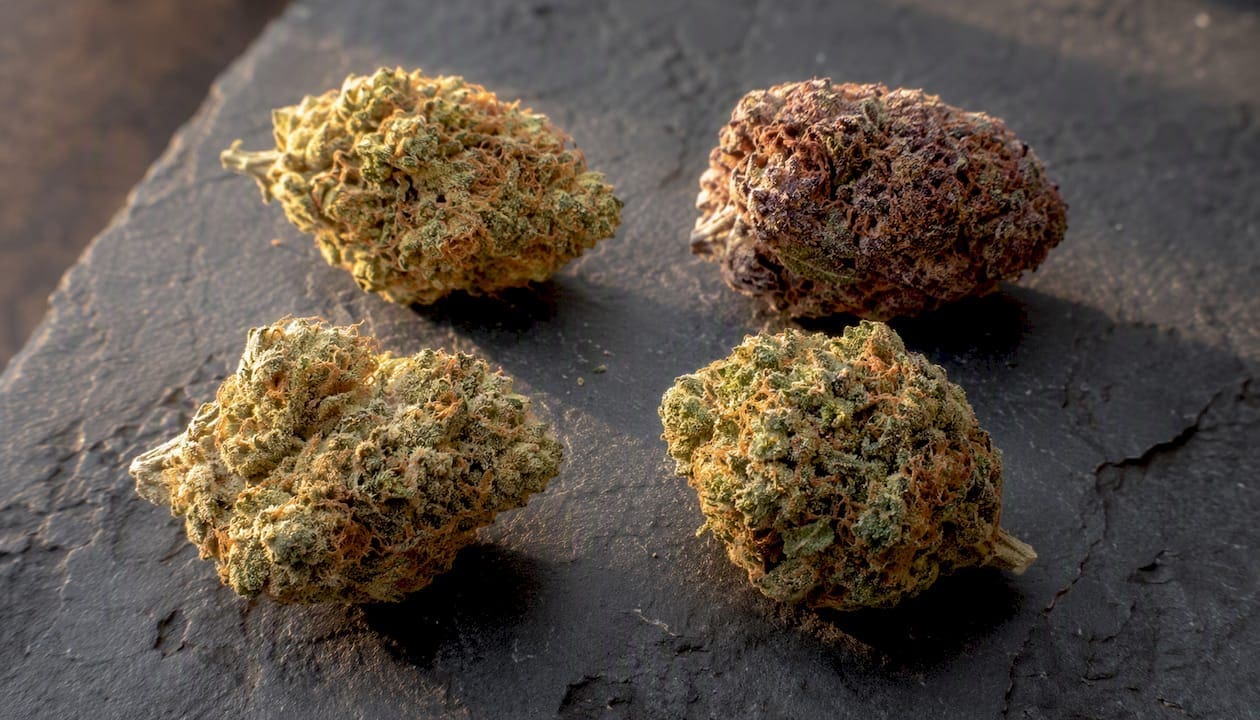
Pro Tip: When you’re browsing a product page, scroll past the indica/sativa label and go straight to the THC/CBD numbers and terpene notes. Those tell you far more about what to expect.
The industry term for classifying cannabis by its chemical makeup rather than plant type is chemovar. You’ll see this word used more often as retailers and producers move toward more accurate labelling. Knowing it helps you ask better questions.
2. How THC and CBD shape your experience
Cannabis contains hundreds of compounds, including more than 70 phytocannabinoids. For beginners, two matter most: THC and CBD.
THC (tetrahydrocannabinol) is the primary intoxicating compound. It produces the “high” associated with cannabis, but at higher concentrations it also increases the likelihood of anxiety, paranoia, and other adverse effects. Higher THC does not mean a better experience, especially for someone new to cannabis.
CBD (cannabidiol) is non-intoxicating. When present in amounts equal to or greater than THC, it may reduce some of THC’s psychoactive effects, according to Health Canada’s lower-risk guidelines. This is why balanced or CBD-forward products are consistently recommended for beginners.
Potency has changed dramatically. Health Canada reports that THC levels in dried cannabis rose from roughly 3% in the 1980s to around 15% in recent years, with some strains reaching 30% or higher. A product that looks “normal” on a shelf today is far stronger than what existed a generation ago.
Other cannabinoids like CBG, CBN, and THCV appear in smaller amounts and may contribute to the overall effect, but the research on their individual roles is still limited. For now, focus on THC and CBD when reading labels.
| Profile | THC range | CBD range | Best for beginners? |
|---|---|---|---|
| Low-THC | Relatively low THC content | Any | Yes — lowest risk of adverse effects |
| Balanced (1:1) | Similar THC and CBD levels | Similar levels | Yes — CBD may soften THC effects |
| CBD-forward | Higher CBD relative to THC | High CBD | Yes — minimal intoxication |
| High-THC | Higher THC content | Low CBD | No — higher risk for new users |
3. Terpenes: what they are and why they matter for your choice
Terpenes are the aromatic compounds that give cannabis its distinctive smell and flavour. They’re found in many plants, not just cannabis, and they’re increasingly listed on Canadian product labels and online menus.
Here are four you’ll commonly encounter:
- Myrcene: Earthy and musky; often associated with relaxing, sedating sensations. It’s one of the most abundant terpenes in cannabis. You can read more about what myrcene does if you want a deeper look.
- Limonene: Citrusy and bright; users often associate it with uplifted or energised feelings.
- Linalool: Floral and lavender-like; frequently linked to calming effects, similar to how aromatherapy uses lavender.
- Pinene: Fresh and piney; some users associate it with alertness and mental clarity.
Terpenes are a useful selection signal, not a guarantee. The Health Canada technical review acknowledges that scientific links between specific terpenes and clinical outcomes remain limited. Think of terpene notes the way you’d think of a wine’s flavour profile: helpful context, not a prescription. The science behind cannabis aroma is genuinely interesting if you want to go deeper.
Pro Tip: If a product’s terpene description matches your goal (e.g., myrcene for relaxation before bed), note it and track whether it works for you. Over a few trials, you’ll start to see patterns.
4. Choosing a strain based on what you actually want
This is where the guide gets practical. Your goal should drive your cannabinoid profile and consumption method choice, not the other way around.
| Goal | Cannabinoid profile to look for | Suggested consumption method |
|---|---|---|
| Better sleep | Low-to-moderate THC, higher CBD, myrcene or linalool terpenes | Tincture or low-dose edible (taken 1–2 hrs before bed) |
| Anxiety relief | Balanced 1:1 or CBD-forward, low THC | Tincture or capsule for controlled dosing |
| Mild pain relief | Balanced or CBD-forward, consider topical for localized pain | Topical (non-intoxicating) or tincture |
| Creativity/energy | Low THC, limonene or pinene terpenes | Vaporiser at low temperature or dried flower |
A few important reminders before you use this table:
- Health Canada states clearly there is currently insufficient evidence to recommend specific strains for particular medical conditions. These goal-based suggestions are starting points, not medical advice.
- For any health condition, work with a healthcare provider who can guide dose titration and monitor your response.
- The cannabis wellness benefits list at Montrosecannabis covers Health Canada-aligned harm reduction guidance if you want a broader wellness reference.
5. Consumption methods: how you take it changes everything
The route you choose affects how quickly you feel effects, how long they last, and how easy it is to control your dose. This matters enormously for beginners.
- Smoking or vaping: Onset is fast, typically within minutes. Effects usually peak within 30 minutes and taper off within 1–3 hours. The speed makes it easier to gauge your response and stop before taking too much. That said, avoid high-potency vapes and concentrates (dabs) as a beginner — the THC delivery is intense and hard to control.
- Edibles: Onset is slow, often 30 minutes to 2 hours, because the cannabis is metabolised through your digestive system. Effects can last 4–8 hours. Many beginners take a second dose too soon because they don’t feel anything, then get hit by both doses at once. Patience is the rule here.
- Tinctures and sprays: Absorbed under the tongue, these offer a middle ground: faster onset than edibles (15–45 minutes), easier to measure precisely, and simpler to adjust. A good choice for beginners who want control.
- Topicals: Creams, balms, and patches applied to the skin. They work locally and don’t produce intoxication, making them suitable for localized discomfort without any psychoactive effect.
One reason smoking and vaping produce faster effects than edibles is chemistry. Health Canada’s technical review notes that THCA (the raw, acidic form in the plant) converts to psychoactive THC only when heated above 120°C. When you ingest cannabis in an edible, that conversion happens differently through digestion, producing a longer and sometimes stronger effect.
Pro Tip: If you’re trying edibles for the first time, eat a light meal first, take your dose, and then genuinely wait two full hours before considering more. Set a timer.

6. Dosing basics: start low, go slow
This phrase gets repeated because it works. The goal for a first session is to feel something mild and positive, not to feel a lot.
Practical starting doses for beginners:
- Edibles: CannabisSense by AGLC recommends starting at 2.5 mg THC. Wait at least two hours before considering any additional amount.
- Dried flower or vaping: 1–2 inhalations from a low-THC product. Pause for 15 minutes and assess before taking more.
- Tinctures: Follow the product’s lowest suggested serving, typically 0.5–1 mL of a low-THC or balanced oil.
Safety checks every beginner should follow:
- Never drive or operate machinery while impaired. Cannabis affects reaction time and judgment.
- Use in a safe, comfortable environment, ideally with someone you trust nearby for your first few sessions.
- Keep all cannabis products out of reach of children and pets. Canadian law requires child-resistant packaging for this reason.
- Know the signs of taking too much: rapid heart rate, intense anxiety, paranoia, or dizziness. If this happens, stay calm, drink water, lie down in a safe space, and wait. The effects will pass.
- Limit frequency. Health Canada’s lower-risk guidelines are clear that “lower-risk” is not “no risk.” Daily or near-daily use increases the likelihood of dependence and other health effects.
For more on managing adverse reactions, the cannabis come-down guide at Montrosecannabis is a practical reference.
7. How to read a Canadian cannabis label
Every legal cannabis product sold in Canada carries mandatory label information governed by federal regulations. Knowing what to look for takes about 30 seconds and can save you from a bad experience.
Key label elements and what they tell you:
- Total THC and total CBD: Expressed as a percentage (dried flower) or milligrams per unit/serving (edibles, oils). This is your most important number.
- Net weight or units: Tells you how much product you’re getting and helps you calculate per-dose amounts.
- Excise stamp: A coloured stamp (gold for recreational, red for medical) that confirms the product came from a licensed producer. No stamp means the product is not legally sourced.
- Bilingual health warnings: Required by law. These include messages about impairment, risks for youth, and pregnancy warnings.
- Ingredient list: Required for edibles and extracts; tells you what else is in the product beyond cannabis.
Health Canada’s label guidance confirms that total THC and total CBD are mandatory disclosures, and these fields are your primary comparison tool when choosing between products.
| Label element | Where to find it | What it tells you |
|---|---|---|
| Total THC | Front or back panel | Potency; higher = stronger intoxication |
| Total CBD | Front or back panel | Non-intoxicating content; higher = more balance |
| Excise stamp | Side or back | Confirms legal, licensed source |
| Health warnings | Back panel | Required risk messaging |
| Net weight/units | Front panel | Helps calculate per-dose amount |
Legal purchasing basics: In Ontario, the legal age to purchase cannabis is 19. You must buy from a licensed retailer (online or in-store). Adults may possess up to 30 grams of dried cannabis (or equivalent) in public. For a full breakdown of Canadian THC limits, labels, and laws, the Montrosecannabis guide covers the current rules clearly.
8. How to test a new strain and track what works
The most reliable way to build your personal strain guide is to treat each new product as a small, controlled experiment. One variable at a time, one session at a time.
A simple three-step trial method:
- Before: Write down your goal for the session, your current mood and energy level, and the product details (name, THC%, CBD%, consumption method, dose).
- During: Note the time you started and any sensations as they develop.
- After: Log time to onset, peak effect, duration, any side effects, and a simple rating out of 5 for how well it met your goal.
A basic session log looks like this:
| Field | What to record |
|---|---|
| Product name | As shown on label |
| THC / CBD | % or mg per dose |
| Dose taken | e.g., 2.5 mg, 1 inhalation |
| Time of first dose | e.g., evening |
| Onset time | Minutes until first effect |
| Peak effect rating | 1–5 (1 = nothing, 5 = too strong) |
| Duration | Hours until effects faded |
| Goal met? | Yes / Partially / No |
| Notes | Side effects, mood, setting |
After three or four sessions with the same product, you’ll have real data to work with. You can also browse the cannabis strain catalogue guide at Montrosecannabis to compare cannabinoid and terpene profiles across products before your next trial.
Pro Tip: Change only one thing per session. If you switch products and doses at the same time, you won’t know which variable made the difference.
What beginners often get wrong about strain selection
Most new cannabis users focus on the wrong thing: the name. A strain name tells you almost nothing reliable about what you’ll experience. “Purple Kush” from one producer can be chemically different from “Purple Kush” from another. The name is marketing; the label is data.
The second common mistake is skipping the trial log. Without tracking, you’re repeating the same guesswork every session. Three logged sessions teach you more about your personal response than three months of casual use without notes.
There’s also a tendency to assume that more THC means a better product. For experienced users chasing a specific effect, potency matters. For beginners, high THC is simply a higher risk of an unpleasant experience, and Health Canada’s data on rising potency levels makes this point plainly. A 12% THC dried flower from a craft grower with a well-documented terpene profile will serve most beginners better than a 28% THC product with no additional context.
Finally, don’t underestimate the role of set and setting. Your environment, your mood going in, and whether you’re alone or with people you trust all shape your experience as much as the product itself. The chemistry matters, but so does the context.
Ready to find your first strain? Montrosecannabis has you covered
Picking your first product doesn’t have to be complicated. Montrosecannabis carries a curated selection of craft cannabis from top-tier Canadian growers, with options specifically suited to beginners: CBD-forward oils, low-THC dried flower, low-dose edibles, and capsules for consistent, measured dosing.

What sets Montrosecannabis apart for new users is the combination of quality and convenience. With one-hour delivery across Durham Region and the GTA, you can order with confidence and have a beginner-friendly product at your door the same day. The team holds a 4.9-star Google rating built on fast, discreet service and products that are exactly what the label says they are.
Ready to order? Browse cannabis delivery options and find a beginner-friendly product that fits your goal. For medical use, Montrosecannabis recommends consulting a healthcare provider before purchasing.
Sources
This article is general information, not a substitute for advice from a qualified doctor. Consult a qualified healthcare professional about your own circumstances before acting on anything here.
FAQ
Which strain is best for beginners?
A CBD-dominant or balanced 1:1 CBD:THC product is the safest starting point. Look for total THC under 10% and choose a tincture or low-dose edible for the most control over your dose.
How do I find the right strain for me?
Define your goal first (sleep, relaxation, mild pain relief), then match it to a cannabinoid profile using the product label. Track your response over a few sessions and adjust from there.
Do most beginners prefer indica or sativa?
The indica/sativa label is less reliable than the actual THC and CBD percentages. Focus on the chemical profile rather than the plant-type label, since most products today are hybrids regardless of how they’re categorised.
How do I choose my strain safely in Canada?
Buy only from a licensed retailer, check for the excise stamp on the package, and start with the lowest available dose. Health Canada’s lower-risk guidelines recommend lower-THC or balanced products and limiting frequency of use.


